ANCIENT MEALS · 026 / 100
Lydian-attributed dish in a Greek literary tradition · Lydia in western Anatolia, described in Greek literature · References from approximately the 4th century BCE, preserved by Athenaeus around 200 CE
Evidence: adapted surviving recipe. The historical evidence and modern cooking choices are distinguished below.
The grated bread is the clue
Sometimes an ancient food description gives enough structure to distinguish a dish immediately. Kandaulos combines boiled meat, fatty broth, cheese and grated bread. The Sardis excavation team’s discussion of Lydian food connects this preparation with references preserved by Athenaeus, including earlier comic writing. Its relationship to Lydia is a literary attribution, not a guarantee that every Lydian household made it.
In Athenaeus, Book 12, around section 516d, the description attributed to Hegesippus of Tarentum supplies those ingredients and an aromatic. The older English translation says anise; the Sardis discussion renders it dill. Rather than pretend that the two words describe the same supermarket product, our recipe chooses dill following the excavation essay. This small difference makes the work of translation visible.
Four ingredients, one changed texture
The recipe begins with a plain lamb simmer. Its purpose is to produce tender meat and cooking liquid without covering the combination in other spices. Bread crumbs then absorb some liquid, and cheese softens through it. That sequence gives the meal an unusual texture: more cohesive than a clear stew, but still something to eat with a spoon. The ancient text supplies the combination; the saucepan quantities and final consistency below are modern.
Phrygian cheese is named in the source. A modern pasteurized sheep cheese cannot be declared its exact descendant merely because it comes from the same broad region. We use a mild feta-style cheese as a practical substitute and limit added salt accordingly. Likewise, commercial wholemeal bread is chosen for accessibility, not because archaeology identifies our particular loaf.
A dish between reading and cooking
The Sardis essay also discusses recovered foods and cooking tools, creating a useful background to the literary testimony. That material does not identify a surviving pot full of this recipe. Keeping text and excavation distinct lets the named dish retain its interest without inventing a direct discovery.
At the table, compare a spoonful of plain meat broth with the finished combination if you can. The bread and cheese do more than decorate: they redirect the whole meal. Add broth gradually because breads differ in absorbency, and stop before the pot becomes a dry mass. Kandaulos offers an unusually clear ancient culinary design, but our cut of lamb, choice of cheese, dill amount and timing remain accountable choices made for a modern cook.
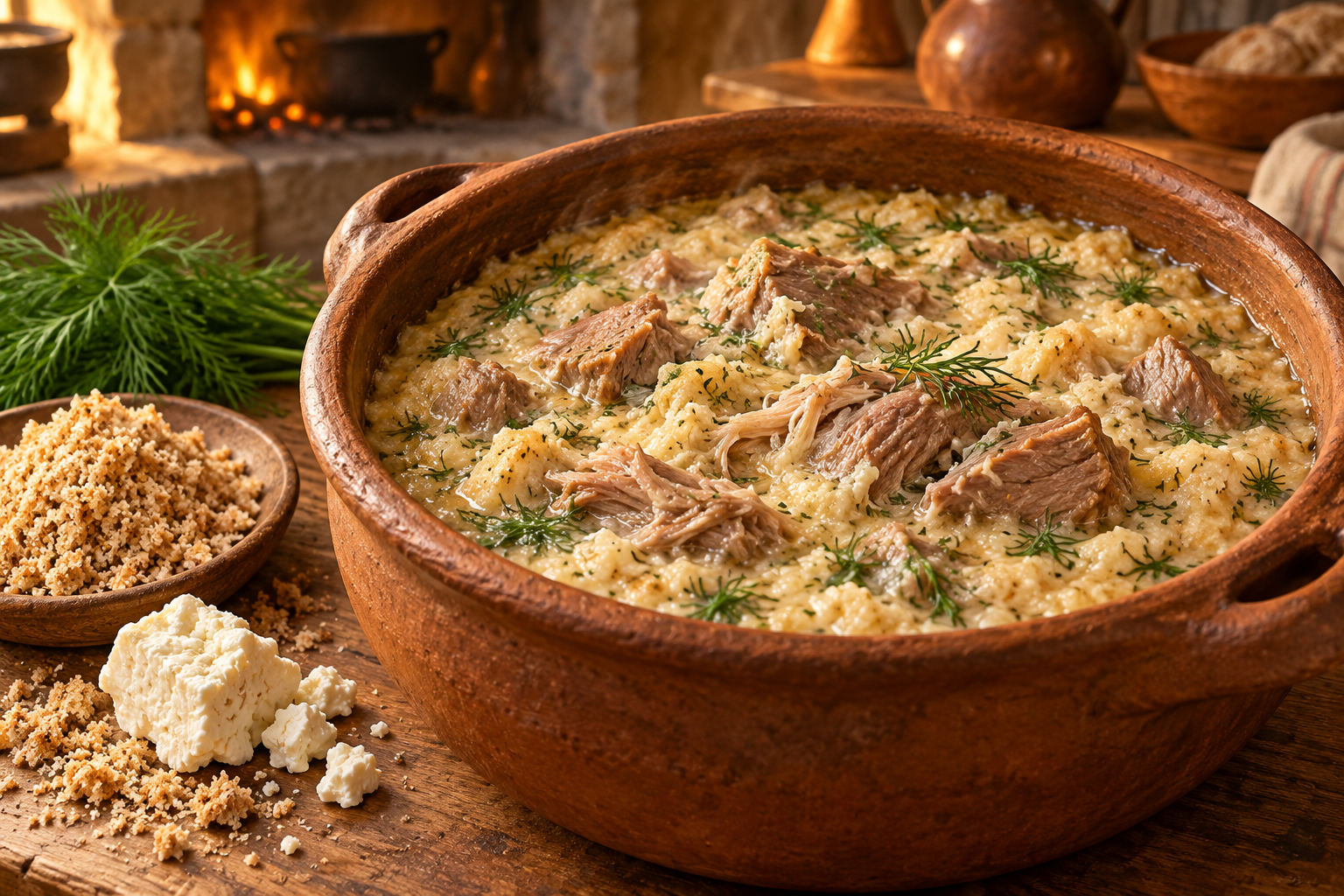
Lamb, bread and cheese kandaulos
Serves 4 · Preparation 20 min · Cooking 105 min · None
A modern adaptation for home cooking. Times are approximate.
Ingredients
- 600 g boneless lamb shoulder, cut into 3 cm pieces
- 900 ml water
- 120 g commercial wholemeal bread, grated or finely crumbled
- 130 g pasteurized mild feta-style cheese, crumbled
- 15 g fresh dill, finely chopped
- ¼ tsp salt, only if needed
Method
- Put lamb and water in a pot. Bring to a boil, skim if desired, then cover and simmer gently for 85–95 minutes until very tender. Add water if needed.
- Reserve about 250 ml broth in a jug. Leave the meat with about 450–500 ml broth in the pot.
- Stir in bread crumbs and simmer gently for 5 minutes. Add reserved broth gradually if the mixture is too stiff.
- Reduce heat to low. Fold in cheese and dill and warm for 2–3 minutes without boiling hard. Taste before adding any salt.
- Serve immediately as a thick spoonable meat dish; loosen individual portions with reserved hot broth if needed.
Substitutions and adjustments
- A mild pasteurized firm sheep cheese can replace feta-style cheese, with different melting behaviour.
- Beef chuck can replace lamb; allow extra simmering time.
Historical choices: The written meat–broth–bread–cheese design survives. Modern dairy identification, lamb cut, proportions and dill choice are adaptations; translations differ on the aromatic.
Kitchen note: Fully cook meat until tender. Use pasteurized cheese and refrigerate cooled leftovers within 2 hours.
Sources and further reading
- Archaeological Exploration of Sardis: Bon Appetit!. Lydian attribution, bread-and-cheese design, dill rendering and distinction between literary and archaeological evidence.
- Athenaeus Book 12, translated by C. D. Yonge. Public-domain primary-text translation around 516d; renders the aromatic as anise.