ANCIENT MEALS · 019 / 100
Hebrew biblical agricultural and meal traditions · Southern Levant · First-millennium BCE textual traditions; exact recipe date unknown
Evidence: historically informed adaptation. The historical evidence and modern cooking choices are distinguished below.
Grain before the familiar loaf
New grain can be eaten differently from fully dried wheat ground into flour. Leviticus 2:14–16 in the NET translation describes first-ripe kernels treated with fire in the setting of a grain offering. The wording points toward a harvest stage and a preparation, not toward a full measured recipe for a modern side dish.
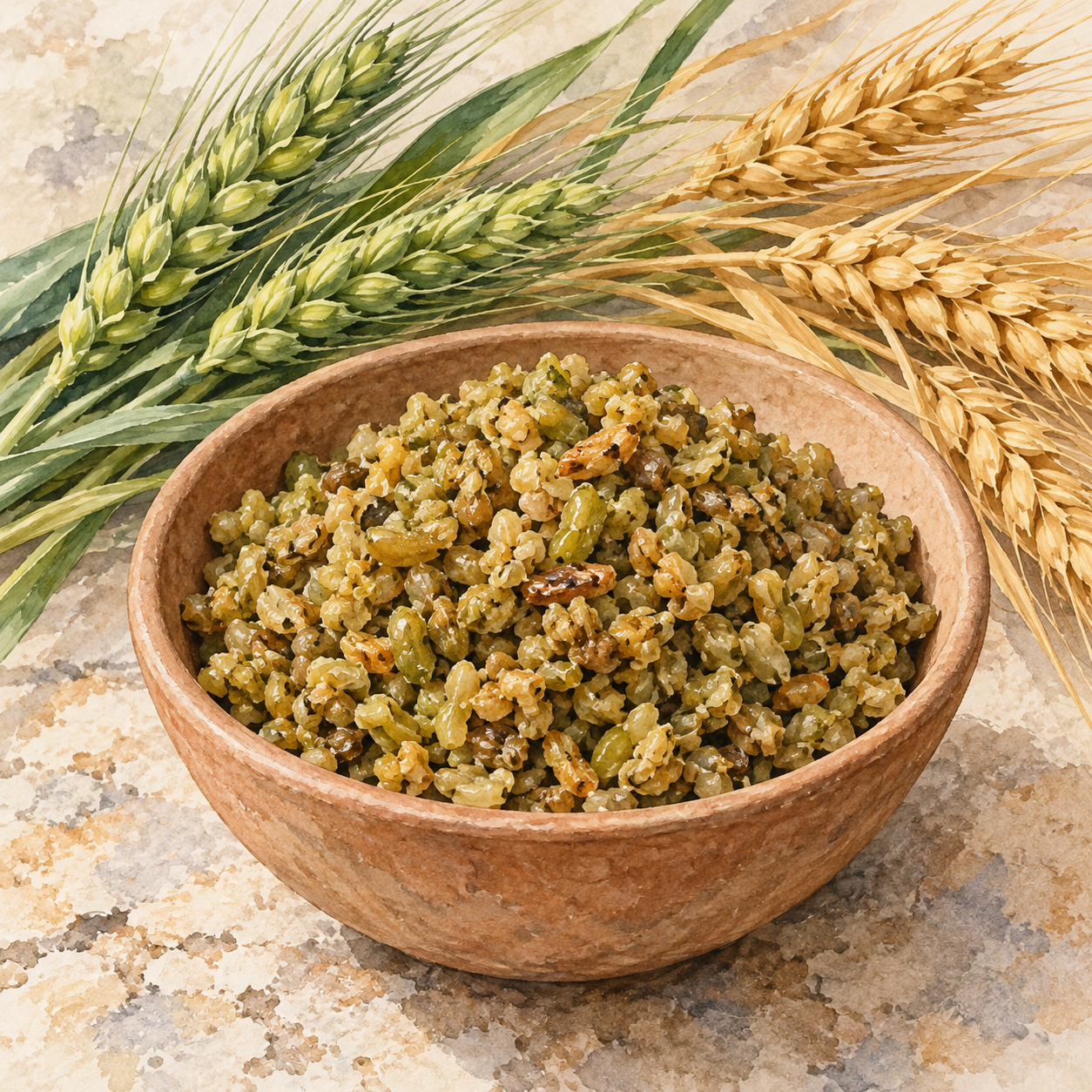
Parched grain also appears in an ordinary meal scene: Ruth 2:14 describes food offered at mealtime during harvest work. These texts place prepared grain in different contexts. An offering and a worker’s meal cannot simply be collapsed into one occasion, but together they make the food form worth noticing.
What commercial freekeh can and cannot do
Our adaptation uses commercial cracked freekeh, made from green wheat that has already been roasted. It provides an accessible ingredient with a relevant harvest-and-fire idea. We do not claim that this product follows exactly the process imagined in either ancient passage. Crop varieties, harvesting decisions and commercial processing make that impossible to establish from the short references alone.
The grain is simmered before a brief toast in a pan. Cooking first gives a tender, safe modern food; the final dry heat supplies aroma and a little texture. This is a deliberate present-day sequence. It is not an instruction to chew hard uncooked cereal or roast unknown grain picked from a field. A small amount of oil and salt is all the recipe needs.
A side dish that invites comparison
Cooked grain and bread ask different things of a diner. A spoonful keeps individual kernels visible, while a loaf turns ground grain into a continuous crumb. Serving this side next to plain bread can make that difference easy to discuss without inventing a single ancient menu. You can also taste the grain before and after the final toast, noticing what a short change in technique contributes.
Commercial freekeh varies in size, so follow its package instructions when they require a longer simmer and add water as needed. The finished grain should be tender with lightly toasted edges, not brittle. The generated botanical illustration shows a modern cooked adaptation and symbolic wheat ears. The historical anchor remains the textual references to parched grain; the packet ingredient, measured liquid, pan finish and portion size belong to this recipe.
Cooked and toasted green wheat
Serves 4 · Preparation 10 min · Cooking 30 min · None
A modern adaptation for home cooking. Times are approximate.
Ingredients
- 200 g commercial cracked freekeh
- 500 ml water, or as package directs
- 1 tbsp olive oil
- ½ tsp salt
Method
- Rinse freekeh if its package recommends it. Put in a saucepan with water and salt.
- Bring to a boil, cover and simmer 20–25 minutes, or as package directs, until tender. Drain any excess water.
- Heat oil in a wide pan. Add cooked grain and toast over medium heat 4–5 minutes, stirring, until slightly fragrant and dry at the edges.
- Serve warm as a grain side.
Substitutions and adjustments
- Commercial bulgur gives a different modern wheat side and usually cooks faster.
- Do not substitute hard raw wheat without fully cooking it first.
Historical choices: Inspired by first-ripe and parched-grain references. Commercial freekeh and the simmer-then-toast method are modern choices.
Kitchen note: Use clean equipment and commercial food-safe ingredients. Refrigerate leftovers promptly and use within 3 days.
Sources and further reading
- NET Bible: Leviticus 2. Primary translation and notes on fire-treated new grain in an offering.
- NRSVUE: Ruth 2:14. Primary meal scene involving parched grain; no quantities or technique details.