ANCIENT MEALS · 018 / 100
Biblical and early rabbinic textual traditions · Ancient Israel/Judah and Jewish communities · First millennium BCE traditions; Mishnah compiled around 200 CE
Evidence: historically informed adaptation. The historical evidence and modern cooking choices are distinguished below.
The cooking method matters to the text
Exodus 12 describes a meal of roasted lamb, unleavened bread and bitter herbs. The passage in translation makes the preparation part of the meal’s meaning. It is a ritual instruction in an ancient text, rather than an archaeological record of a particular family’s dinner. Its historical setting and development should not be reduced to one confidently dated recipe.
The later Mishnah Pesachim 7:1, compiled around 200 CE, discusses a spit and the roasting arrangement in more detail. This second source shows the importance of technique within a continuing interpretive tradition. It does not turn our modern oven roast into an enactment of the ancient rite.
A manageable modern portion
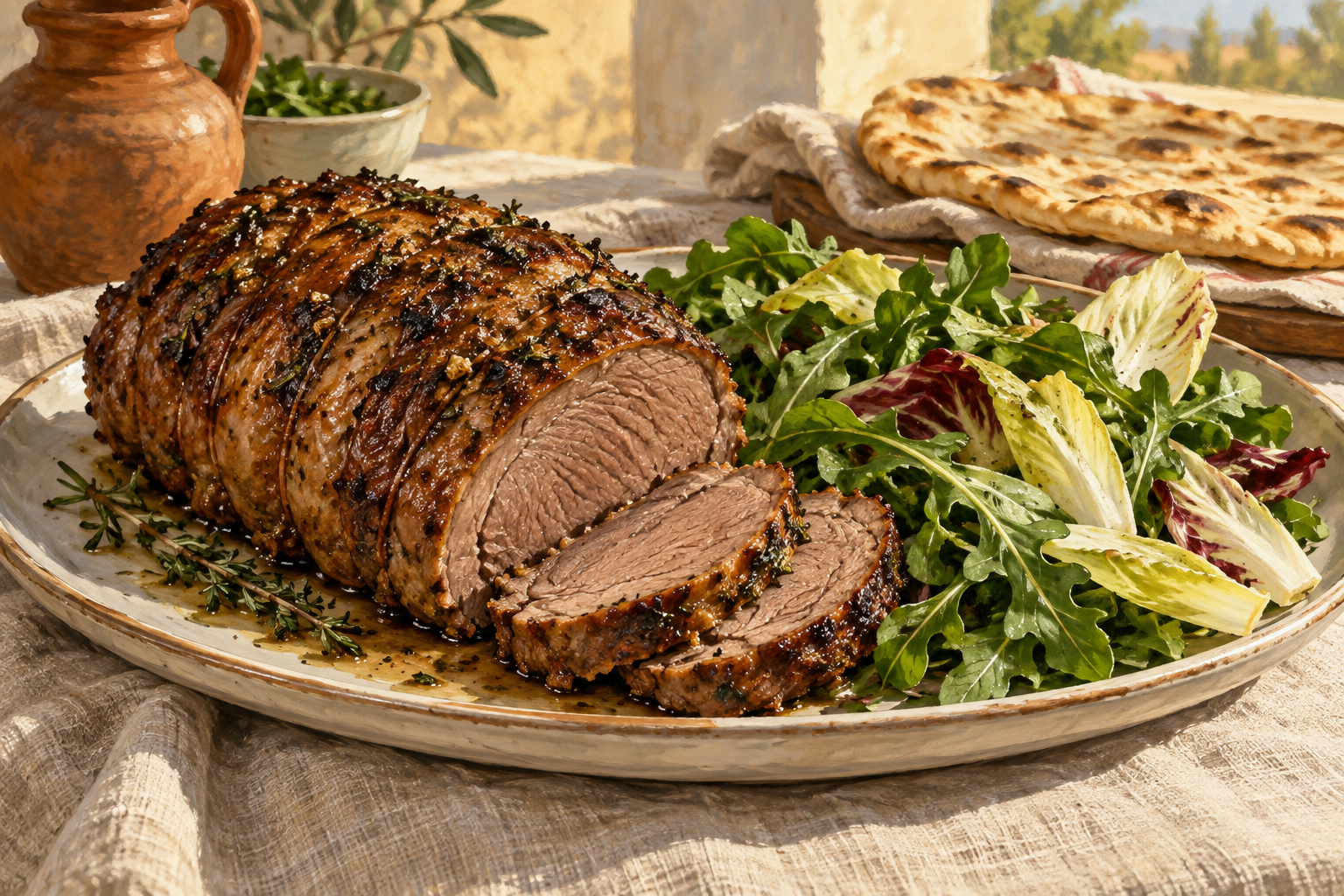
We use a boneless lamb shoulder rather than a whole animal. That choice is substantial: it changes the scale, cooking time and presentation. The roast is seasoned simply with salt and a little oil, and commercially grown endive or rocket supplies the bitter greens. The text does not identify our supermarket leaves in the detail needed to settle the original plant combination.
Dry oven heat creates a browned surface while the interior becomes fully cooked. We do not boil the meat first. Yet an electric or gas oven, a modern cut and a thermometer inevitably differ from the source’s setting. The recipe is best described as a food-history adaptation of a documented pairing and cooking idea, with no claim to satisfy religious requirements.
Bitterness as a deliberate part of a meal
Keep the greens separate until serving. Their crisp bitterness gives a contrast to rich meat, allowing the diner to notice a flavour that a long braise might conceal. Thin slices of roast also make a small amount easier to share. Plain commercially made unleavened bread can accompany the plate without requiring a second full recipe here.
Lamb shoulder varies in shape and fat, so use the stated time as a guide and check the thickest part for doneness. Resting the roast before slicing improves handling and gives the cook time to wash and dry the greens. The generated image shows a modern plate, not a depiction of an ancient ceremony. The sources anchor roast lamb and bitter herbs in specific textual traditions; portions, oven settings, leaf selection and serving arrangement remain openly contemporary choices.
Simple roast lamb with bitter greens
Serves 6 · Preparation 15 min · Cooking 110 min · 15 minutes resting
A modern adaptation for home cooking. Times are approximate.
Ingredients
- 1 kg boneless lamb shoulder, rolled and tied by butcher
- 1 tbsp olive oil
- 1 tsp salt
- 120 g commercial endive or rocket, washed and dried
- 6 small pieces commercial plain unleavened bread, optional accompaniment
Method
- Heat oven to 190°C/375°F. Rub lamb with oil and salt and place on a rack in a roasting dish.
- Roast 90–110 minutes, checking after 75 minutes. For a fully cooked modern roast, aim for 70–75°C/158–167°F in the thickest part.
- Rest 15 minutes before removing string and slicing.
- Serve with washed bitter greens and optional unleavened bread.
Substitutions and adjustments
- Boneless goat shoulder can replace lamb; cook until tender, allowing extra time if needed.
- Use commercially grown bitter salad leaves you know are edible.
Historical choices: Food-history adaptation of a roast-lamb and bitter-herb pairing. This modern cut and oven method do not claim to reproduce or fulfil an ancient ritual.
Kitchen note: Use commercially sourced meat. Check internal temperature, wash greens and refrigerate leftovers within 2 hours.
Sources and further reading
- Sefaria: Exodus 12:8. Primary translated meal pairing; not a measured household recipe.
- Sefaria: Mishnah Pesachim 7:1. Early rabbinic discussion of roasting technique, with ritual context.