ANCIENT MEALS · 017 / 100
Hebrew biblical textual tradition · Judah and the Babylonian exile · Sixth century BCE setting; final textual history is complex
Evidence: adapted surviving recipe. The historical evidence and modern cooking choices are distinguished below.
The loaf carries a warning
Ezekiel’s bread is memorable because its ingredients are listed together: several cereals and pulses enter one vessel. In Ezekiel 4 and its translation notes, the action belongs to a symbolic representation of siege, restricted food and exile. Its narrative setting is the sixth century BCE. The list is therefore part of a difficult historical and literary context, not an ancient advertisement for an especially virtuous loaf.
A second modern translation also presents the mixed ingredients, but neither supplies the proportions required for an everyday bread recipe. Translating ancient grain names can add another layer of uncertainty. Using modern wheat, barley, spelt and millet is an accessible interpretation of the list, not a botanical resolution of every term.
Turning a list into dough
Our loaf combines grain flours with cooked millet, lentils and white beans. Cooking the pulses first prevents raw beans from hiding inside bread and helps them mix into the dough. White beans are a modern choice within the broad bean category; this recipe does not require favas. Strong wheat flour supplies enough structure for the loaf to hold together despite its heavier additions.
Commercial yeast and a loaf tin make the method practical. Those details do not come from Ezekiel. The passage also describes unusual fuel within the symbolic action, but we use an ordinary modern oven. A historical account of a practice should not automatically become an instruction to reproduce it in a household kitchen.
A mixed loaf, carefully interpreted
The dough will feel heavier than a plain wheat dough. Add water gradually, because cooked pulses vary in moisture, and let the loaf cool completely before slicing. The goal is a firm, cooked crumb rather than a tall airy sandwich loaf. Small pieces of millet and lentil can remain visible, making the ingredient mixture easier to understand.
It makes a generous modern loaf and does not recreate the text’s limited daily ration or imply that such a ration was desirable. Serve slices with a normal varied meal. Cooking the ingredient list gives the reader a tangible entry into a powerful food passage while keeping literary setting, historical uncertainty and modern kitchen decisions distinct. The generated illustration depicts this adaptation only; its appearance is not evidence for the shape of Ezekiel’s bread.
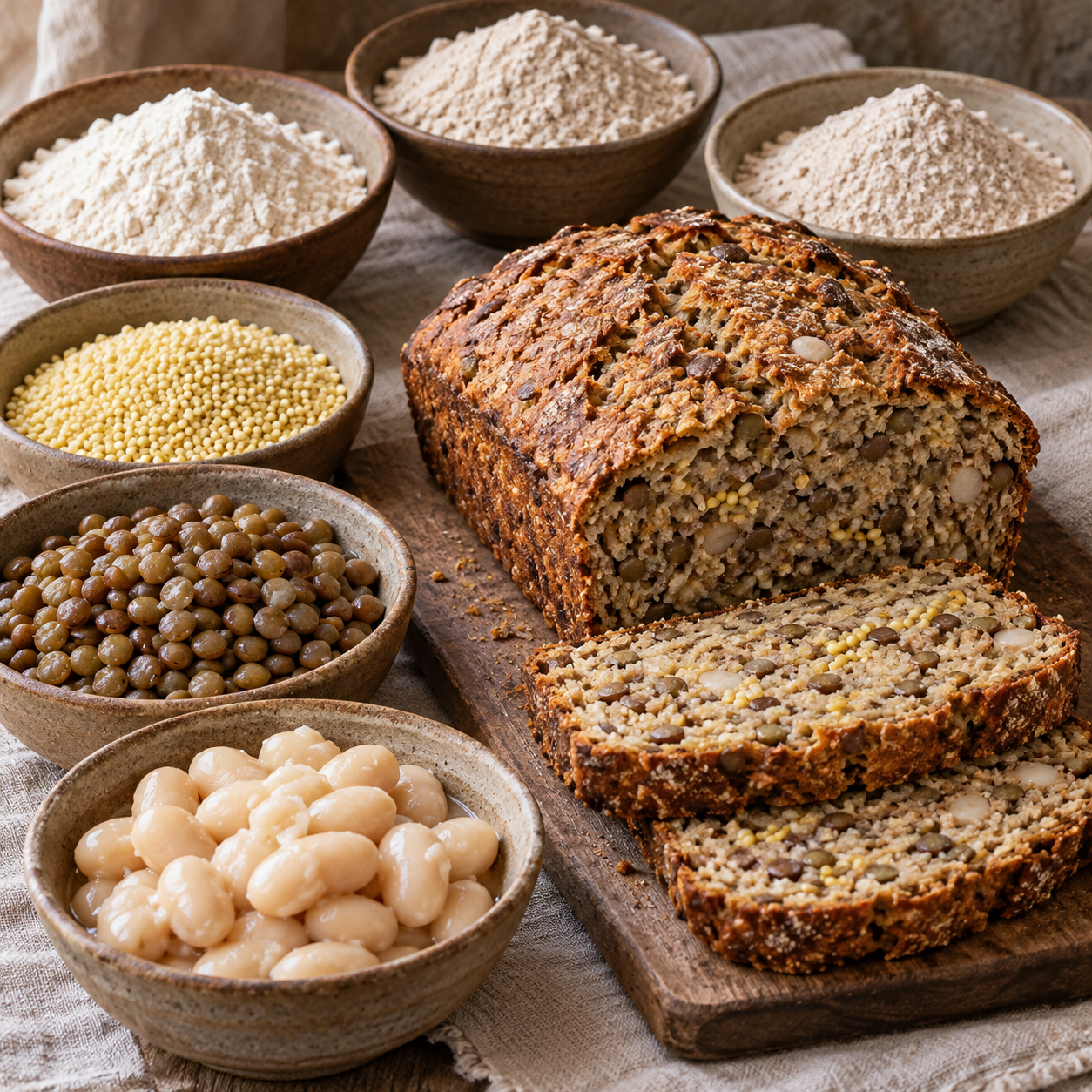
Mixed cereal and cooked-pulse loaf
Serves 10 · Preparation 30 min · Cooking 65 min · 60–90 minutes rising, 30 minutes final rest, at least 90 minutes cooling
A modern adaptation for home cooking. Times are approximate.
Ingredients
- 300 g strong bread flour
- 80 g barley flour
- 80 g spelt flour
- 50 g dry millet
- 100 g cooked lentils, well drained
- 100 g cooked canned white beans, drained and mashed
- 7 g commercial instant yeast
- 250–300 ml lukewarm water, plus millet cooking water
- 1 tsp salt
- 1 tbsp olive oil, for tin
Method
- Boil millet in 150 ml water, cover and simmer about 15 minutes until tender. Cool completely.
- Mix flours, yeast and salt. Add cooked millet, lentils, beans and 250 ml water. Knead 6–8 minutes, adding only enough extra water for soft dough.
- Cover and leave 60–90 minutes until visibly risen. Oil a 900 g loaf tin, shape dough into it and rest 30 minutes.
- Heat oven to 200°C/390°F. Bake 45–55 minutes, until fully cooked; centre should reach about 95°C/203°F.
- Cool completely, at least 90 minutes, before slicing.
Substitutions and adjustments
- Chickpeas may replace white beans as a modern pulse choice.
- Wholemeal wheat replaces spelt if necessary.
Historical choices: Adapted from Ezekiel’s grain-and-pulse list. Proportions, cooked legumes, white-bean choice, yeast and loaf tin are modern.
Kitchen note: Use fully cooked pulses; do not add raw dried beans to dough. Bake flour fully.
Sources and further reading
- USCCB: Ezekiel 4 with notes. Primary passage in translation and explanation of siege/scarcity symbolism.
- Bible Gateway: Ezekiel 4:9, NRSVUE. Independent modern translation of the grain-and-pulse ingredient list; no measures or loaf method.