ANCIENT MEALS · 016 / 100
Greek-language culinary papyrus · Greek-speaking eastern Mediterranean; papyrus provenance unknown · Approximately 200–500 CE; catalog dates vary between fragments
Evidence: historically informed adaptation. The historical evidence and modern cooking choices are distinguished below.
The dressing survives more clearly than the vegetable
One Heidelberg culinary-papyrus passage combines washed plant shoots with mustard, honey and a sauce. In Bilabel’s 1920 edition, the shoots are interpreted as coming from vines. That is a particular reading of a fragmentary source, not a licence to collect unidentified shoots or to declare the modern cabbage pictured here an ancient ingredient in the same instruction.
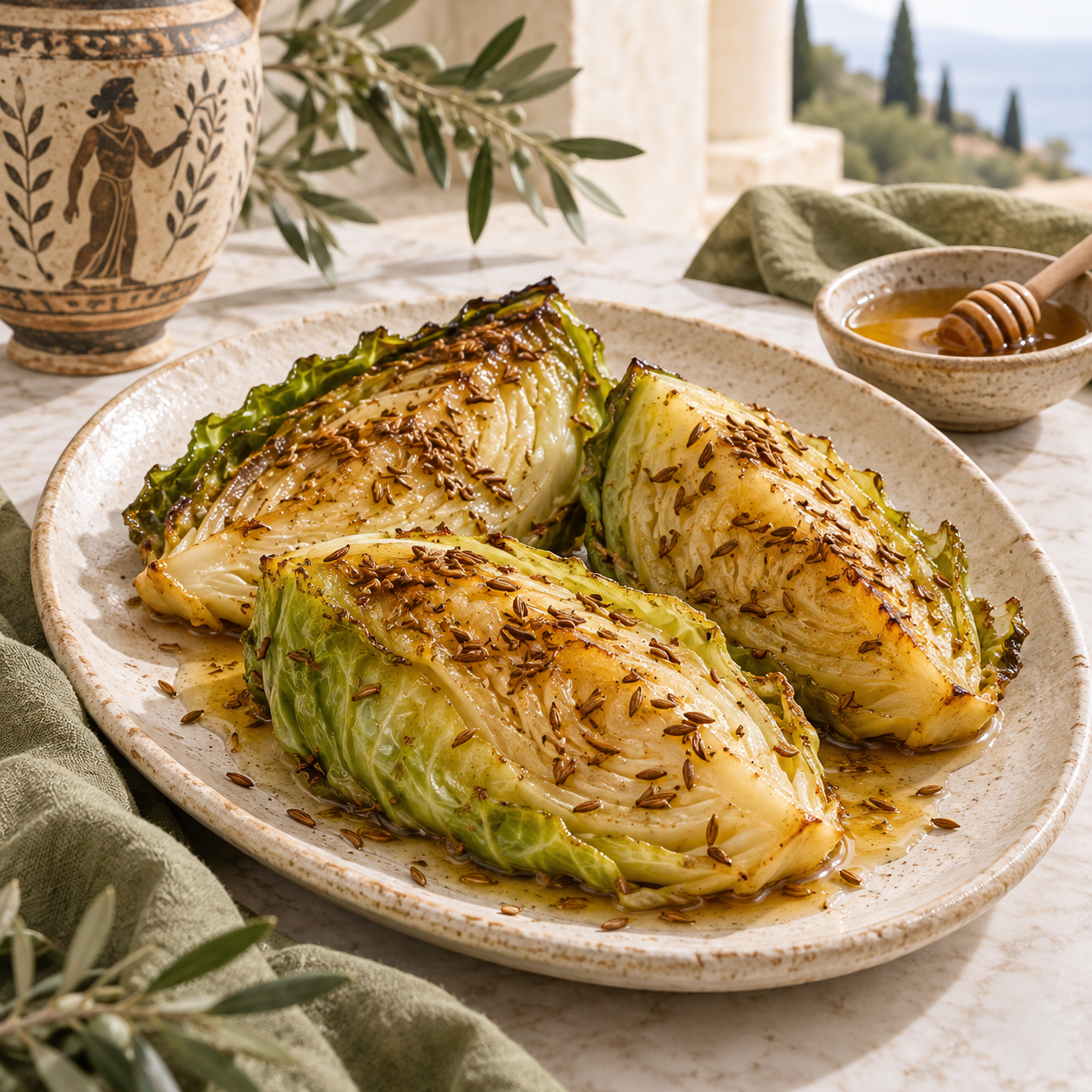
The Heidelberg catalogue records Greek-language cookbook fragments with unknown provenance and late antique dating ranges. We retain that uncertainty. The present recipe borrows the dressing idea while using thoroughly cooked commercial cabbage as an accessible modern substitute for the plant material described in the translation.
A substantial change, honestly named
Cabbage leaves and vine shoots are different foods. Their texture, flavour and cooking behaviour cannot be treated as interchangeable archaeological evidence. Calling the recipe “a papyrus dressing on modern cabbage” keeps the surviving flavour combination visible without presenting the whole plate as a recovered ancient dish. It is a historically informed adaptation, more distant from its source than the papyrus liver skewers in this collection.
Honey provides sweetness, mustard supplies pungency and wine vinegar balances the dressing. Commercial fish sauce is an optional modern way to give savoury depth; it is not asserted as the precise sauce meant by the damaged passage. Ground mustard makes the quantities easier to control, and a brief heating step brings the dressing together without turning the honey into a heavy glaze.
Let the vegetable keep its texture
Cut cabbage into small wedges with a little core attached. Steam or simmer until tender, then drain well before adding the dressing. If the cabbage is waterlogged, the sauce becomes thin and the contrast between sweet, sharp and savoury flavours fades. These are practical decisions in our modern method; the papyrus does not supply a cabbage-cooking timetable.
Begin with the lower vinegar amount and adjust after tasting. Serve warm as a side dish, keeping the wedges intact so their layers show. The generated illustration depicts this adapted cabbage plate and has no documentary authority. The historical lesson is unusually useful: preserving a recipe’s idea sometimes requires making a replacement, but the replacement should remain visible in the title, method and explanation. A specific ancient dressing can inspire dinner without turning a modern vegetable choice into a false fact.
Cooked cabbage with mustard and honey dressing
Serves 4 · Preparation 15 min · Cooking 20 min · None
A modern adaptation for home cooking. Times are approximate.
Ingredients
- 600 g commercial green cabbage, cut into small wedges
- 2 tbsp honey
- 1 tsp ground mustard
- 1–2 tbsp commercial wine vinegar
- 1 tbsp olive oil
- 1 tsp commercial fish sauce, optional modern interpretation
- 1 tbsp water
- ¼ tsp salt, if not using fish sauce
Method
- Steam cabbage wedges for 12–18 minutes, or simmer in water until tender; drain thoroughly.
- Whisk honey, mustard, 1 tbsp vinegar, oil and water in a small saucepan. Add optional fish sauce or salt.
- Warm gently 1 minute. Taste and add more vinegar if desired.
- Pour dressing over hot cabbage, toss carefully and serve warm.
Substitutions and adjustments
- Use commercial kale leaves instead of cabbage and shorten cooking as needed.
- Omit fish sauce and use salt for a vegetarian modern adaptation.
Historical choices: The papyrus passage is interpreted as dressed vine shoots. Cabbage is a clearly modern replacement, while honey–mustard retains the attested dressing idea.
Kitchen note: Use commercial edible cabbage; do not forage or substitute unidentified vine shoots. Contains mustard; fish sauce contains fish.
Sources and further reading
- Bilabel: Opsartytika und Verwandtes. Public-domain translation of shoot preparation with mustard and honey; plant reading and sauce details are uncertain.
- Heidelberg: G 1701 catalogue. Official dates, language and unknown provenance.