ANCIENT MEALS · 014 / 100
Greek-language culinary papyrus · Greek-speaking eastern Mediterranean; papyrus provenance unknown · Approximately 200–500 CE; catalog dates vary between fragments
Evidence: adapted surviving recipe. The historical evidence and modern cooking choices are distinguished below.
Enough words to light a grill
A brief instruction can preserve a remarkably clear idea: cut liver, combine it with oil and seasonings, put it on a spit and roast. Bilabel’s scholarly edition of the Heidelberg culinary papyrus includes a liver passage with coriander, thyme and vinegar. The text has uncertainties, but its basic cooking form is more definite than a list of food animals found in a rubbish deposit.
The Heidelberg catalogue identifies Greek cookbook fragments and records unknown provenance. Their catalogued date ranges fall between the third and fifth centuries CE. The recipe therefore belongs to a late antique Greek-language cooking tradition, with its exact geographical home left open.
A substitution should not disappear
Our version uses commercially sourced lamb liver, trimmed and cut into small even pieces. A cook could choose beef liver instead; the ancient passage does not specify the animal in the detail this modern recipe requires. We also omit a disputed juice term rather than build the dish around a speculative ingredient. Oil, coriander, thyme and vinegar retain the more secure flavour outline.
The marinade is kept brief and refrigerated. Even cubes help the pieces cook at similar speeds, and narrow spacing allows hot air to reach them. A grill pan or broiler is easier to control than an open hearth. Neither the measured marinade time nor our internal-temperature instruction is ancient; both belong to making the recipe usable in a modern kitchen.
Texture without a dangerous shortcut
Ancient recipe collections rarely give the food-safety endpoints now used for meat. That absence is not an invitation to leave liver raw in the centre. Cook it thoroughly, turning the skewers so all sides receive heat. The goal is a lightly browned exterior and fully cooked centre; an instant-read thermometer is more reliable than judging only by colour.
Serve two small skewers per person with cooked vegetables or bread. Liver’s pronounced flavour makes a little go a long way, and coriander seed provides contrast without needing a large spice mixture. Check doneness early and avoid letting it dry out after it reaches temperature. The historical connection is specific and modest: a surviving spit-roasting instruction supplies the dish’s structure, while the species, quantities, refrigeration and safe endpoint are stated as modern decisions. Its generated illustration depicts the finished adaptation, not a documented ancient serving arrangement.
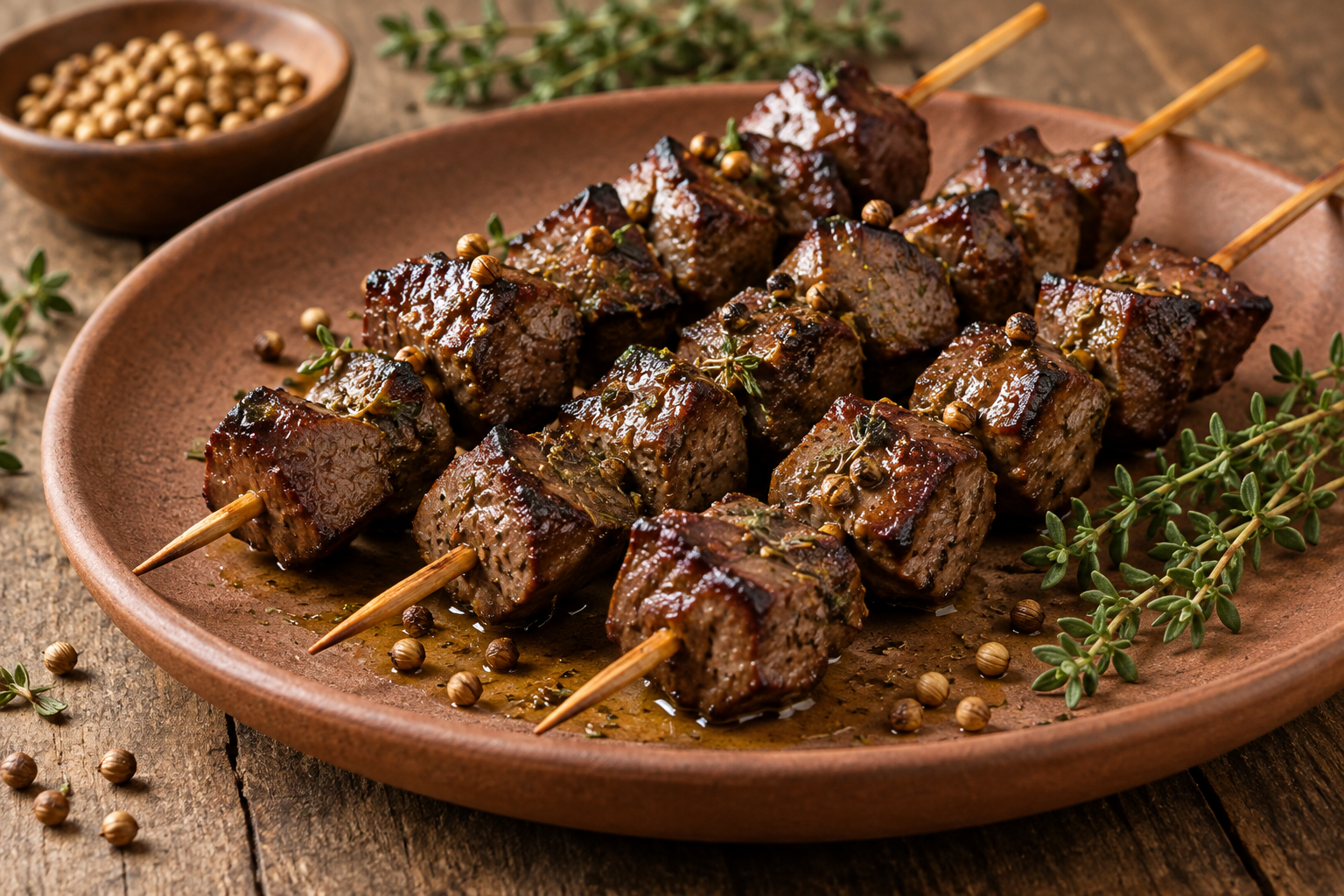
Lamb-liver skewers with coriander and thyme
Serves 4 · Preparation 20 min · Cooking 12 min · 20 minutes refrigerated marinating
A modern adaptation for home cooking. Times are approximate.
Ingredients
- 450 g commercial lamb liver, trimmed and cut in 2 cm pieces
- 2 tbsp olive oil
- 1 tbsp wine vinegar
- 1 tsp coriander seed, crushed
- 1 tsp dried thyme
- ½ tsp salt
- 8 small wooden skewers, soaked as manufacturer directs
Method
- Toss liver with oil, vinegar, coriander, thyme and salt in a non-reactive bowl. Cover and refrigerate 20 minutes.
- Heat a grill pan to medium-high or heat broiler. Thread liver onto skewers with small gaps between pieces.
- Cook 8–12 minutes, turning frequently, until the centre reaches 71°C/160°F; timing depends on equipment and size.
- Discard any uncooked marinade. Serve immediately while hot.
Substitutions and adjustments
- Beef liver can replace lamb liver; trim tough membranes and cut evenly.
- Commercial poultry liver requires 74°C/165°F instead.
Historical choices: Adapted surviving liver-spit instruction. Species and amounts are modern; uncertain juice term is omitted.
Kitchen note: Cook lamb or beef liver to 71°C/160°F, or poultry liver to 74°C/165°F. Keep raw liver refrigerated and separate from ready-to-eat food.
Sources and further reading
- Bilabel: Opsartytika und Verwandtes. Public-domain scholarly translation of liver, seasonings and spit-roasting; uncertain terms visible.
- Heidelberg: G 1701 catalogue. Language, date ranges and unknown provenance.