ANCIENT MEALS · 013 / 100
New Kingdom, Dynasty 18 · Thebes, Upper Egypt · Approximately 1350 BCE
Evidence: historically informed adaptation. The historical evidence and modern cooking choices are distinguished below.
The birds arrive before the meal
The goose in this story first appears alive, in a noisy-looking crowd. The British Museum’s painting from Nebamun’s tomb chapel shows geese and a basket of eggs being presented to scribes. It dates to around 1350 BCE at Thebes. Rather than depicting a recipe, the scene draws attention to produce, accounting and an estate’s abundance.
The museum’s gallery explanation calls the paintings an idealised vision of life. That distinction is essential. They show how a wealthy official wanted his world remembered, not a neutral survey of every Egyptian household’s diet. We can use the geese as evidence for a valued food animal without assuming that everyone regularly enjoyed roast goose.
What we add in a modern kitchen
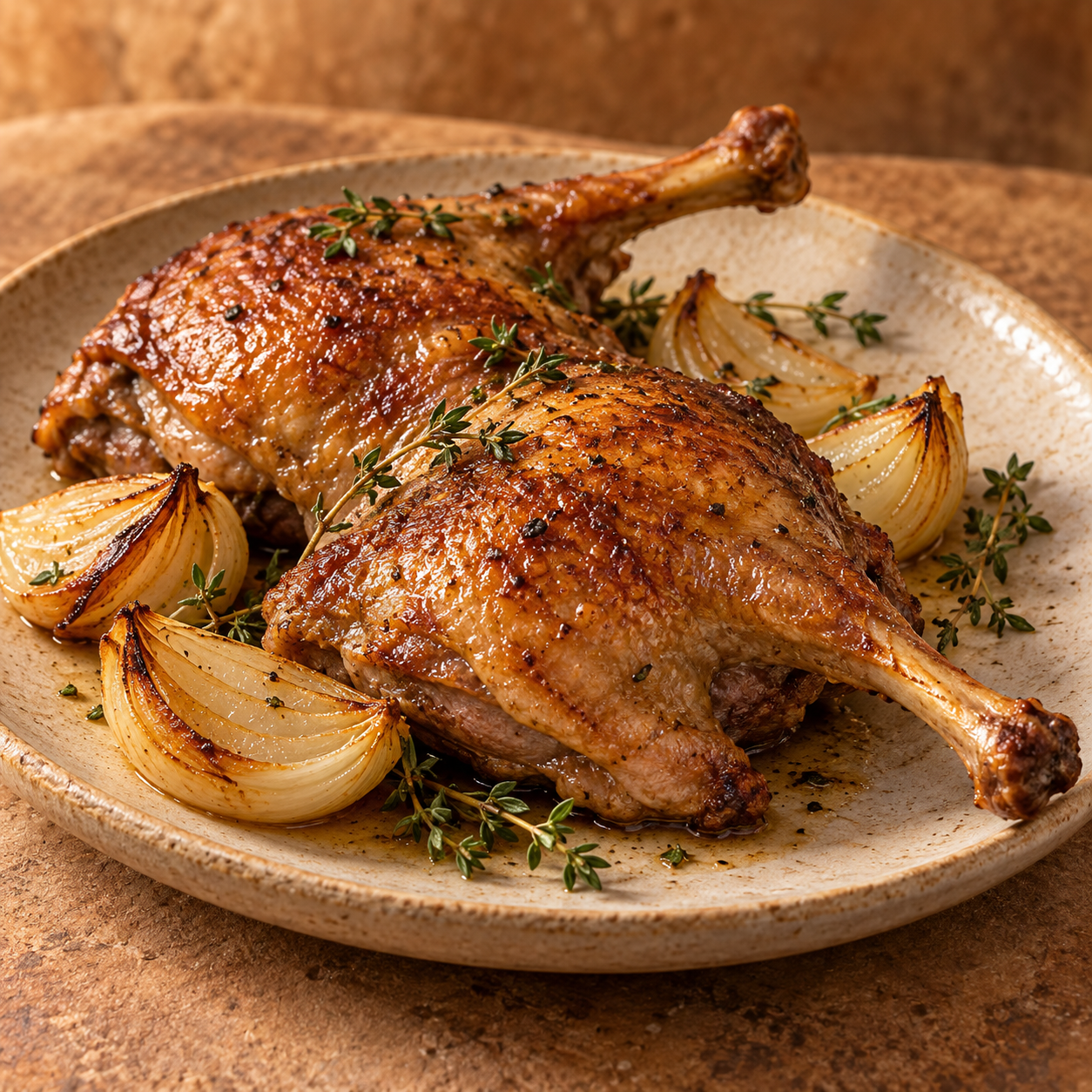
The recipe below roasts goose legs with onion and a small amount of thyme. The painting does not give those seasonings or a roasting temperature. They are modern culinary choices designed to produce a manageable meal from the historically anchored animal. Goose legs are easier to buy and cook in a small oven than a whole large bird, and their fat can moisten the onion as it cooks.
We begin with covered cooking so the meat has time to soften, then uncover the dish to brown the skin. That is our oven method, not a claim about a specific ancient hearth. The cook should drain excess fat carefully rather than leave the bird submerged. Keeping the flavouring modest makes it easier to notice the difference between the rich meat, crisp skin and sweet onion.
Food and its administration
A roast can seem like a single person’s achievement, but the goose scene invites a wider view. Animals had to be raised, moved and counted before a kitchen could use them. The scribe’s presence makes that system unusually visible. Our article does not invent the goose’s final destination or claim that the pictured birds were all served at one banquet.
The leg’s size will affect timing; tenderness and a safe internal temperature matter more than an exact minute count. Serve with plain cooked grain or vegetables, and use a modest portion because goose is rich. The generated image shows a modern roast inspired by the painting’s food evidence. It is a practical way into the story of a counted animal, while the recipe’s sauce, equipment and serving decisions remain clearly our own.
Roast goose legs with onion
Serves 4 · Preparation 15 min · Cooking 130 min · 10 minutes resting
A modern adaptation for home cooking. Times are approximate.
Ingredients
- 2 large (about 1.2 kg total) commercial goose legs
- 3 onions, cut in wedges
- 150 ml water
- ½ tsp dried thyme, optional modern seasoning
- ¾ tsp salt
Method
- Heat oven to 170°C/340°F. Put onion wedges and water in a roasting dish. Pat goose legs dry and season with salt and optional thyme.
- Place legs skin-side up over onions. Cover tightly and roast 90 minutes.
- Uncover, carefully spoon off excess fat, and raise oven to 200°C/390°F. Roast 25–40 minutes more until skin browns and meat is tender.
- Check the thickest meat away from bone reaches at least 74°C/165°F. Rest 10 minutes, then remove from bone and divide into four portions.
Substitutions and adjustments
- Duck legs replace goose; start checking tenderness after 75 minutes.
Historical choices: Inspired by specific Egyptian goose imagery. Leg selection, onion, thyme and the two-stage oven method are modern adaptations.
Kitchen note: Use commercially sourced poultry and cook to at least 74°C/165°F. Handle hot fat carefully.
Sources and further reading
- British Museum: Nebamun’s geese. Specific scene, date, location, geese, eggs and scribes; no recipe.
- British Museum: Egyptian life and death. Explains elite, idealised context and representational limits.