ANCIENT MEALS · 011 / 100
Greek-language culinary papyrus · Greek-speaking eastern Mediterranean; papyrus provenance unknown · Approximately 200–500 CE; catalog dates vary between fragments
Evidence: adapted surviving recipe. The historical evidence and modern cooking choices are distinguished below.
The instruction ends before dinner does
A papyrus recipe tells the cook to work lentils into bird broth, with aromatic seasonings, then breaks off. That incomplete ending is a useful place to begin. The Heidelberg catalogue for G 1701 identifies Greek-language cookbook fragments, with dating ranges spanning the third to fifth centuries CE. It lists their provenance as unknown, so their original kitchen should not be placed confidently in a particular Egyptian city.
RAWI’s historical recipe presentation provides the lentil instruction and credits modern reconstruction work by Harald Froschauer and Cornelia Römer. Anise, cumin, dried dill and onion are the flavour clues that make this more specific than a generic ancient lentil soup. The measurements below are new, and the resulting consistency is our choice.
Why cook the lentils first?
Separately cooking the lentils gives the adaptation a useful sequence: first soften the pulse, then combine it with seasoned liquid. That makes it possible to adjust texture and acidity without guessing whether a dry lentil will become tender in a heavily flavoured mixture. Red lentils are selected because they break down readily; the ancient instruction does not require our supermarket variety.
The brief recipe also creates a small interpretive problem. How thick was the finished food? A translation using “purée” can invite an expectation of smoothness that an ancient cook may not have shared. We offer a spoonable mash, with the option of adding broth if it becomes too dense. Anise and dill should remain apparent, but the stated quantities are deliberately restrained so one seasoning does not drown the others.
A recipe is more than its missing words
Use commercial poultry stock and wine, or water in place of wine. These ingredients make an accessible modern kitchen method; they do not copy an ancient stock recipe or establish its precise flavour. Grating onion helps it soften quickly into the final mixture. The cook can use a masher for a coarse finish or a blender for a smoother one, noting that this is another contemporary decision.
Keep extra hot broth nearby and judge the finished texture after a few minutes off the heat, when lentils often thicken further. Serve warm with plain bread or vegetables. The surviving fragment still matters despite its broken edge: it offers a distinctive aromatic combination and a preparation sequence. Our task is to turn those clues into a usable meal while preserving the missing ending as a real limit of the evidence.
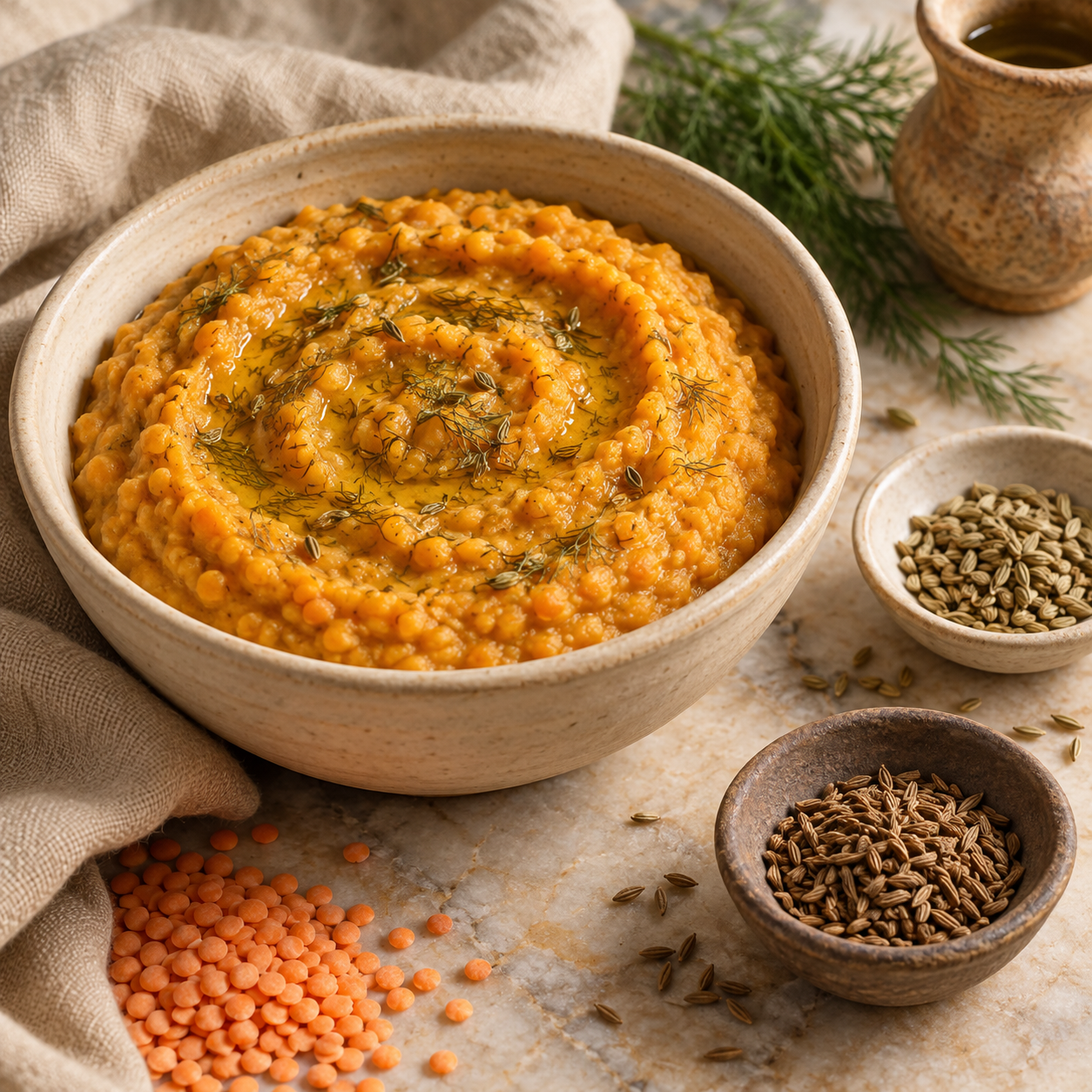
Lentil purée with anise, cumin and dill
Serves 4 · Preparation 15 min · Cooking 30 min · None
A modern adaptation for home cooking. Times are approximate.
Ingredients
- 250 g dry red lentils, rinsed
- 750 ml water, for cooking
- 400 ml commercial poultry stock
- 100 ml commercial white wine or water
- 1 small onion, grated
- ½ tsp anise seed, crushed
- ¾ tsp ground cumin
- 1 tsp dried dill
- ¼ tsp salt, or to taste
Method
- Boil lentils in 750 ml water, then simmer 15–20 minutes until fully soft. Drain excess water.
- Put stock, wine, onion, anise and cumin in a second pan; boil, then simmer 8 minutes.
- Mash lentils into the seasoned stock. Add dried dill and simmer gently 3–5 minutes, stirring.
- Add hot water or stock if too thick. Season and serve warm.
Substitutions and adjustments
- Vegetable stock is a modern meat-free alternative.
- Water replaces wine.
Historical choices: Adapted from a fragmentary Greek-language lentil instruction. Red-lentil choice, proportions and final texture are modern.
Kitchen note: Use clean equipment and commercial food-safe ingredients. Refrigerate leftovers promptly and use within 3 days.
Sources and further reading
- Heidelberg: G 1701 catalogue. Official material, language, uncertain provenance and date ranges.
- RAWI: historical lentil recipe. Published translation and credited modern reconstruction; no ancient quantities.