ANCIENT MEALS · 010 / 100
New Kingdom, Dynasty 18 · Thebes, Upper Egypt · Approximately 1479–1396 BCE
Evidence: archaeological reconstruction. The historical evidence and modern cooking choices are distinguished below.
The kitchen is on the wall
A food scene can preserve work that a finished loaf conceals. In the tomb of Rekhmire at Thebes, people prepare cakes through a series of actions. The Metropolitan Museum’s facsimile records this New Kingdom scene, dated approximately 1479–1396 BCE. It is a copied image of an ancient wall painting, not a modern photograph of people cooking or a written recipe with measurements.
An Egyptological presentation from RAWI, with translated snippets and commentary, connects the scene with tigernuts, dates, honey and fat. It also explains uncertainty over shaping and cooking. That combination of visual action and short text is an unusually vivid source, but it does not justify calling the following oven method the single authentic Egyptian recipe.
A tuber with a misleading name
Tigernuts are tubers, although the name suggests a tree nut. Commercial tigernut flour makes them accessible without pounding hard dried tubers for a long time. This adaptation combines that flour with wheat flour for structure, chopped dates for sweetness and honey for flavour. Butter is a convenient modern fat. The grain addition and all quantities are our own kitchen choices.
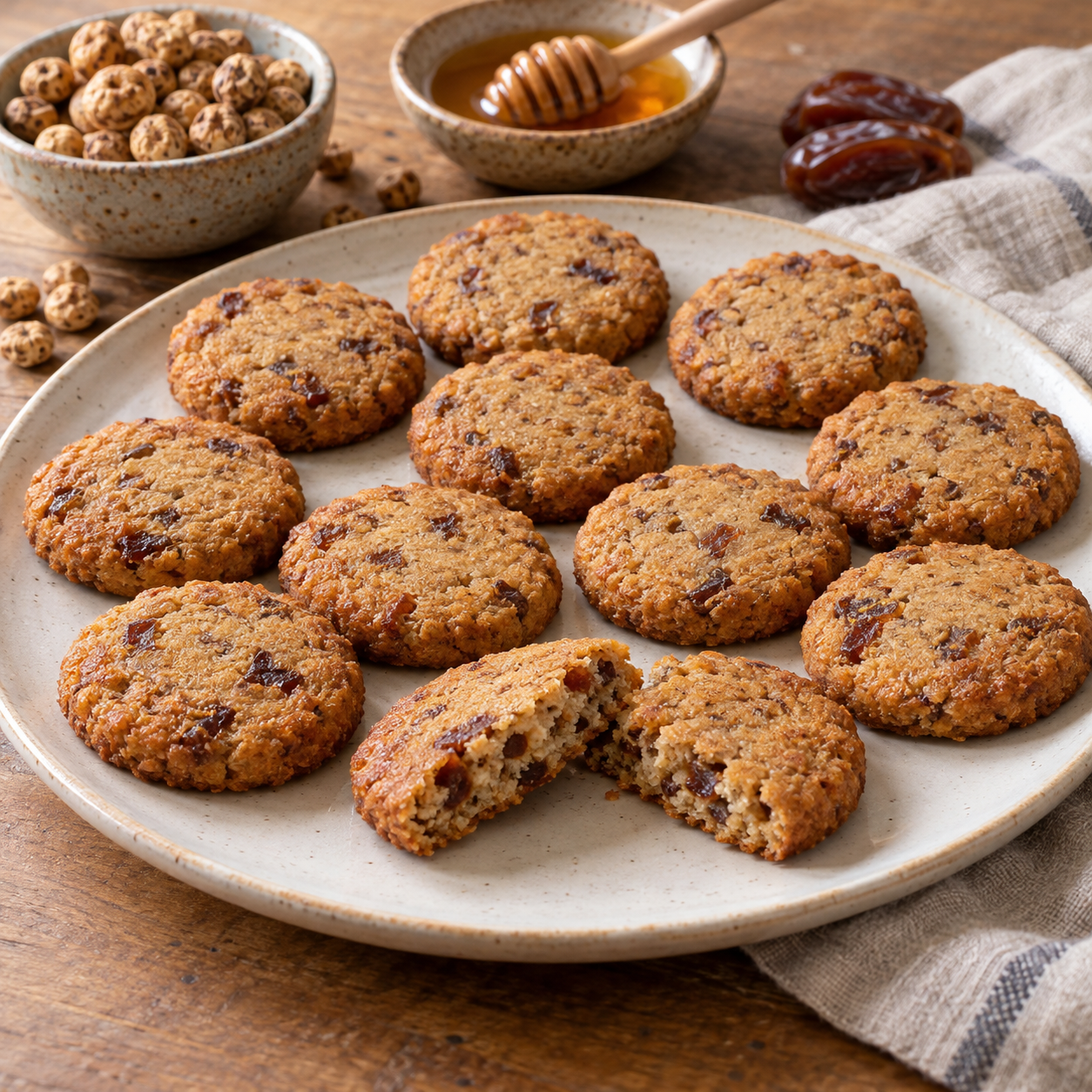
The most substantial change is baking. Some interpretations of the scene favour frying, but we bake small cakes in a controlled modern oven. The caption and recipe state this difference. A browned baked surface cannot tell us how the ancient cakes were cooked, and it would be misleading to hide that change behind an attractive image. Small compact shapes are chosen because they are easier to handle than elaborate cones.
What survives beyond the ingredients
The scene also draws attention to labour: sorting, pounding, mixing and forming. These are different tasks, and making a batch still involves several stages even when flour comes from a packet. The modern recipe offers a way to notice the transformation from dry ingredient to shaped food while avoiding an invented claim that we know the bakers’ exact proportions or preferences.
Let the cakes cool before lifting them so the date-rich dough has time to settle. They should be firm at the edges and cooked throughout. Their texture may vary with the fineness of tigernut flour. Serve a small cake beside a few tubers to make the ingredient visible. The resulting plate is an honest reconstruction exercise: a specific ancient scene supplies the starting point, while binder, shape and baking procedure remain explicitly modern.
Baked tigernut, date and honey cakes
Serves 6 · Preparation 20 min · Cooking 20 min · 10 minutes resting and 15 minutes cooling
A modern adaptation for home cooking. Times are approximate.
Ingredients
- 120 g commercial food-grade tigernut flour
- 80 g plain wheat flour
- 80 g soft pitted dates, finely chopped
- 60 g honey
- 40 g pasteurized butter, melted
- 70 ml water
- 1 pinch salt
Method
- Heat oven to 180°C/350°F and line a tray. Check chopped dates for pits.
- Mix tigernut flour, wheat flour and salt. Stir in dates, honey, melted butter and water.
- Rest mixture 10 minutes. If crumbly, add 1 tsp water at a time; it should hold when squeezed.
- Shape 12 compact small cakes, about 1 cm thick, using clean damp hands.
- Bake 18–22 minutes until edges are firm and lightly browned. Cool on the tray 15 minutes before moving.
Substitutions and adjustments
- Use spelt for wheat flour.
- If tigernut flour is unavailable, ground almonds make a modern substitute but lose the central historical ingredient.
Historical choices: Inspired by the Rekhmire cake-making scene. Baking replaces debated frying methods; flour blend and measurements are modern.
Kitchen note: Contains wheat and dairy. Cook flour fully and check dates for pits.
Sources and further reading
- Met: Preparing and Cooking Cakes, Rekhmire. Specific scene, date and provenance.
- RAWI: Rekhmire cake-making evidence. Egyptological interpretation and explicit uncertainty about cooking and shape.