Pacific Northwest · Nez Perce berry context; modern dairy dessert
Food history and kitchen connections
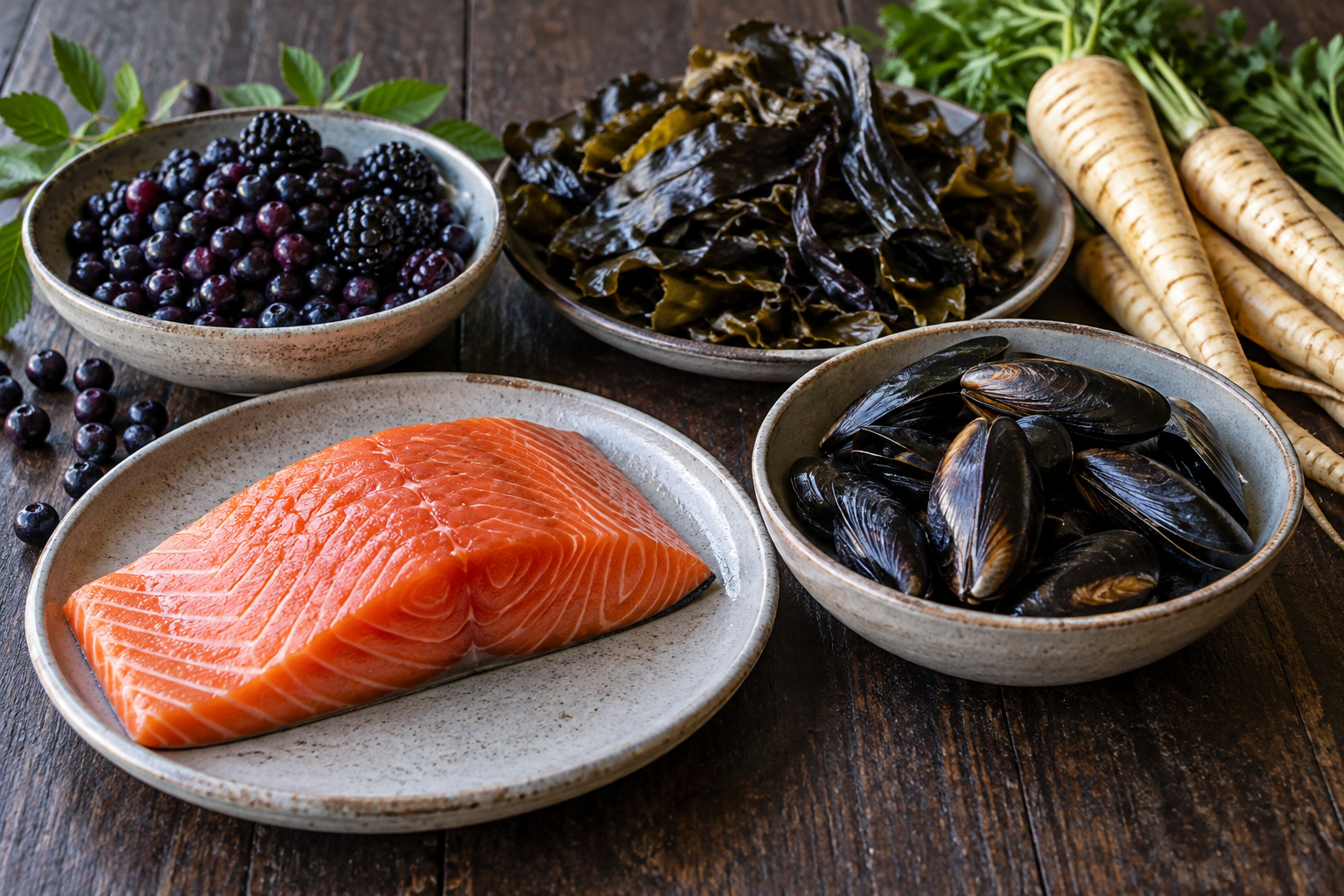
Nez Perce National Historical Park identifies huckleberries among traditional regional fruits. The source names a particular berry species rather than treating every purple berry as identical. This recipe offers purchased huckleberries when available and cultivated blueberries as an explicit, accessible substitute; it does not require gathering plants.
The layered yogurt cup is entirely contemporary. A cooked berry topping can be made ahead, cooled safely, and added just before serving so the yogurt remains distinct. Toasted oats supply a dry contrast without turning the whole cup into a granola dessert. Keep the portions small and the berry flavor clear.
Modern adaptation: Yogurt, rolled oats, measured sugar, and a refrigerated layered presentation are modern choices. Allow time for the cooked fruit to cool before assembling; the recipe is not a historical dairy dish. It is not presented as a recovered ancient recipe or as endorsed by a Native nation.
Cook it today
Yield: 4 small dessert cups · Prep 10 min · Cook 10 min (approximate)
Ingredients
- 250 g purchased food-grade huckleberries or cultivated blueberries (about 2 cups)
- 45 ml water (3 tablespoons)
- 15 g sugar (1 tablespoon), optional
- 400 g plain pasteurized yogurt (about 1⅔ cups)
- 30 g rolled oats (⅓ cup)
- 15 g hulled sunflower seeds (1½ tablespoons)
Method
- Put the berries and water in a small saucepan. Bring to a simmer and cook for 6–8 minutes, pressing some fruit gently with a spoon. Taste a cooled drop before adding optional sugar. Leave a few whole berries for texture.
- Transfer the compote to a shallow clean container and cool promptly. Refrigerate until completely chilled before layering with yogurt. This cooling period is additional to the hands-on and cooking times and can be done the day before.
- Toast the oats and seeds in a dry skillet over medium-low heat for 3–4 minutes, stirring often. Tip onto a plate immediately and cool completely. They should smell toasted and look lightly golden, not dark brown.
- Divide half the yogurt among four small glasses. Add a spoonful of chilled compote, then the remaining yogurt and fruit. Sprinkle the dry topping over the cups just before serving so it stays crisp. Keep all assembled cups refrigerated until needed.
Substitutions
Cultivated blueberries change the berry species but make the recipe widely practical; name the resulting cups accordingly. A suitable plain plant-based yogurt can replace dairy. Check its sweetness and allergen label before adding sugar or seeds.
Serving
Serve cold with a spoon. The fruit is the main flavor, so avoid heavily sweetened yogurt that conceals it. These cups can follow a fish-and-vegetable meal, with the dairy openly identified as part of the modern adaptation.
Storage
Refrigerate compote within 2 hours and use within 3 days. Assemble cups the day they will be eaten and keep at 4°C/40°F or colder, following the yogurt’s date. Store toasted topping separately and add at serving.
Sources and evidence notes
- Plants — Nez Perce National Historical Park: Public historical account identifies regional berry species; modern cultivated substitutes are distinguished.
- Reviving Traditional Coast Salish Food Knowledge — Burke Museum: Public museum exhibit draws on archaeology and community knowledge; it does not establish these modern recipes or grocery species.
These original modern recipes are inspired by documented ingredients and food traditions. They are not recovered ancient recipes or claims of tribal endorsement. Sources support the historical context; quantities, combinations, substitutions and appliance methods are modern.