Pacific Northwest · Coastal shellfish history; simple modern steaming
Food history and kitchen connections
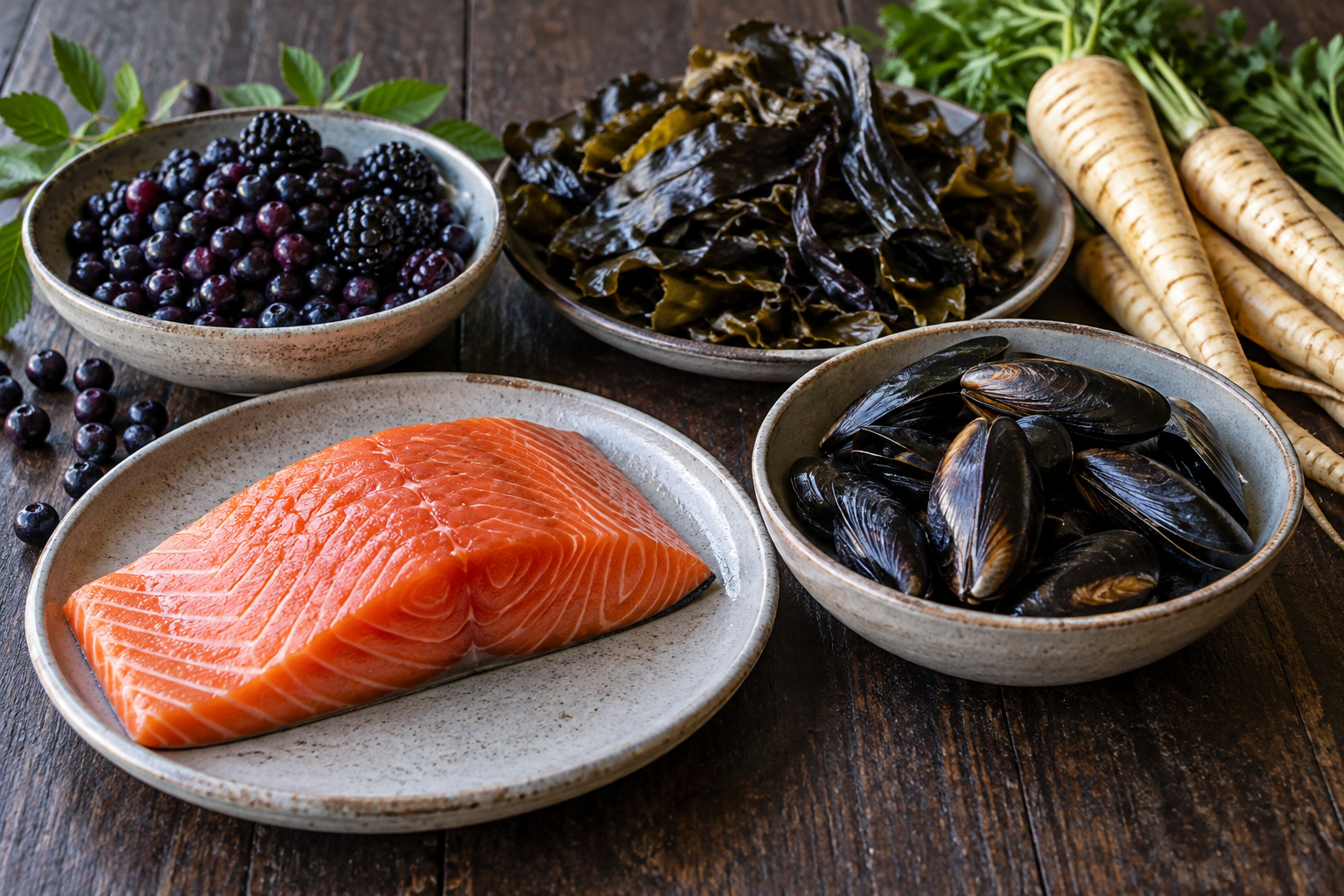
A public Coast Salish food list compiled from archaeological and community sources includes mussels among many marine foods. The Burke Museum’s account emphasizes that these food systems remain living traditions. This particular covered-pot method is an independent modern preparation, not an ancient recipe assigned to a coastal nation.
Commercial shellfish sourcing matters more than an elaborate sauce. Use a small amount of liquid, because mussels release juice as they open. A wide pot allows more even steaming, and a tight lid keeps the heat where it is needed. Have bowls ready so the finished shellfish can be eaten promptly.
Modern adaptation: Use commercially supplied live mussels from a reputable seller, with package handling advice. Onion, oil, lemon, and the measured broth are contemporary choices; no beach harvesting is required. It is not presented as a recovered ancient recipe or as endorsed by a Native nation.
Cook it today
Yield: 4 starter portions or 2 main portions · Prep 15 min · Cook 15 min (approximate)
Ingredients
- 1 kg live commercial mussels in shells
- 120 g onion, thinly sliced (1 medium)
- 15 ml neutral oil (1 tablespoon)
- 200 ml water (¾ cup plus 1 tablespoon)
- 15 ml lemon juice (1 tablespoon), optional
- 15 g chopped parsley, optional
- No added salt initially; the mussels supply briny liquid
Method
- Keep mussels refrigerated until shortly before cooking and follow the seller’s storage instructions. Scrub under cold running water and remove beards. Discard cracked shells and mussels that remain open when tapped. Do not leave live shellfish sitting in fresh water.
- Warm the oil in a large lidded pot. Cook onion over medium heat for 5–6 minutes until soft. Add the measured water and bring to a brisk simmer before adding the mussels.
- Add the mussels, cover immediately, and steam for about 5–8 minutes, shaking the covered pot carefully once or twice. Check that the shells have opened and the meat looks opaque and cooked; keep steaming briefly if necessary.
- Discard any mussels that remain closed after cooking. Lift opened cooked mussels into warmed bowls. Let the broth settle briefly, then spoon it over without pouring in any grit collected at the bottom.
- Add optional lemon and parsley after tasting; extra salt is usually unnecessary. Serve immediately. If cooking a double quantity, use two pots rather than packing one so tightly that the shellfish heat unevenly.
Substitutions
Use commercially frozen fully cooked mussels only by following their own package heating instructions; they do not use the live-shell checking method. If shellfish is unsuitable for a diner, choose a separate fish or vegetable recipe rather than attempting an allergy-based substitution in the same pot.
Serving
Offer bread for the broth and empty bowls for shells. For a main meal add a cooked vegetable and a substantial side. The simple presentation is a present-day choice, not evidence that a recipe is historically exact.
Storage
Refrigerate leftover cooked meat and broth in shallow containers within 2 hours and use within 1 day at 4°C/40°F or colder. Remove shells for storage and reheat to 74°C/165°F. Never assume cooking makes contaminated harvested shellfish safe.
Sources and evidence notes
- Traditional Coast Salish Foods — Burke Museum: Museum food list drawing on archaeology and Northwest Indian College community knowledge. Supports regional ingredients, not this modern formula or identical grocery species.
- Reviving Traditional Coast Salish Food Knowledge — Burke Museum: Public museum exhibit draws on archaeology and community knowledge; it does not establish these modern recipes or grocery species.
- Safe Minimum Internal Temperatures — FoodSafety.gov: Current modern food-safety endpoints, separate from historical practice.
These original modern recipes are inspired by documented ingredients and food traditions. They are not recovered ancient recipes or claims of tribal endorsement. Sources support the historical context; quantities, combinations, substitutions and appliance methods are modern.