Pacific Northwest · Coast Salish shellfish context; modern chowder
Food history and kitchen connections
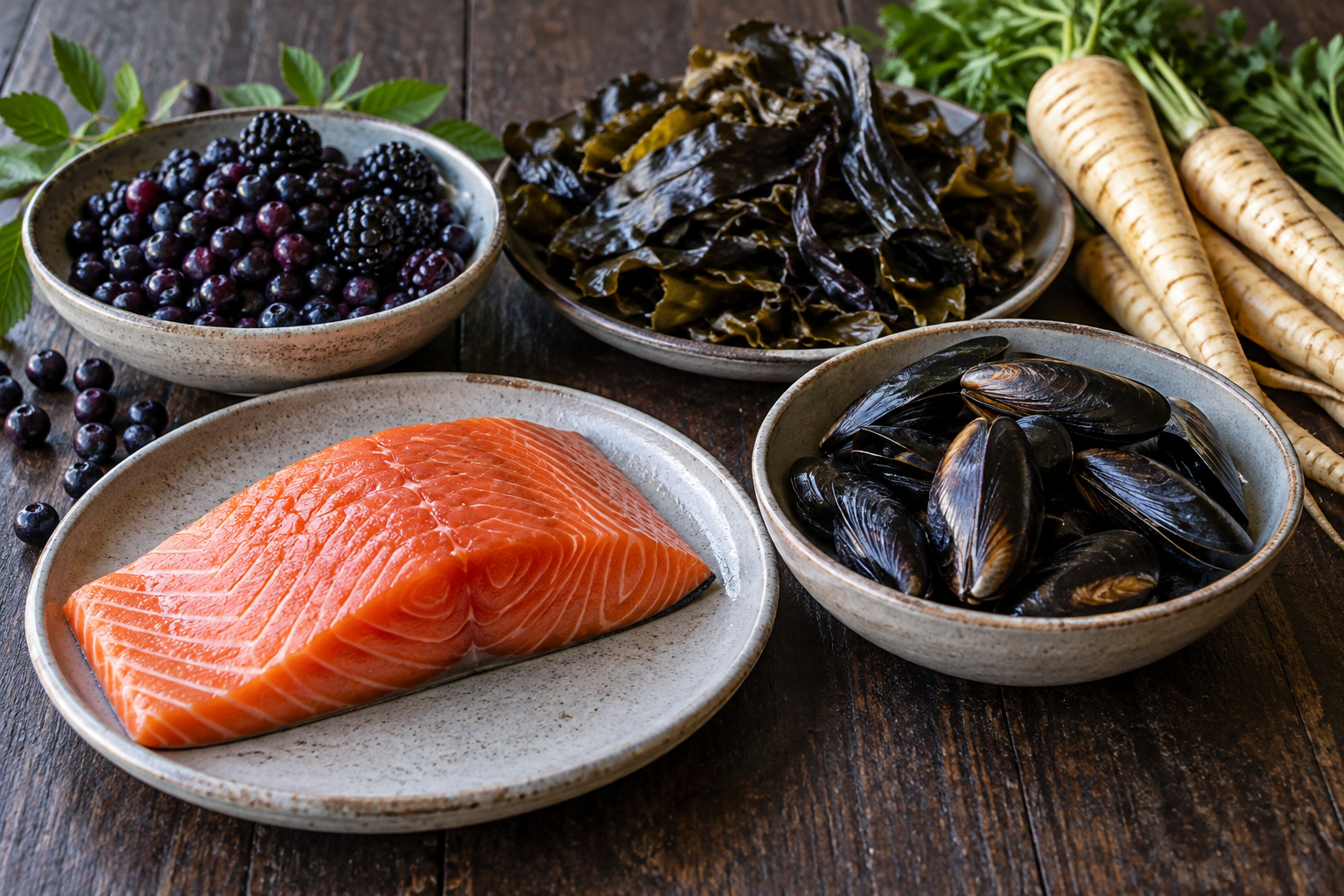
The Swinomish Indian Tribal Community describes shellfish access as part of cultural identity and food security. The Burke Museum likewise presents shellfish within a diverse Coast Salish food history. Those sources establish the significance of an ingredient, not this dairy-and-potato chowder or a universal coastal recipe.
Canned cooked clams make a straightforward home version possible without gathering shellfish. Their liquid adds flavor but can also be salty, so measure it and dilute with water. Add the clams near the end: extended boiling can make already-cooked shellfish unnecessarily tough.
Modern adaptation: Canned clams, potato, milk, onion, and this creamy soup format are modern choices. The recipe is independent and does not reproduce a tribal feast or historical chowder. It is not presented as a recovered ancient recipe or as endorsed by a Native nation.
Cook it today
Yield: 4 bowls · Prep 12 min · Cook 25 min (approximate)
Ingredients
- 300 g drained canned cooked clam meat, reserving liquid
- 400 g peeled potatoes, cut into 1.5 cm cubes
- 120 g onion, finely chopped (1 medium)
- 20 ml neutral oil (4 teaspoons)
- 600 ml water plus reserved clam liquid combined (2½ cups)
- 300 ml milk (1¼ cups)
- 15 g plain wheat flour (2 tablespoons)
- 1–2 g salt (a small pinch), only after tasting
- 15 g chopped parsley, optional
Method
- Drain the clams into a jug. Check the label for any shell fragments or handling directions. Add water to the clam liquid to make 600 ml total. If the liquid tastes very salty, use less of it and more water.
- Warm the oil in a saucepan over medium-low heat. Cook onion for 6 minutes until soft. Add the potatoes and measured liquid, bring to a gentle simmer, and cook for 12–15 minutes until the potato cubes are tender.
- Whisk the flour with 60 ml of the cold milk until smooth, then whisk in the remaining milk. Stir this into the simmering potato mixture. Cook gently for 4–5 minutes, stirring around the base until the broth thickens lightly and the flour is cooked.
- Fold in the clams and heat gently for 2–3 minutes without prolonged hard boiling. As a soup using cooked shellfish, bring the center to 74°C/165°F. Taste before adding salt. Thin with water if necessary and add optional parsley after removing from the heat.
Substitutions
Use a suitable unsweetened plant milk for a dairy-free version, understanding the flavor and thickness change. This recipe assumes commercially canned cooked clams. Do not replace them with beach-collected shellfish or raw clam meat without a separate safe cooking method.
Serving
Serve hot with plain bread. The soup should flow around the potato pieces rather than resemble a thick paste. A smaller bowl works as a starter before a vegetable meal; a large bowl is a substantial lunch.
Storage
Cool promptly in shallow containers and refrigerate within 2 hours at 4°C/40°F or colder. Use within 2 days, or sooner if the clam label requires. Reheat, stirring, to 74°C/165°F; avoid repeated reheating.
Sources and evidence notes
- Climate Change — Swinomish Indian Tribal Community: Tribal source on shellfish food security and habitat; no shellfish gathering or ceremonial recipe is given.
- Reviving Traditional Coast Salish Food Knowledge — Burke Museum: Public museum exhibit draws on archaeology and community knowledge; it does not establish these modern recipes or grocery species.
- Safe Minimum Internal Temperatures — FoodSafety.gov: Current modern food-safety endpoints, separate from historical practice.
These original modern recipes are inspired by documented ingredients and food traditions. They are not recovered ancient recipes or claims of tribal endorsement. Sources support the historical context; quantities, combinations, substitutions and appliance methods are modern.