Pacific Northwest · Salmon ingredient history; contemporary cooked-fish cakes
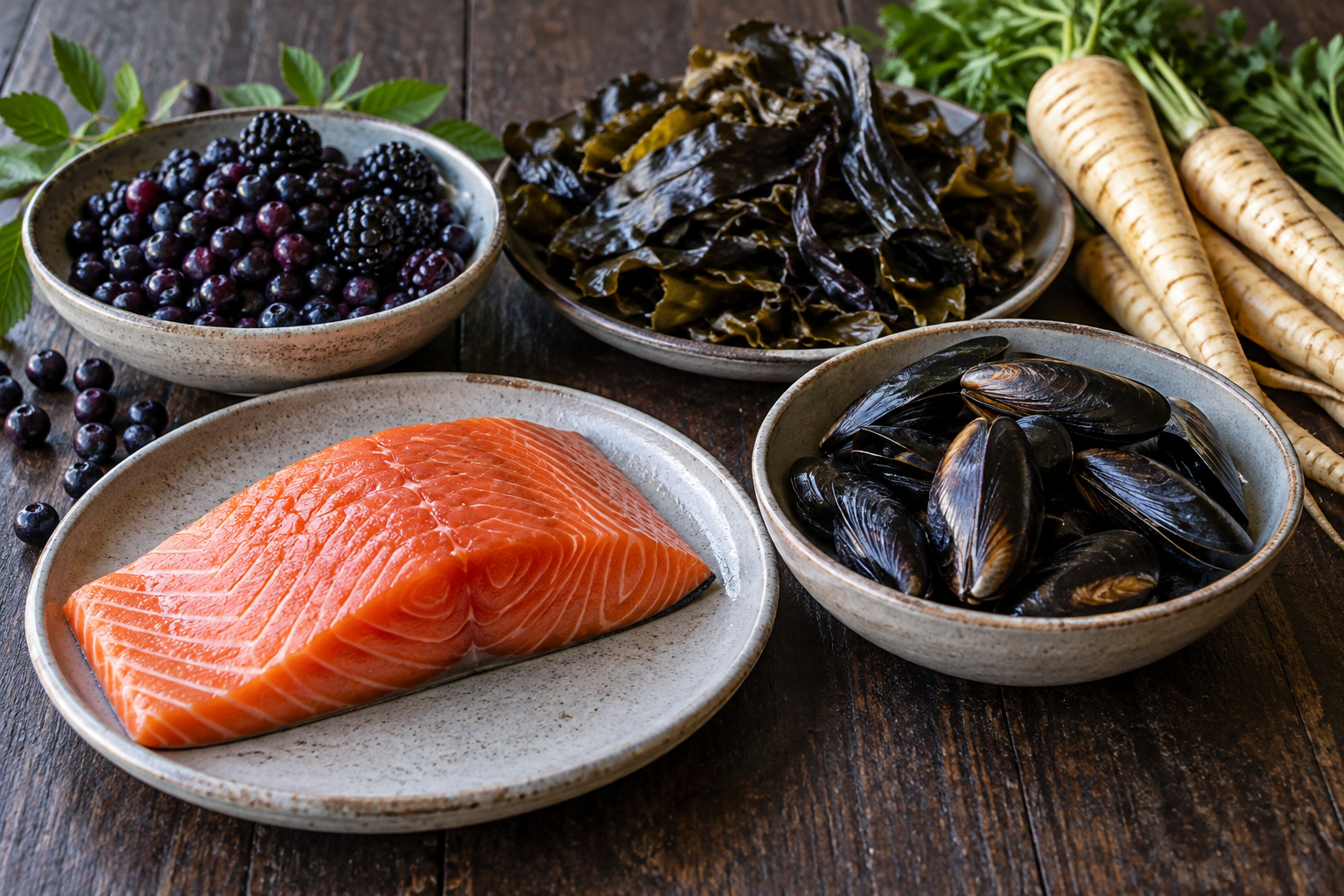
Food history and kitchen connections
Salmon’s importance in the Columbia River tribal world is documented by CRITFC. These skillet cakes are a practical modern use for canned cooked fish, with potato and egg as binders. They are not described as an ancient preservation food or as a recipe belonging to one of the commission’s member nations.
A dry potato mash is more useful here than a rich dairy mash. It holds the fish together without requiring much flour. Keep the cakes broad and shallow, and chill briefly before frying; very thick cakes can brown outside while remaining cool in the middle.
Modern adaptation: The potatoes, canned salmon, egg, wheat flour, and pan-fried cake format are modern choices. Hands-on time is about 20 minutes; allow an additional 20-minute refrigerator rest before cooking. It is not presented as a recovered ancient recipe or as endorsed by a Native nation.
Cook it today
Yield: 4 portions; 8 cakes · Prep 20 min · Cook 30 min (approximate)
Ingredients
- 400 g peeled potatoes, cut into 2 cm cubes
- 300 g drained canned cooked salmon, checked for hard bones and skin as desired
- 1 large egg
- 30 g plain wheat flour (¼ cup), plus 10 g for shaping
- 40 g finely chopped onion (¼ small)
- 25 ml neutral oil (5 teaspoons)
- 2 g salt (⅓ teaspoon), adjusted for canned fish
- 1 lemon, cut into wedges
Method
- Put the potatoes in a saucepan, cover with water, and bring to a simmer. Cook for 12–15 minutes until tender. Drain thoroughly, return to the warm dry pan briefly, then mash without milk or butter. Spread on a plate to cool until no longer hot.
- Flake the drained salmon into a bowl. Add the cooled potato, egg, flour, onion, and salt. Mix gently until evenly combined, without grinding the fish into a paste. The mixture should hold a shape; add a teaspoon of flour if it is very wet.
- With lightly floured hands, form eight cakes about 8 cm wide and 1.5 cm thick. Set on a plate, cover, and refrigerate for 20 minutes. This additional rest helps them survive turning and is not included in the hands-on preparation time.
- Heat half the oil in a wide skillet over medium-low heat. Cook four cakes for about 4 minutes per side, turning only after a golden crust forms. Repeat with the remaining oil and cakes, lowering heat if the crust browns too quickly.
- Check the center of the cakes with a thermometer. Because they combine previously cooked fish with egg, heat them to 74°C/165°F throughout. Serve promptly with lemon wedges.
Substitutions
Use fully cooked refrigerated salmon instead of canned fish, keeping it cold until mixing and using it within its safe storage period. For a flour substitute use a familiar all-purpose blend; the egg remains important to this formulation.
Serving
Serve two cakes per person with a crisp vegetable side. Avoid a large watery sauce over the cakes, which quickly softens their crust. Make the cakes smaller for a starter, remembering that they will cook more quickly.
Storage
Refrigerate cooked cakes within 2 hours at 4°C/40°F or colder for up to 2 days. Reheat to 74°C/165°F. Keep the raw-egg mixture refrigerated and cook it the same day; do not leave it on the counter during meal preparation.
Sources and evidence notes
- Salmon Culture — Columbia River Inter-Tribal Fish Commission: Tribal fisheries commission explains the central place of salmon; not a recipe license or endorsement.
- About Us — Columbia River Inter-Tribal Fish Commission: Identifies the four member tribes and the commission’s fisheries work.
- Safe Minimum Internal Temperatures — FoodSafety.gov: Current modern food-safety endpoints, separate from historical practice.
These original modern recipes are inspired by documented ingredients and food traditions. They are not recovered ancient recipes or claims of tribal endorsement. Sources support the historical context; quantities, combinations, substitutions and appliance methods are modern.