California · Miwok plant-food context; modern baked cake
Food history and kitchen connections
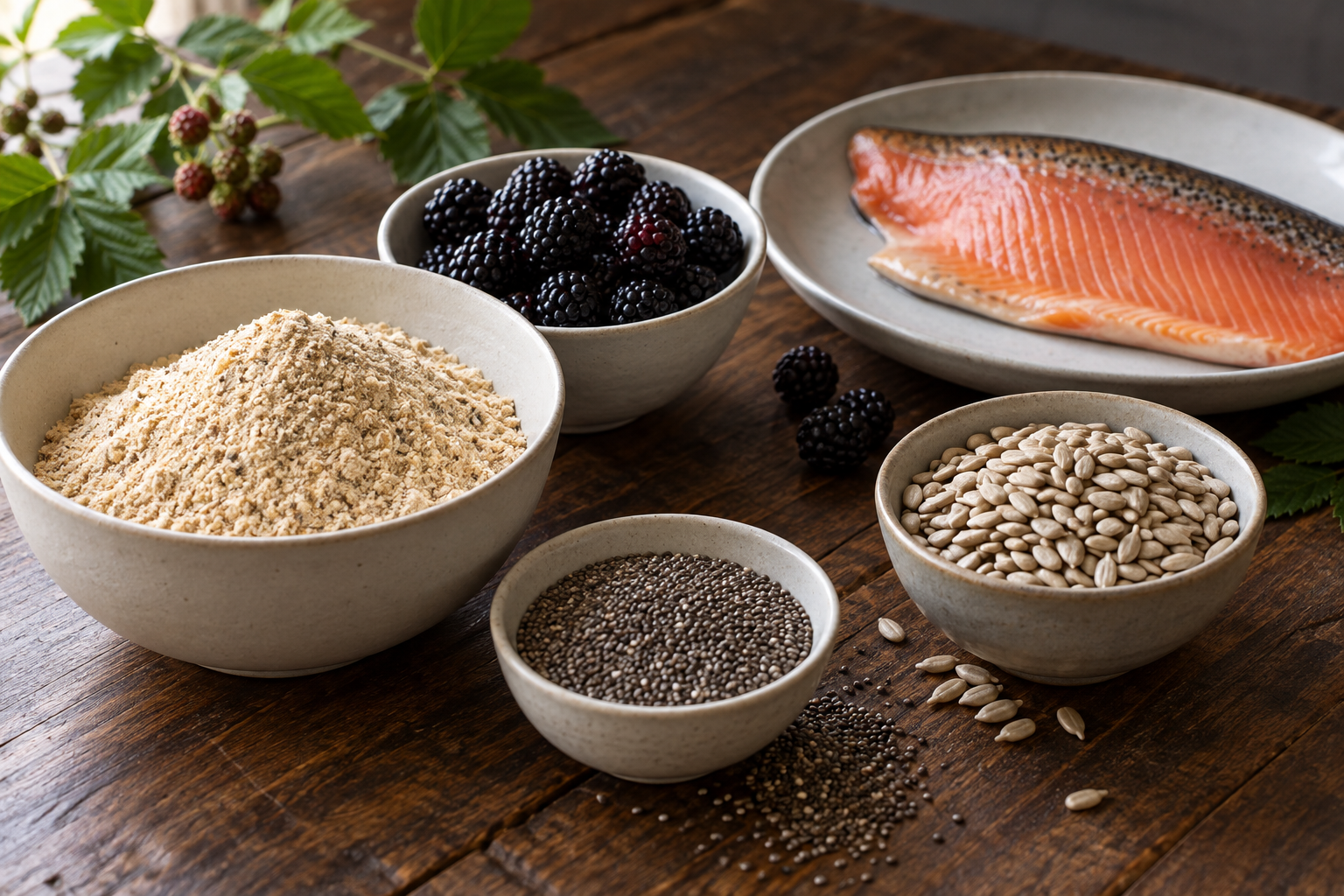
Yosemite’s plant-use account describes seeds and berries in the seasonal food history of local Miwok people. It does not describe this baked oat cake. This recipe uses familiar supermarket ingredients to make a soft sliceable dish while keeping the distinction between historical food categories and a modern formula explicit.
The fruit should sit partly within the batter, not form a thick wet layer underneath. A shallow skillet gives the center room to set. Toasted seeds add texture, while oats keep the cake substantial. Serve it as a modest breakfast or dessert; it is intended for fresh eating, not for reproducing historical dried food.
Modern adaptation: Rolled oats, wheat flour, egg, milk, baking powder, and an oven skillet are contemporary choices. This is not presented as an ancient Miwok cake or as an exact combination from oral tradition. It is not presented as a recovered ancient recipe or as endorsed by a Native nation.
Cook it today
Yield: 6 slices · Prep 15 min · Cook 28 min (approximate)
Ingredients
- 100 g rolled oats (1¼ cups)
- 70 g plain wheat flour (½ cup)
- 5 g baking powder (1¼ teaspoons)
- 2 g salt (⅓ teaspoon)
- 1 large egg
- 200 ml milk or unsweetened plant milk (¾ cup plus 1 tablespoon)
- 30 ml neutral oil (2 tablespoons), divided
- 20 g sugar (1½ tablespoons), optional
- 200 g fresh or frozen cultivated berries (1½ cups)
- 35 g hulled sunflower seeds (¼ cup)
Method
- Heat the oven to 190°C/375°F. Brush a 22 cm ovenproof skillet or shallow baking dish with 5 ml oil. Mix the oats, flour, baking powder, salt, and optional sugar in a large bowl.
- Beat the egg, milk, and remaining oil together. Stir into the dry ingredients until no flour pockets remain. Rest for 5 minutes while the oats absorb liquid. Do not beat repeatedly; the batter should remain soft rather than stretchy.
- Fold in half the berries and seeds. Spoon into the prepared skillet and level gently. Scatter the remaining fruit and seeds over the top, pressing them only slightly into the batter so the center is not weighed down.
- Bake for 25–30 minutes, until the top is golden, the center springs back lightly, and a skewer inserted into batter away from a berry comes out without wet mixture. An egg-based dish should reach 71°C/160°F in the center.
- Rest for 10 minutes before cutting. A still-hot cake can seem wet even when cooked; cooling lets the oats and fruit settle. Use a flexible spatula to lift the first slice carefully from the skillet.
Substitutions
Use pumpkin seeds for a different texture, or omit seeds if needed. Check allergy needs rather than assuming a seed substitute is suitable. An equal weight of chopped cultivated strawberries can replace berries; pat very wet fruit dry before folding in.
Serving
Serve a small warm slice with plain yogurt or fruit compote, identifying those as modern accompaniments. This cake is soft rather than crisp and works best on a plate with a fork.
Storage
Cool promptly, cover, and refrigerate within 2 hours for up to 3 days at 4°C/40°F or colder. Reheat portions to 74°C/165°F. Freeze individual slices for 1 month; thaw in the refrigerator.
Sources and evidence notes
- Plant Use — Yosemite National Park: Documents Sierra Miwok plant foods, processing, and continuing practice; not an ancient dated recipe.
- The Kawaiisu Culture — California State Parks: Public regional food history including seeds, berries, and nuts, not this modern recipe.
- Safe Minimum Internal Temperatures — FoodSafety.gov: Current modern food-safety endpoints, separate from historical practice.
These original modern recipes are inspired by documented ingredients and food traditions. They are not recovered ancient recipes or claims of tribal endorsement. Sources support the historical context; quantities, combinations, substitutions and appliance methods are modern.