California · Yurok salmon-food context; independent oven dish
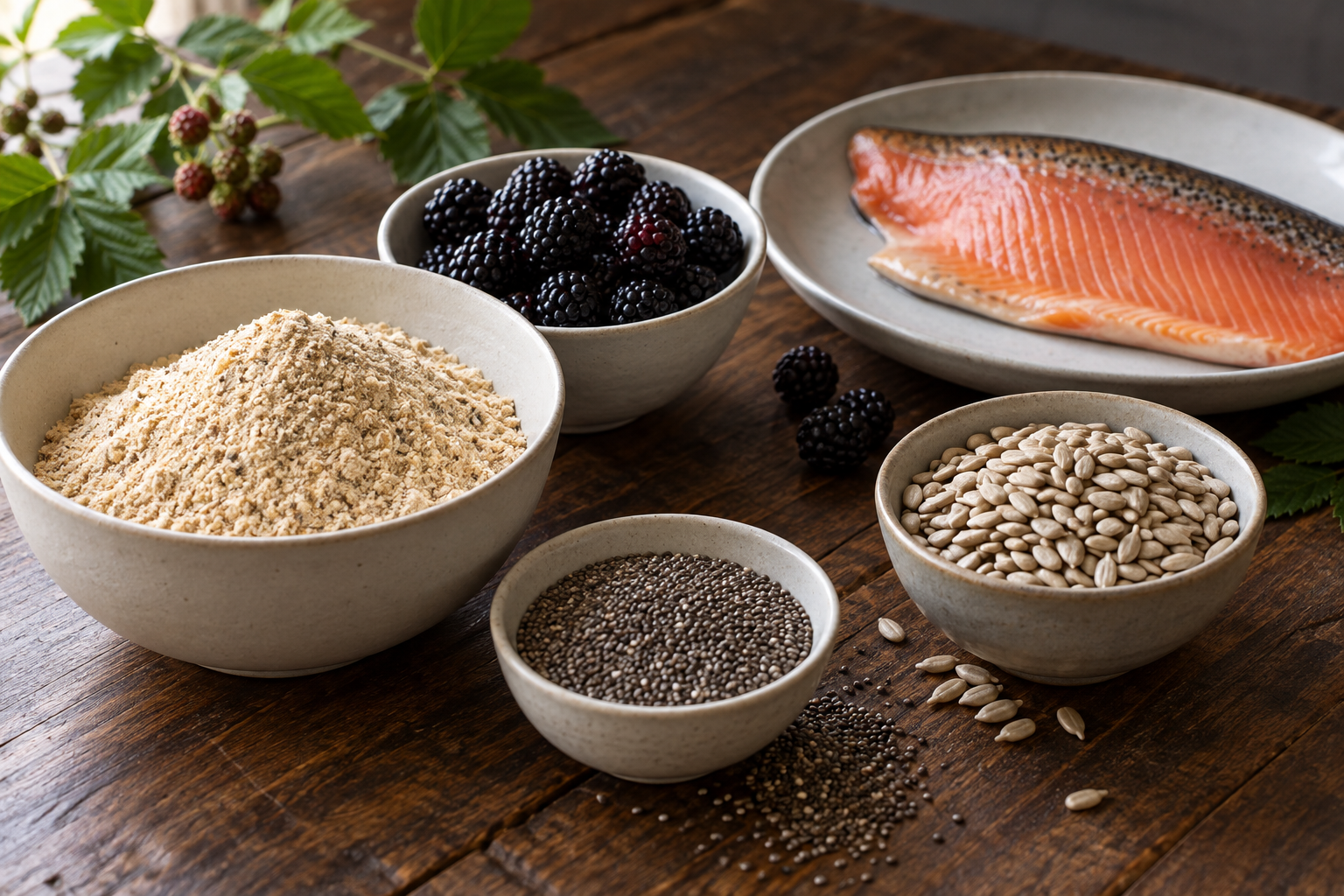
Food history and kitchen connections
Salmon is among the foods named by the Yurok Tribe in its account of the Klamath–Trinity rivers. That tribal source provides the cultural and regional connection. It does not establish the toasted seed topping, oven setting, or purchased salmon variety in the practical recipe below.
A thin seed layer gives the fish a contrasting surface without burying it under a heavy crust. The seeds are toasted separately for control: a thick raw coating could burn before the center cooks. A little oil helps the topping adhere, while the fish is cooked with a thermometer rather than judged by color alone.
Modern adaptation: This is an original home-oven salmon dish. Grocery salmon and pumpkin seeds may differ from historical local ingredients; the topping and lemon are present-day choices. It is not presented as a recovered ancient recipe or as endorsed by a Native nation.
Cook it today
Yield: 4 portions · Prep 10 min · Cook 18 min (approximate)
Ingredients
- 4 salmon fillets, about 150 g each
- 40 g hulled pumpkin seeds (⅓ cup)
- 20 ml neutral oil (4 teaspoons), divided
- 3 g salt (½ teaspoon)
- 1 lemon, cut into wedges
- 30 ml water (2 tablespoons) for the baking dish
Method
- Heat the oven to 190°C/375°F. Toast the seeds in a dry skillet over medium-low heat for 3–4 minutes, stirring until fragrant. Tip onto a plate, cool briefly, and chop coarsely. Leaving them whole makes the topping less likely to stay on the fish.
- Brush a shallow baking dish with 5 ml oil. Check the fish for bones and arrange skin-side down, leaving a little space between fillets. Brush with the remaining oil and sprinkle evenly with salt.
- Scatter the chopped seeds over the fillets in a thin layer and press very lightly. Add the water to the bottom of the dish, not over the seeds. Bake for about 12–18 minutes, depending on the thickness of the fish.
- Check the thickest portion with a food thermometer; it must reach 63°C/145°F. If seeds darken before the fish is done, cover loosely with foil. Avoid tightly sealing the dish, which would soften the topping completely.
- Lift onto warm plates with a broad spatula and offer lemon separately. Do not leave the finished fish in the hot dish for long; carryover heat can make thin fillets dry.
Substitutions
Hulled sunflower seeds can replace pumpkin seeds, giving a different topping. Check seed allergies before swapping. Trout works if cooked to the same endpoint; thinner fillets may take less time. Use inspected commercial fish rather than assuming any local catch is safe.
Serving
Serve with roasted vegetables and a light bean side. The topping is a texture accent, so a small amount goes further than a thick crust. Keep sharp sauces separate to preserve the toasted surface until the plate reaches the table.
Storage
Refrigerate within 2 hours at 4°C/40°F or colder and use within 2 days. Reheat covered to 74°C/165°F, accepting that the seed topping will soften. Freeze cooked portions for up to 1 month.
Sources and evidence notes
- Our History — Yurok Tribe: Tribal account of Klamath–Trinity river foods and continuing identity.
- Traditional Aquatic Foods — Yurok Tribe Climate Change Adaptation Plan: Tribal account distinguishes salmon, steelhead, and other aquatic foods; grocery rainbow trout is an explicit modern choice.
- Safe Minimum Internal Temperatures — FoodSafety.gov: Current modern food-safety endpoints, separate from historical practice.
These original modern recipes are inspired by documented ingredients and food traditions. They are not recovered ancient recipes or claims of tribal endorsement. Sources support the historical context; quantities, combinations, substitutions and appliance methods are modern.