California · Yurok aquatic-food context; grocery trout adaptation
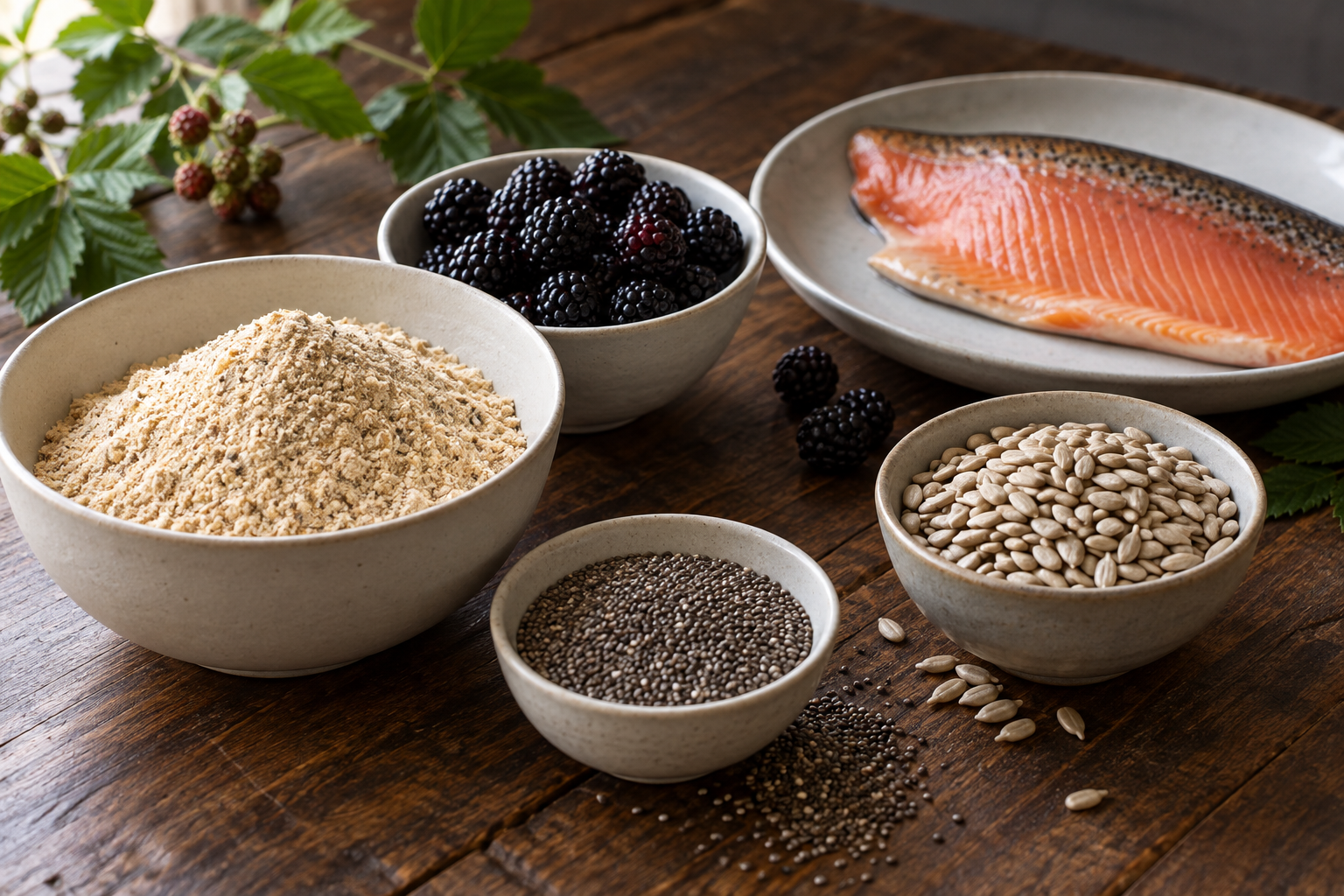
Food history and kitchen connections
The Yurok Tribe’s own history identifies the Klamath–Trinity rivers as central to its food supply. Its aquatic-food material distinguishes salmon and steelhead among several river foods. This recipe uses grocery rainbow trout; it does not equate every trout with a locally harvested steelhead or claim a Yurok cooking formula.
Gentle poaching is a convenient modern technique for thin fillets. It avoids smoking, drying, or handling a fire and keeps the cooking liquid simple. A shallow pan and restrained heat are important: a hard boil breaks the fish apart before its center is safely cooked.
Modern adaptation: The grocery fish, onion, lemon, covered skillet, and measured poaching method are independent modern choices. This is not a ceremonial meal or a reconstruction of a tribal preparation. It is not presented as a recovered ancient recipe or as endorsed by a Native nation.
Cook it today
Yield: 4 portions · Prep 10 min · Cook 15 min (approximate)
Ingredients
- 4 boneless trout fillets, about 600 g total
- 500 ml water (2 cups), or enough for 1 cm depth in the pan
- 100 g onion, thinly sliced (1 small)
- 15 ml neutral oil (1 tablespoon)
- 3 g salt (½ teaspoon)
- 1 lemon, cut into wedges for serving
- 15 g chopped parsley, optional modern garnish
Method
- Check the fillets for pin bones with clean fingers and remove any with tweezers. Pat the fish dry. Keep raw fish and its utensils separate from ready-to-eat foods, and wash hands and surfaces after handling.
- Put the onion, water, oil, and salt into a wide covered skillet. Bring to a simmer and cook for 5 minutes, until the onion softens slightly. Use enough liquid for a shallow bath, not a deep rolling boil.
- Place the trout skin-side down in one layer. Cover, lower the heat, and poach gently for about 6–10 minutes, depending on thickness. Small bubbles should appear around the edges; reduce the heat if the liquid boils vigorously.
- Check the thickest part with a food thermometer: fish should reach 63°C/145°F. The flesh should also be opaque and separate readily. Lift each fillet with a broad spatula, draining briefly, and place on warm plates.
- Spoon a little onion and cooking liquid alongside, avoiding a flooded plate. Add optional parsley and offer lemon wedges separately. Use the thermometer rather than adding a fixed extra minute to every thin fillet.
Substitutions
Use grocery salmon or a mild white-fish fillet, adjusting time for thickness and keeping the same safe endpoint. Do not use fish gathered from waters with an advisory without following that advisory; this recipe assumes inspected commercial fish.
Serving
Serve with cooked vegetables and a small portion of seed porridge or bread. The plain fish is deliberate: the contemporary method lets its flavor remain evident without implying that a minimal ingredient list is automatically historically exact.
Storage
Refrigerate cooked fish within 2 hours in a shallow covered container at 4°C/40°F or colder and use within 2 days. Reheat gently to 74°C/165°F. Never store fish in oil at room temperature.
Sources and evidence notes
- Our History — Yurok Tribe: Tribal account of Klamath–Trinity river foods and continuing identity.
- Traditional Aquatic Foods — Yurok Tribe Climate Change Adaptation Plan: Tribal account distinguishes salmon, steelhead, and other aquatic foods; grocery rainbow trout is an explicit modern choice.
- Safe Minimum Internal Temperatures — FoodSafety.gov: Current modern food-safety endpoints, separate from historical practice.
These original modern recipes are inspired by documented ingredients and food traditions. They are not recovered ancient recipes or claims of tribal endorsement. Sources support the historical context; quantities, combinations, substitutions and appliance methods are modern.