California · Seed-meal food history; modern baked cracker
Food history and kitchen connections
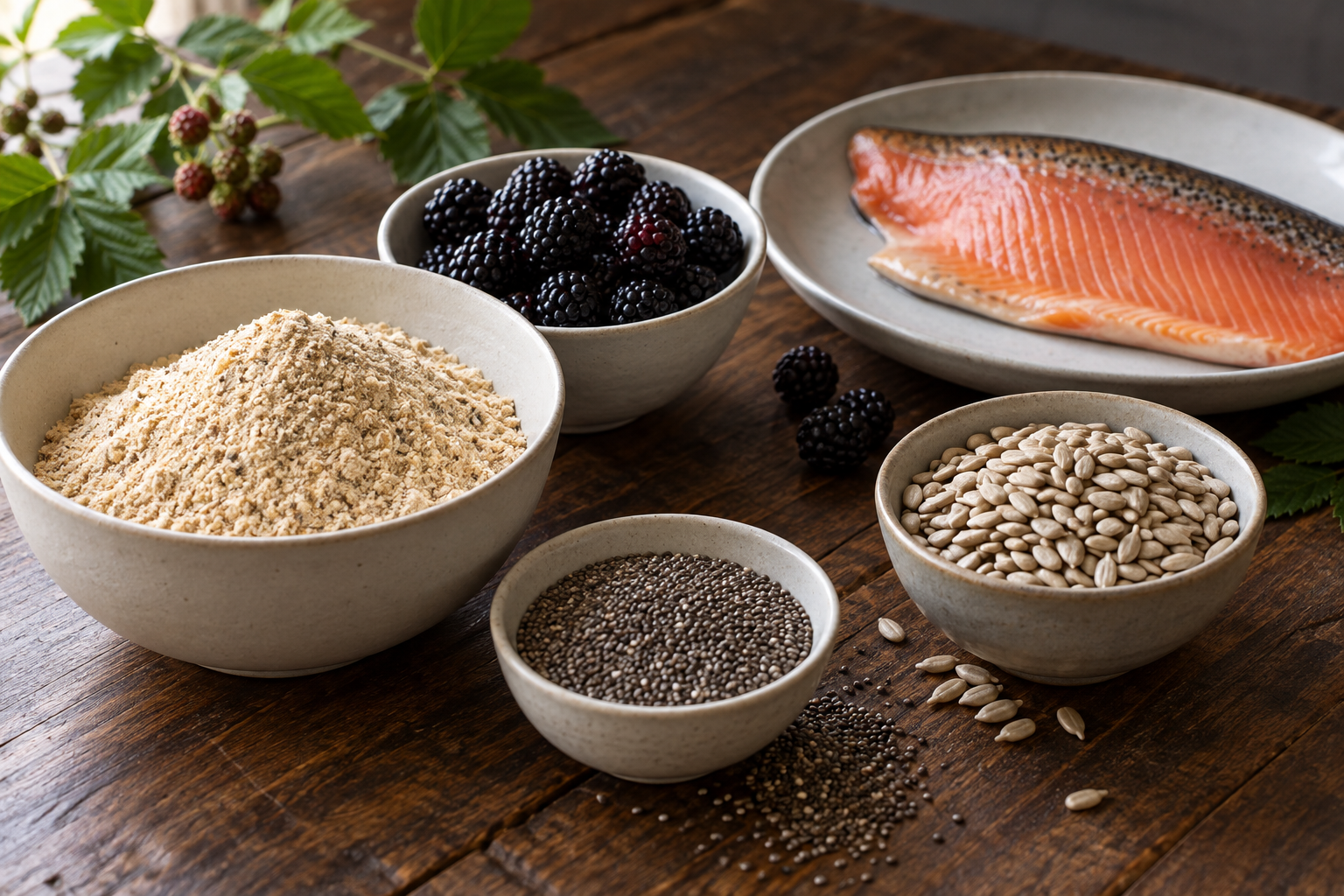
The Kawaiisu food account published by California State Parks identifies seeds as part of a diverse regional diet. A modern cracker can highlight a ground seed without being passed off as an ancient seed cake. Here wheat flour supplies structure and a domestic oven supplies a dry, crisp texture.
The important cooking decision is thickness. A very thin sheet becomes crisp, while a thicker one remains chewy even after browning. Cutting before baking makes neat pieces and lets the cook remove finished edge crackers while the center catches up. Freshly baked crackers are best used promptly rather than treated as a preservation method.
Modern adaptation: Cultivated sunflower seeds, wheat flour, oil, and a rolled oven-baked dough are modern choices. This original recipe is not named for a tribal bread or a documented Chumash cake. It is not presented as a recovered ancient recipe or as endorsed by a Native nation.
Cook it today
Yield: 6 snack portions; about 30 crackers · Prep 18 min · Cook 22 min (approximate)
Ingredients
- 100 g hulled sunflower seeds (⅔ cup)
- 100 g plain wheat flour (¾ cup plus 1 tablespoon)
- 3 g salt (½ teaspoon)
- 20 ml neutral oil (4 teaspoons)
- 75 ml water (5 tablespoons), plus a little if needed
- 10 g extra flour for rolling
Method
- Heat the oven to 180°C/350°F and line a large baking sheet with parchment. Grind 70 g seeds to a coarse meal in short pulses. Keep the remaining seeds whole; do not grind so long that the meal turns into seed butter.
- Mix ground and whole seeds with the flour and salt. Add oil and water, then stir and knead briefly to form a firm, cohesive dough. If loose dry crumbs remain, add water a teaspoon at a time. Rest covered for 5 minutes.
- Roll between two sheets of parchment to about 2 mm thick. Peel off the upper sheet. Score into rectangles about 4 × 5 cm and prick each several times with a fork so it bakes evenly. Slide the lower paper onto the sheet.
- Bake for 18–22 minutes, rotating halfway through. Remove deeply golden edge pieces first if necessary. Separate along the scored lines and return any soft center crackers for 3–5 minutes more. They should feel dry and become crisp as they cool.
- Cool completely on a rack before putting into a container. If still leathery after cooling, bake briefly again at 160°C/320°F rather than scorching them at high heat.
Substitutions
Use hulled pumpkin seeds for a differently flavored cracker, chopping them finely before mixing. A familiar all-purpose gluten-free blend may work, but dough behavior differs; roll between parchment and adjust water gradually.
Serving
Serve a few crackers with soup or a smooth bean spread. The measured yield is approximate because rolling thickness changes the count. A modest portion is satisfying; the seeds make these richer than a plain flour cracker.
Storage
For this home recipe, keep cooled crackers sealed in the refrigerator and use within 3 days, or freeze for 1 month. Recrisp briefly in a moderate oven. Do not seal while warm, which traps steam.
Sources and evidence notes
- The Kawaiisu Culture — California State Parks: Public regional food history including seeds, berries, and nuts, not this modern recipe.
- Chumash Plant Foods — National Park Service: Documents acorns and seed meals in the Chumash region; no claim that grocery substitutions are identical.
These original modern recipes are inspired by documented ingredients and food traditions. They are not recovered ancient recipes or claims of tribal endorsement. Sources support the historical context; quantities, combinations, substitutions and appliance methods are modern.