California · Chumash chia context; modern hydrated pudding
Food history and kitchen connections
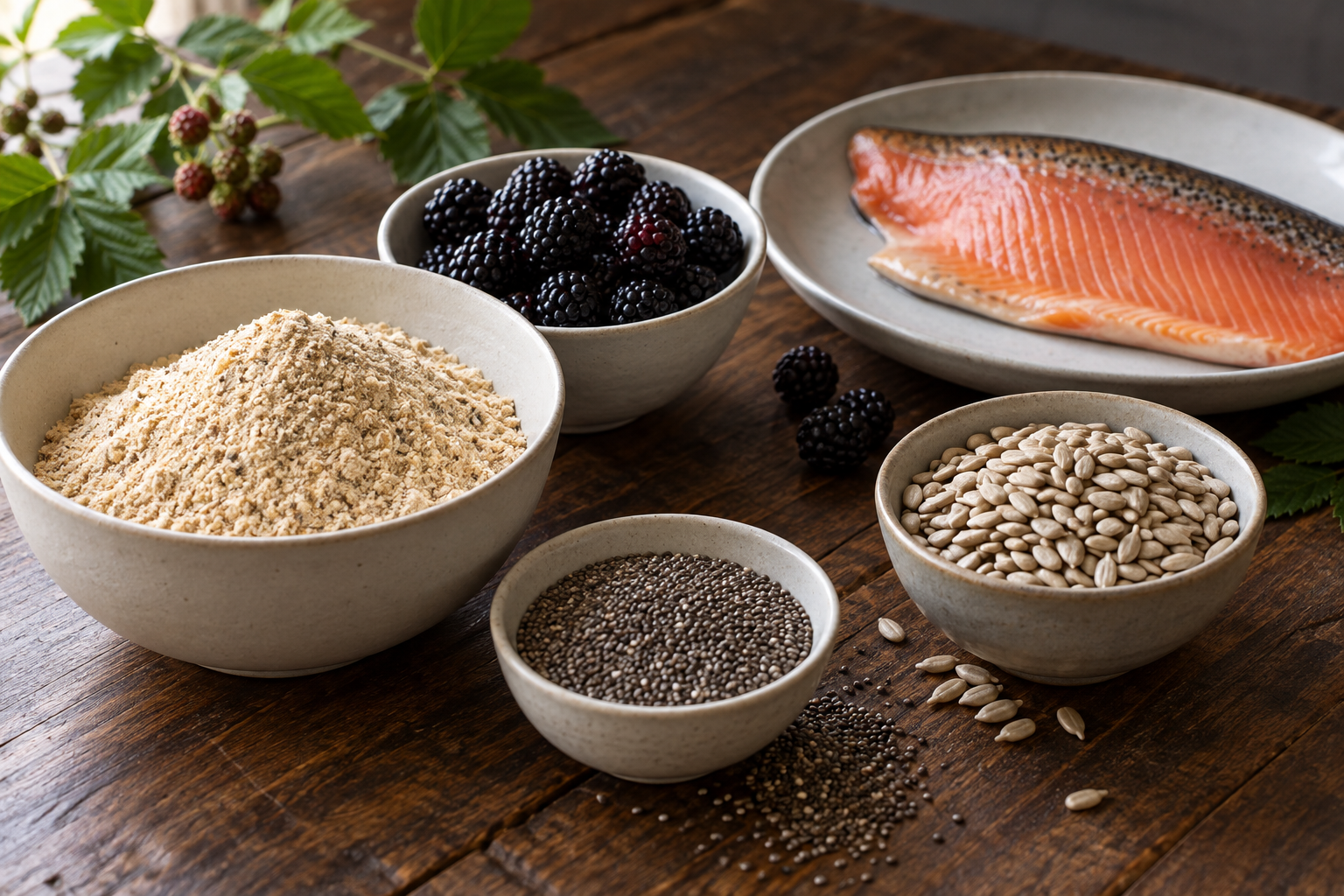
The NPS account of Chumash plant foods includes chia and other seed meals. Grocery chia is commonly Salvia hispanica, whereas California chia includes Salvia columbariae. These should not be treated as automatically identical. The recipe deliberately uses the packaged grocery product and an entirely contemporary refrigerated pudding format.
The appeal is practical: the seeds hydrate without cooking and thicken the liquid into a spoon dessert. Stirring twice matters more than elaborate equipment, because dry clumps resist hydration. Cultivated blackberries add tartness, while the modest portion keeps this a dessert rather than a substitute for an entire varied meal.
Modern adaptation: Packaged Salvia hispanica chia, milk or plant milk, cultivated berries, and refrigeration are explicit modern substitutions and methods. Allow at least 3 hours chilling in addition to hands-on time. It is not presented as a recovered ancient recipe or as endorsed by a Native nation.
Cook it today
Yield: 4 small dessert cups · Prep 12 min · Cook 0 min (approximate)
Ingredients
- 45 g packaged food-grade chia seeds (about ¼ cup)
- 300 ml milk or unsweetened plant milk (1¼ cups)
- 15 ml maple syrup (1 tablespoon), optional
- 200 g fresh cultivated blackberries (about 1½ cups)
- 15 ml water (1 tablespoon), only if mashing berries needs it
Method
- Measure the chia seeds into a bowl and add the milk and optional syrup. Whisk for a full minute, scraping around the sides and base so no dry pockets remain. The mixture will look thin initially; do not add extra seeds immediately.
- Wait 10 minutes at room temperature, whisk again thoroughly, then divide among four small covered cups. Refrigerate for at least 3 hours or overnight. This chilling time is additional to the 12 minutes of hands-on preparation.
- Wash the blackberries just before using. Mash half with a fork to release their juice, adding the water only if necessary. Keep the remaining berries whole. Cover and refrigerate the fruit until the pudding has thickened.
- Before serving, stir each cup. If too stiff, add a teaspoon or two of milk. The seeds should be fully hydrated and suspended in a soft gel, with no dry clumps. Spoon mashed berries over the pudding and finish with the whole fruit.
Substitutions
Use raspberries or chopped strawberries if blackberries are unavailable, noting the different fruit. Choose a milk appropriate to dietary needs, and check labels for nut or other allergens. Do not eat spoonfuls of dry chia in place of making the pudding.
Serving
Serve cold directly from the refrigerator in small glasses or bowls. For a less sweet version omit syrup and let the berries provide the contrast. This recipe does not claim to reproduce a historical chia drink, seed cake, or ceremonial food.
Storage
Keep covered at 4°C/40°F or colder and use within 2 days, or sooner if the milk label requires. Add fresh berries close to serving. Refrigerate promptly and discard portions left out for more than 2 hours.
Sources and evidence notes
- Chumash Plant Foods — National Park Service: Documents acorns and seed meals in the Chumash region; no claim that grocery substitutions are identical.
- The Kawaiisu Culture — California State Parks: Public regional food history including seeds, berries, and nuts, not this modern recipe.
- Chia (Salvia columbariae) — USDA NRCS Plant Guide: Identifies California chia and its regional food history; the grocery S. hispanica used here is explicitly distinguished. No medical claims or processing instructions are adopted.
These original modern recipes are inspired by documented ingredients and food traditions. They are not recovered ancient recipes or claims of tribal endorsement. Sources support the historical context; quantities, combinations, substitutions and appliance methods are modern.