California · California acorn history; modern batter
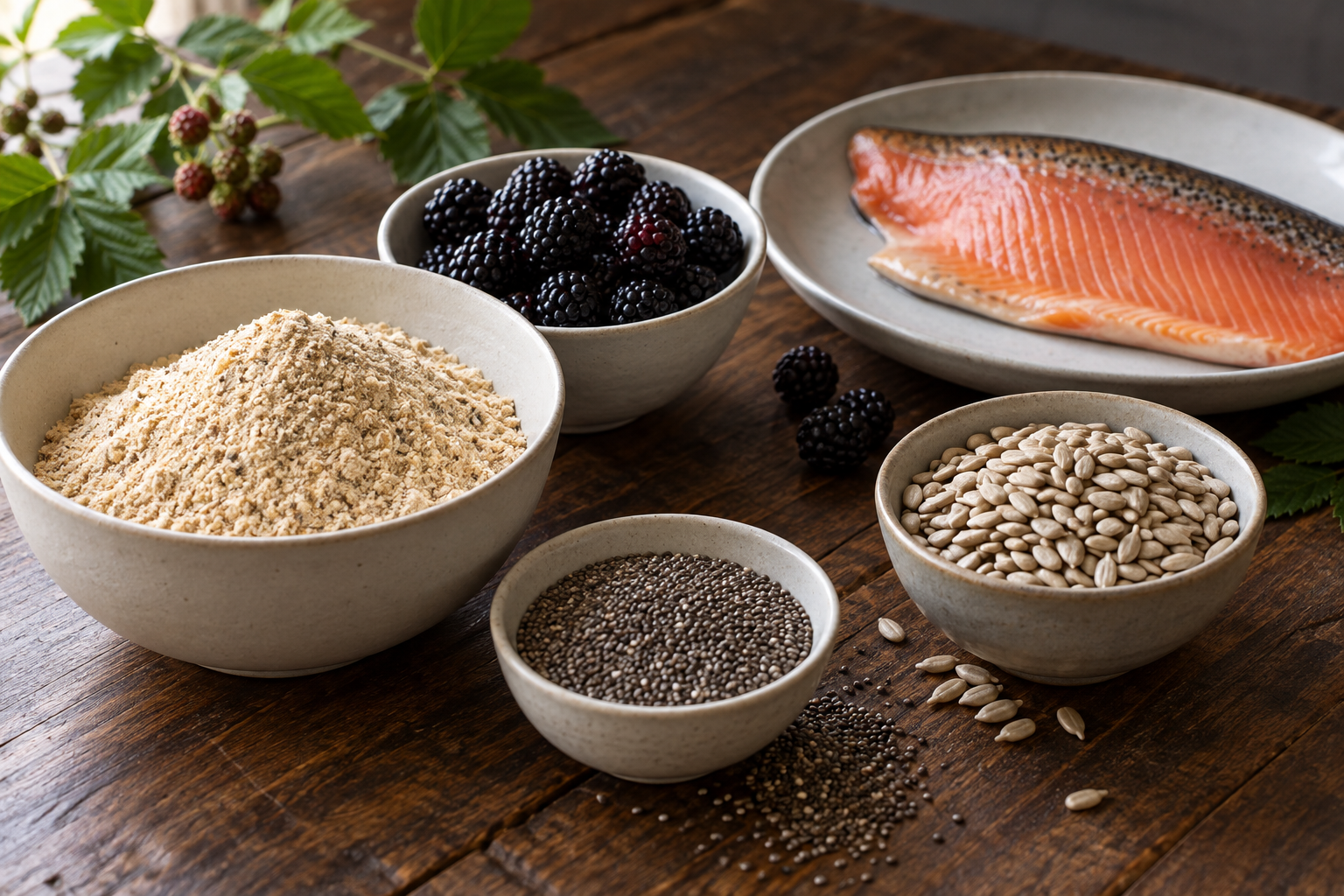
Food history and kitchen connections
Acorns appear in the food history of several California peoples, including the Chumash, but that shared ingredient does not mean a single shared cuisine. The NPS account supplies regional context. These small cakes instead use an openly modern mixture, with purchased leached meal, oats, egg, and baking powder.
Acorn meal adds flavor while the other ingredients provide structure. A short rest thickens the batter, making small rounds easier to turn. The cakes are breakfast food or a bread accompaniment; they should be cooked through with tender centers, not fried until hard enough to store without refrigeration.
Modern adaptation: Only commercially leached, ready-to-cook food-grade meal is used. This recipe is not a reconstruction of Chumash seed cakes or a historical acorn bread. It is not presented as a recovered ancient recipe or as endorsed by a Native nation.
Cook it today
Yield: 2 servings; about 8 cakes · Prep 15 min · Cook 16 min (approximate)
Ingredients
- 35 g commercially leached food-grade acorn meal (about ¼ cup)
- 80 g oat flour (about ¾ cup)
- 4 g baking powder (1 teaspoon)
- 1 g salt (a small pinch)
- 1 large egg
- 160 ml milk or unsweetened plant milk (⅔ cup)
- 20 ml neutral oil (4 teaspoons), divided
- 100 g cultivated berries for serving, optional
Method
- Confirm that the acorn meal is leached for human consumption and suitable for ordinary cooking; follow its label. Mix the acorn meal, oat flour, baking powder, and salt. Beat the egg with the milk and 10 ml oil separately.
- Stir the wet mixture into the dry ingredients until smooth, then rest for 10 minutes. The batter should fall slowly from a spoon. If it becomes paste-like, add milk a tablespoon at a time; if very thin, add a teaspoon of oat flour and wait briefly.
- Warm a nonstick or well-seasoned skillet over medium-low heat and brush with a little remaining oil. Add 30 ml portions of batter and spread gently to about 8 cm across. Cook in batches without crowding.
- Cook for about 3 minutes on the first side, until the edges set. Turn carefully and cook 2–3 minutes more. Split a cake to check that the center is cooked with no wet batter; lower the heat if the surface darkens first. Keep batches warm briefly and serve promptly.
Substitutions
Replace the acorn meal with 25 g finely ground toasted sunflower seeds and 10 g extra oat flour if a safe prepared acorn product is unavailable. Certified gluten-free oat flour is needed if avoiding gluten; check all labels. Acorn is a tree-nut ingredient, and this batter also contains egg.
Serving
Serve with a small portion of fresh berries or alongside a bean dish with the sweet toppings omitted. These cakes are more delicate than wheat pancakes: a thin spatula and modest size help prevent breakage.
Storage
Refrigerate cooled cakes within 2 hours for up to 3 days at 4°C/40°F or colder. Freeze for 1 month with parchment between them. Reheat until the centers reach 74°C/165°F; avoid leaving egg batter at room temperature.
Sources and evidence notes
- Chumash Plant Foods — National Park Service: Documents acorns and seed meals in the Chumash region; no claim that grocery substitutions are identical.
- Tools and Trade — Yosemite National Park: Historical acorn-food context; this project does not instruct home leaching or hot-stone cooking.
These original modern recipes are inspired by documented ingredients and food traditions. They are not recovered ancient recipes or claims of tribal endorsement. Sources support the historical context; quantities, combinations, substitutions and appliance methods are modern.