Southwest · Amaranth crop context
Food history and kitchen connections
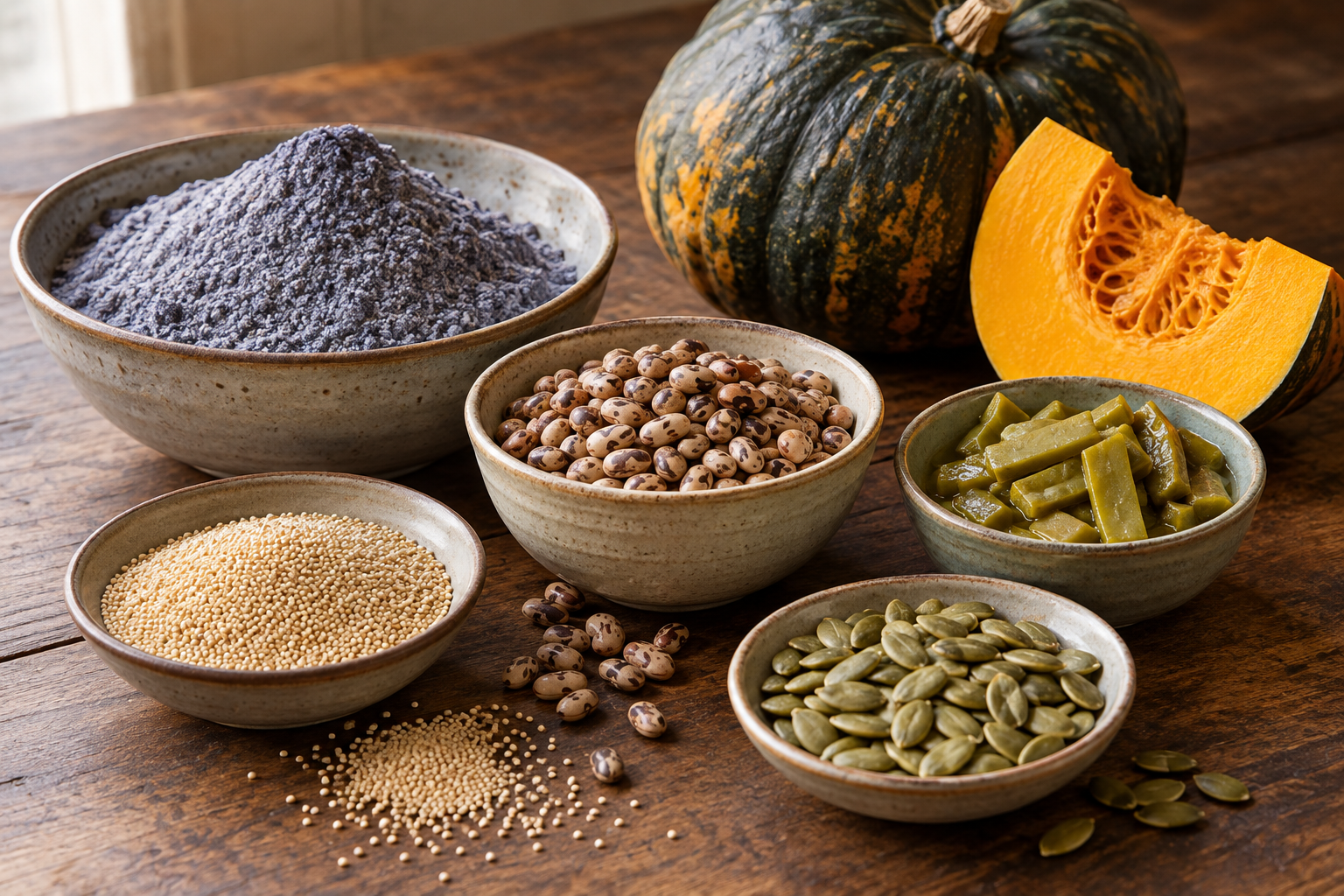
Tonto National Monument includes amaranth among crops of the Tonto Basin. This source gives a regional ingredient connection, not the measured pilaf below. The recipe uses commercially grown grain and cultivated mushrooms, with no claim that their varieties or their combination match an excavated meal.
Amaranth makes a softer and more cohesive dish than rice, so the word pilaf describes its meal role rather than a separate-grained texture. Browning mushrooms first supplies a savory contrast. Add cooked beans at the end and the bowl becomes substantial without depending on a heavy sauce.
Modern adaptation: The sauté-and-simmer sequence, supermarket mushrooms, oil, onion, and cooked white beans form an original modern dish. Amaranth varieties sold for grain are not assumed identical to every historical plant called amaranth. It is not presented as a recovered ancient recipe or as endorsed by a Native nation.
Cook it today
Yield: 4 portions · Prep 12 min · Cook 28 min (approximate)
Ingredients
- 180 g whole amaranth grain (1 cup)
- 480 ml water or mild vegetable stock (2 cups)
- 250 g cultivated mushrooms, sliced
- 120 g onion, chopped (1 medium)
- 240 g fully cooked white beans, drained (1½ cups)
- 25 ml neutral oil (5 teaspoons), divided
- 3 g salt (½ teaspoon), adjusted to stock
- 15 ml lemon juice (1 tablespoon)
- 20 g pumpkin seeds (2 tablespoons)
Method
- Check the amaranth packet for any rinsing instruction and use a very fine sieve if rinsing. Combine the grain and water or stock in a small saucepan. Bring to a simmer, cover, and cook gently for about 20–25 minutes, following the packet if its timing differs.
- Meanwhile heat 15 ml oil in a wide skillet. Cook the mushrooms over medium-high heat for 7–9 minutes, stirring occasionally, until their released water evaporates and their edges brown. Transfer to a plate; overcrowding prevents good browning.
- Add the remaining oil and onion to the skillet. Cook over medium heat for 6 minutes until soft. Add the beans and 30 ml water, cover briefly, and heat for 3–4 minutes until the beans are hot.
- Fold the cooked amaranth and mushrooms into the skillet. Add salt only after tasting, then add lemon juice. The grain should be tender and thickly spoonable; loosen with a little hot water if it is stiff. Scatter the seeds over individual bowls.
Substitutions
Use cooked quinoa instead of amaranth when needed, following its own packet water ratio and cooking time. This changes both texture and ingredient history. Cooked black beans can replace white beans. Use only grocery or cultivated mushrooms, never an unidentified wild mushroom.
Serving
Serve with roasted squash or a crisp vegetable salad. Keep a few browned mushrooms aside to place on top so their texture remains evident. This dish is best eaten with a spoon rather than treated as fluffy rice.
Storage
Cool promptly in shallow containers and refrigerate within 2 hours for up to 3 days at 4°C/40°F or colder. Reheat to 74°C/165°F with a spoonful of water, stirring so the center heats evenly.
Sources and evidence notes
- The Salado of the Tonto Basin — Tonto National Monument: Regional agriculture including amaranth; distinguish prehistoric ingredients from a modern dish.
- The Heritage Garden and Ancestral Puebloan Agriculture: Archaeological and ethnobotanical context; the modern garden does not reproduce an ancient menu.
These original modern recipes are inspired by documented ingredients and food traditions. They are not recovered ancient recipes or claims of tribal endorsement. Sources support the historical context; quantities, combinations, substitutions and appliance methods are modern.