Southwest · O’odham desert-food context
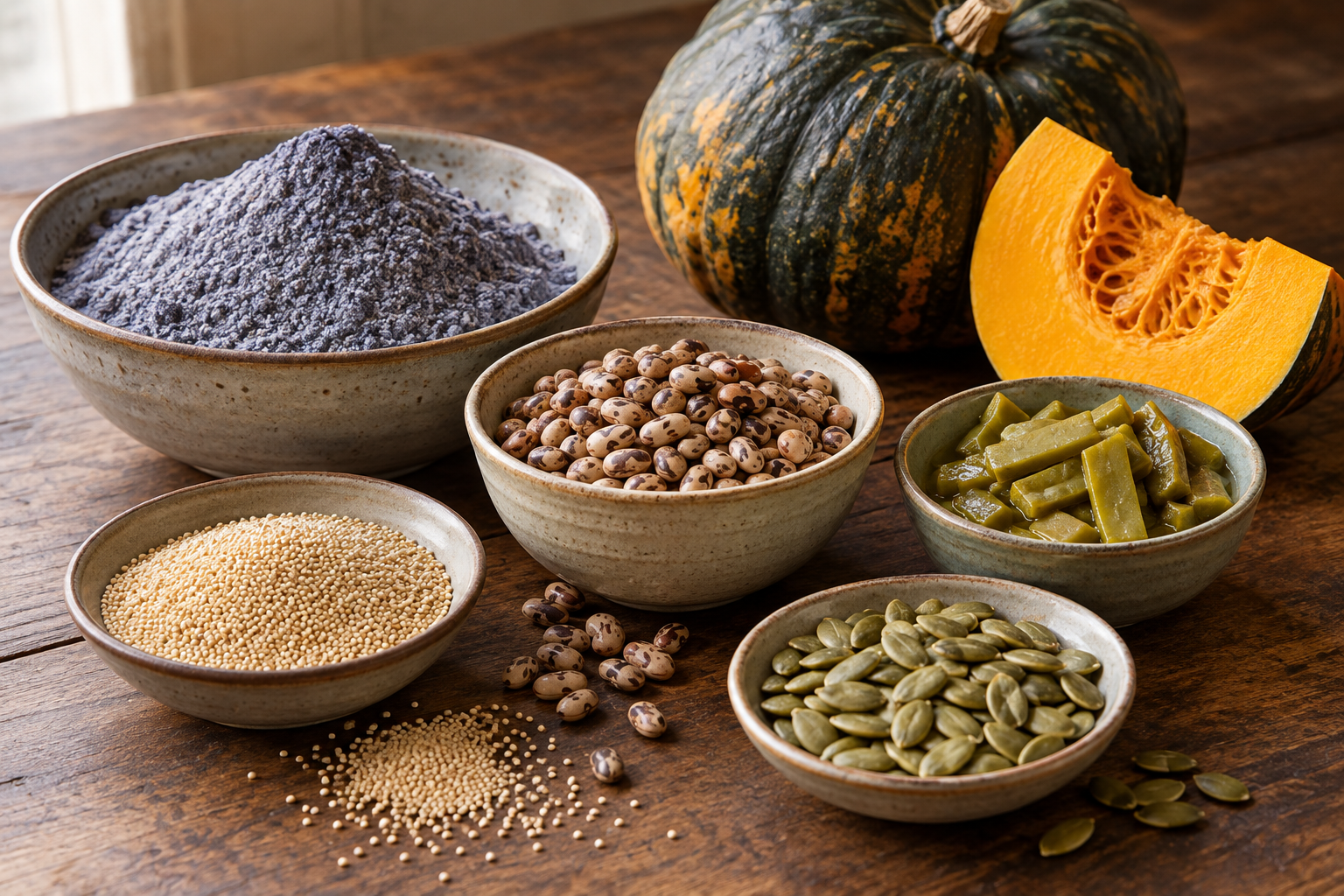
Food history and kitchen connections
Cholla buds appear in the Arizona State Museum’s Tohono O’odham foodways material and in the public NPS interview with O’odham elder Daniel Joaquin. That evidence identifies a food, not this sheet-pan recipe. Knowledge about gathering, cleaning, and cooking cactus belongs to experienced practitioners and cannot be replaced by a brief ingredient list.
Buy a commercially prepared, food-grade product and follow its rehydration instructions before starting. The buds provide a pleasantly substantial contrast to soft roasted squash. Their preparation varies by producer, which is why the listed cooking time begins only when they are ready for the skillet.
Modern adaptation: This original modern side uses fully prepared cholla buds. Commercial green beans offer an easy alternative, openly changing the central ingredient and historical connection. It is not presented as a recovered ancient recipe or as endorsed by a Native nation.
Cook it today
Yield: 4 side portions · Prep 15 min · Cook 35 min (approximate)
Ingredients
- 600 g peeled winter squash, cut into 2 cm cubes
- 200 g commercially prepared cholla buds, fully rehydrated and cooked according to their label
- 25 ml neutral oil (5 teaspoons), divided
- 2 g salt (⅓ teaspoon), adjusted for the prepared buds
- 30 ml water (2 tablespoons)
- 15 ml lemon juice (1 tablespoon)
- 20 g roasted pumpkin seeds (2 tablespoons)
Method
- Read the cholla package before planning the meal. Rehydrate and cook as directed, allowing any soaking time in addition to the times above. Drain well. The quantity here refers to the prepared weight; do not put dry buds directly onto the squash tray.
- Heat the oven to 210°C/410°F. Toss the squash with 15 ml oil and the salt. Spread on a baking sheet and roast for 25–30 minutes, turning halfway through, until tender with browned edges. Crowded pieces need another tray.
- Warm the remaining oil in a skillet over medium heat. Add the prepared buds and water, cover, and heat for 5 minutes. Uncover and cook for 2–3 minutes more to evaporate excess liquid. Follow any higher cooking endpoint required on the package.
- Fold in the roasted squash with a broad spoon, keeping the pieces intact. Add lemon juice and taste before adjusting salt. Transfer to a warmed bowl and scatter over the seeds just before serving.
Substitutions
If you cannot buy prepared buds, replace them with 200 g cooked green beans. This is a practical alternative, not an equivalent historical ingredient. Butternut squash is a reliable grocery option; a firmer pumpkin may need longer roasting.
Serving
Serve beside a plain bean dish, leaving space on the plate for the contrasting textures. Choose smaller squash cubes if preparing this as a filling for modern tortillas. Buying a Native-owned food product, where available, can connect shopping with living food producers.
Storage
Cool promptly and refrigerate within 2 hours for up to 3 days at 4°C/40°F or colder, or follow a shorter product-label limit. Reheat to 74°C/165°F. This is a fresh cooked side, not a shelf-stable preserve.
Sources and evidence notes
- Food, Culture, Health: Traditional Tohono O’odham Foodways — Arizona State Museum: Public educational material identifies regional foods; no recipe prose is reproduced.
- Native Peoples of the Sonoran Desert: The O’odham: Public cultural introduction and a quoted O’odham elder; modern formulation here is independent.
These original modern recipes are inspired by documented ingredients and food traditions. They are not recovered ancient recipes or claims of tribal endorsement. Sources support the historical context; quantities, combinations, substitutions and appliance methods are modern.