Southwest · Regional bean context with modern vegetables
Food history and kitchen connections
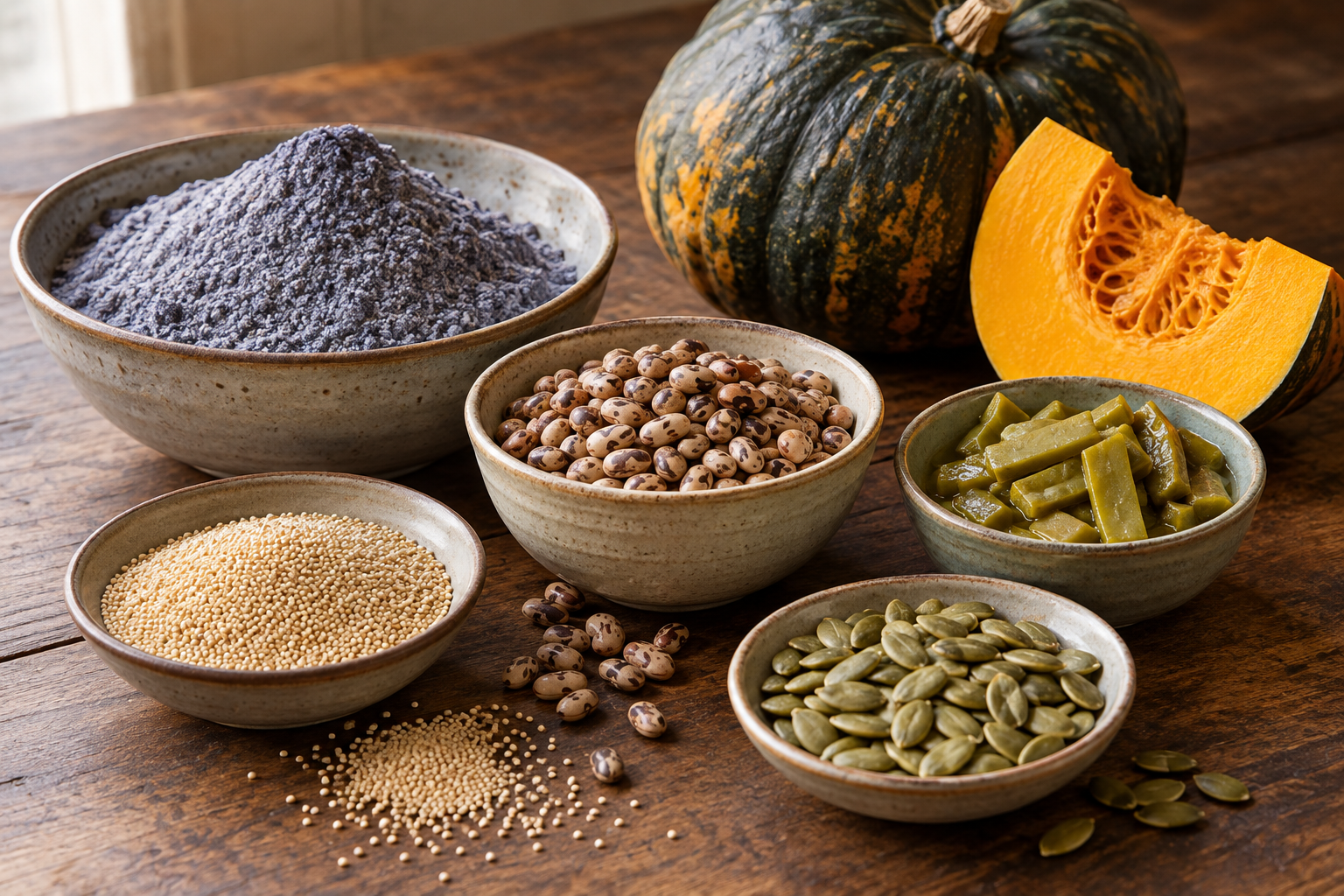
Beans belong to several Southwestern agricultural histories, but those histories should not be collapsed into one cuisine. Here the regional crop connection comes from the NPS account of the Tonto Basin. The salad’s bell pepper, acidic dressing, and serving style are contemporary, not a claim about a Salado recipe.
Warm beans absorb a little dressing more readily than refrigerator-cold beans. Roasted pepper provides sweetness and a soft texture without turning the dish into a soup. Keep the chopped vegetables substantial enough to recognize. This is useful as a light lunch or a room-temperature side for freshly cooked fish, with prompt refrigeration afterward.
Modern adaptation: Canned beans, cultivated bell pepper, lemon juice, and salad assembly are accessible modern decisions. The source supports regional agriculture, not the exact pepper cultivar or combination. It is not presented as a recovered ancient recipe or as endorsed by a Native nation.
Cook it today
Yield: 4 side portions or 2 light lunches · Prep 12 min · Cook 22 min (approximate)
Ingredients
- 480 g drained canned pinto beans (about 3 cups)
- 2 red bell peppers, about 300 g, deseeded and cut into strips
- 80 g onion, sliced thinly (½ medium)
- 30 ml neutral or olive oil (2 tablespoons), divided
- 20 ml lemon juice (4 teaspoons)
- 60 ml water (¼ cup)
- 3 g salt (½ teaspoon), adjusted for canned beans
- 20 g roasted pumpkin seeds (2 tablespoons)
Method
- Heat the oven to 220°C/425°F. Toss pepper strips and onion with 15 ml oil and half the salt on a baking sheet. Spread them apart; crowded vegetables steam instead of browning. Roast for 18–22 minutes, turning once, until soft with browned edges.
- Rinse and drain the beans. Put them in a saucepan with the water, cover, and heat gently for 5–6 minutes. Stir once or twice, then drain any remaining water. The beans should be hot but intact, not bursting apart.
- Whisk the remaining oil with the lemon juice in a large bowl. Add the warm beans and fold gently, working from the bottom so the dressing coats them without crushing them.
- Add the roasted vegetables and their pan juices. Taste before adding the remaining salt. Let stand for 5 minutes, fold once more, and sprinkle with seeds just before serving. If the salad tastes sharp, add a tablespoon of warm water rather than more oil.
Substitutions
Cooked tepary beans work well when available, but their extra preparation time is not included. Use bottled roasted peppers, drained and sliced, for a quicker version; soften the onion separately in a skillet and reduce the overall cooking time.
Serving
Serve warm or just cooled, with the dressing pooled lightly around the beans. A leafy salad and bread turn the two larger portions into a practical lunch. Avoid leaving the bowl on the table for an extended meal.
Storage
Refrigerate within 2 hours in a shallow covered container for up to 3 days at 4°C/40°F or colder. Serve chilled from the refrigerator, or reheat to 74°C/165°F; add seeds afterward to retain their texture.
Sources and evidence notes
- The Salado of the Tonto Basin — Tonto National Monument: Regional agriculture including amaranth; distinguish prehistoric ingredients from a modern dish.
- The Salado Culture — Tonto National Monument: Identifies the archaeological Salado designation and approximately 1250–1450 CE context.
These original modern recipes are inspired by documented ingredients and food traditions. They are not recovered ancient recipes or claims of tribal endorsement. Sources support the historical context; quantities, combinations, substitutions and appliance methods are modern.