Plains · A modern bread featuring documented sunflower and corn crops
Food history and kitchen connections
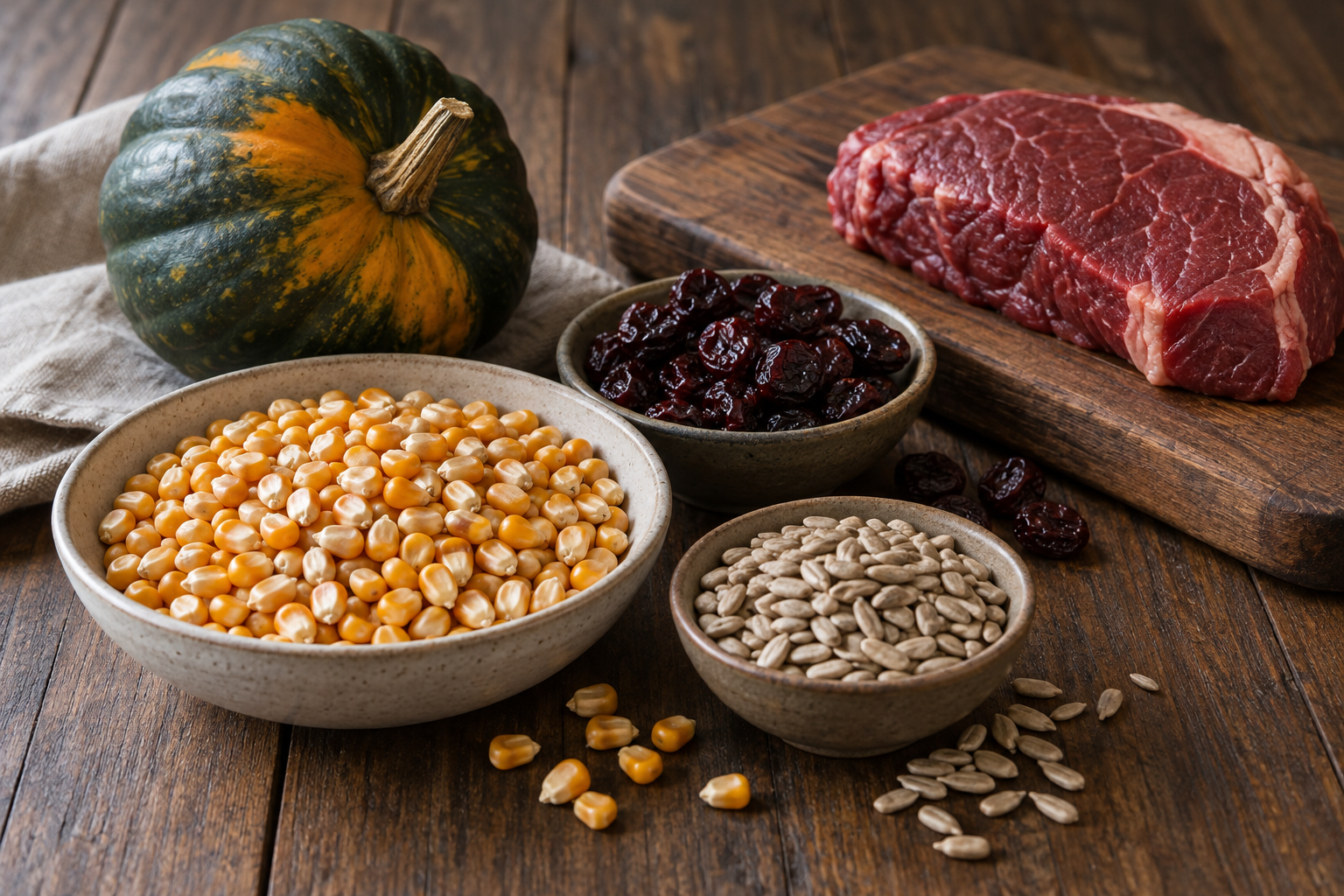
The Knife River garden history documents sunflower seeds and corn in Hidatsa agriculture. These ingredients provide the narrow historical connection for this bread. An oven-baked loaf containing wheat flour, baking powder, and milk belongs to a later set of tools and ingredients, and is described accordingly.
Toasting the seeds before they enter the batter makes them noticeable against the corn. A preheated skillet encourages a firmer bottom crust, while mixing the batter briefly keeps the center tender. The loaf is intentionally only lightly sweetened so it can sit beside beans or soup. Because commercial cornmeal varies in grind, rest the batter briefly to give the grain time to hydrate, then bake immediately after that rest. Do not expect the batter to behave like a yeast dough or an unbaked traditional seed preparation.
Modern adaptation: Original modern quick bread, not an ancient Hidatsa bread recipe. Wheat flour, chemical leavener, egg, and dairy are stated additions, and the documented crops do not authenticate the finished formula.
Cook it today
Yield: 8 wedges · Prep 15 min · Cook 25 min (approximate)
Ingredients
- 3/4 cup fine yellow cornmeal
- 3/4 cup all-purpose flour
- 2 teaspoons baking powder
- 1/2 teaspoon fine salt
- 1 tablespoon sugar
- 1/2 cup unsalted sunflower kernels
- 1 large egg
- 1 cup milk or unsweetened oat beverage
- 3 tablespoons sunflower oil, divided
Method
- Heat the oven to 400°F. Put a 9-inch ovenproof skillet in the oven while it warms. Toast sunflower kernels in a separate dry pan for 3 to 4 minutes, then transfer to a plate to cool.
- Whisk cornmeal, flour, baking powder, salt, and sugar in a bowl. Beat egg, milk, and 2 tablespoons oil in another bowl. Stir wet ingredients into dry just until combined and fold in the seeds.
- Rest batter for 5 minutes. Using oven mitts, remove the hot skillet and add remaining oil, tilting to coat. Pour in batter carefully; the pan and handle are very hot.
- Bake for 20 to 25 minutes, until the top is golden and a skewer inserted into the center shows no wet batter. Let stand 10 minutes before cutting. Leave a mitt on the handle as a visible reminder that it remains hot.
Substitutions
Use pumpkin seeds for a different seed flavor. An 8-inch square baking dish also works; grease it without preheating and expect a slightly softer bottom crust.
Serving
Serve warm wedges with bean spread or soup. For a sweet breakfast, add a spoon of berry sauce at the table rather than increasing batter sugar.
Storage
Cool and store covered in the refrigerator within 2 hours for up to 3 days. Freeze individual wedges for up to 2 months. Contains wheat and egg.
Sources and evidence notes
- The Gardens: Knife River Indian Villages: Documents Hidatsa farming and sunflower use through Buffalo Bird Woman records.
- History of Hidatsa: Pre-1845: MHA Nation-authored NPS educational history of villages and trade.
These original modern recipes are inspired by documented ingredients and food traditions. They are not recovered ancient recipes or claims of tribal endorsement. Sources support the historical context; quantities, combinations, substitutions and appliance methods are modern.