Plains · Inspired by Mandan, Hidatsa, and Arikara agricultural and hunting histories
Food history and kitchen connections
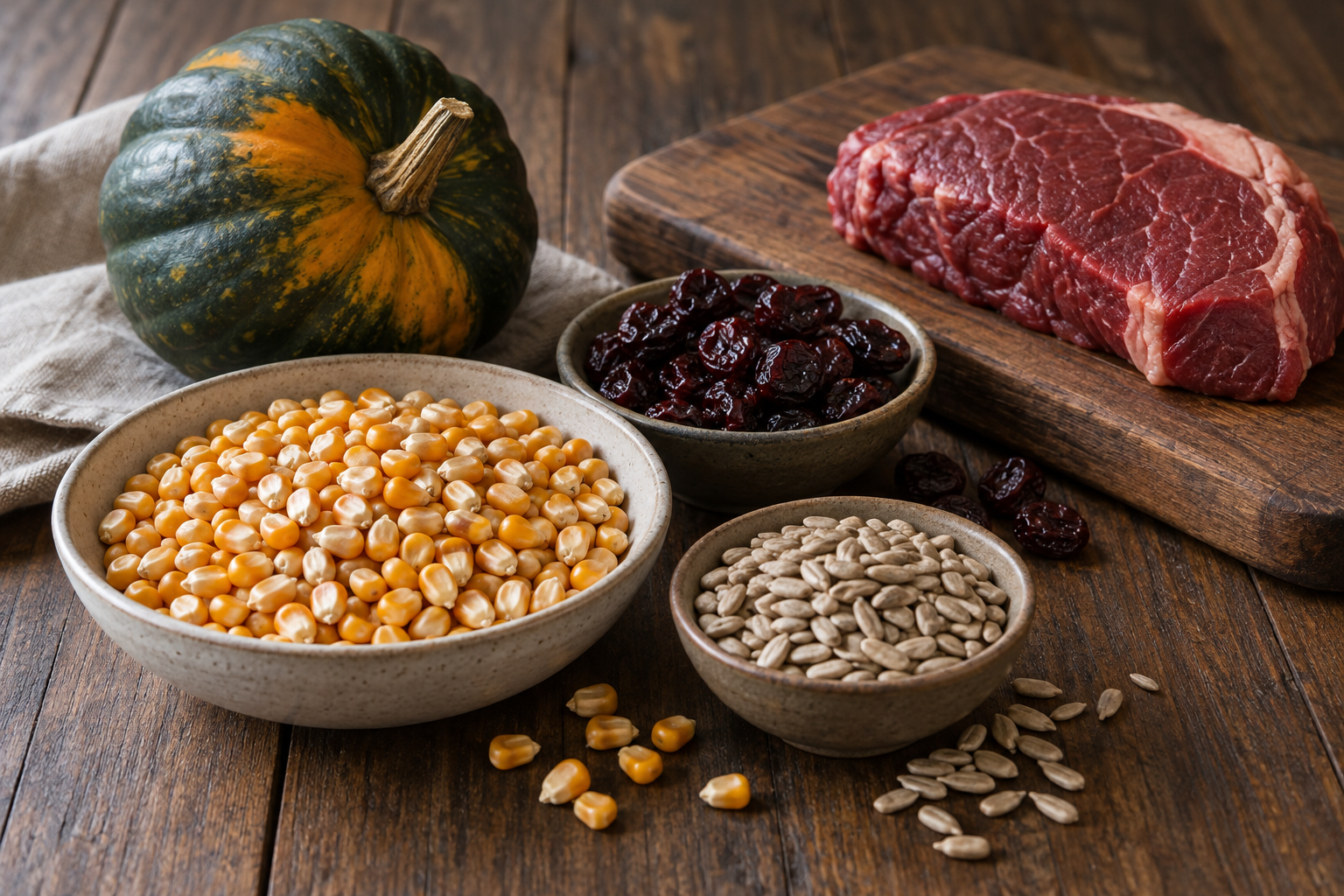
The National Park Service documents bison, cultivated squash, and corn in Mandan, Hidatsa, and Arikara food histories. These communities combined agriculture with hunting; the familiar image of all Plains people following herds leaves out that important distinction. This braise is a new use of the documented ingredients.
Stew-cut bison becomes tender through patient moist cooking rather than the brief heat suited to a steak. Add squash after the meat has had time to soften: if both go into the pot together, the vegetable may dissolve long before the meat is ready. The resulting broth can stay simple. A little purchased onion and thyme are modern seasonings that support the savory flavor without being offered as evidence of an ancestral formula. Check tenderness with a fork as well as temperature.
Modern adaptation: Original modern braise using inspected grocery-store bison, cultivated squash, broth, and an oven. It is inspired by documented foods, not reconstructed from an ancient Mandan, Hidatsa, or Arikara recipe.
Cook it today
Yield: 4 bowls · Prep 20 min · Cook 150 min (approximate)
Ingredients
- 1 1/4 pounds bison stew meat, in 1-inch pieces
- 1 tablespoon sunflower oil
- 1 yellow onion, diced
- 3 cups reduced-sodium beef broth
- 1 cup water
- 1/2 teaspoon dried thyme
- 3/4 teaspoon fine salt
- 3 cups peeled winter squash, in 1-inch cubes
- 1 tablespoon cider vinegar
Method
- Heat the oven to 325°F. Pat bison dry. Warm oil in an ovenproof pot over medium-high heat and brown the meat in two batches, transferring each batch to a clean plate.
- Cook onion in the pot for 5 minutes. Add broth, water, thyme, and salt. Scrape up browned bits, return bison and any plate juices, and bring to a simmer. Cover and place in the oven for 90 minutes.
- Check the meat. It should be beginning to yield to a fork; if still firm, cook another 20 minutes before adding squash. Stir in squash, cover, and cook 30 to 40 minutes more, until both components are tender.
- Whole-cut bison must reach at least 145°F followed by a 3-minute rest; braising for tenderness will normally take it higher. Stir in vinegar and taste the broth. Remove excess surface fat if desired.
Substitutions
Use beef chuck for a clearly identified modern substitute. Frozen cubed squash can be added directly but may soften faster, so check after 20 minutes.
Serving
Serve in wide bowls with plain cooked corn on the side. Keep the squash pieces large enough to lift separately from the rich broth.
Storage
Refrigerate in shallow containers within 2 hours for up to 3 days. Reheat to 165°F. Freeze for up to 2 months.
Sources and evidence notes
- Subsistence: Tribal Nutrition and Health: Mandan, Hidatsa, and Arikara food education; history only, not an endorsement.
- History of Hidatsa: Pre-1845: MHA Nation-authored NPS educational history of villages and trade.
These original modern recipes are inspired by documented ingredients and food traditions. They are not recovered ancient recipes or claims of tribal endorsement. Sources support the historical context; quantities, combinations, substitutions and appliance methods are modern.