Southeast · Inspired by publicly documented regional nuts, grapes, and cultivated squash
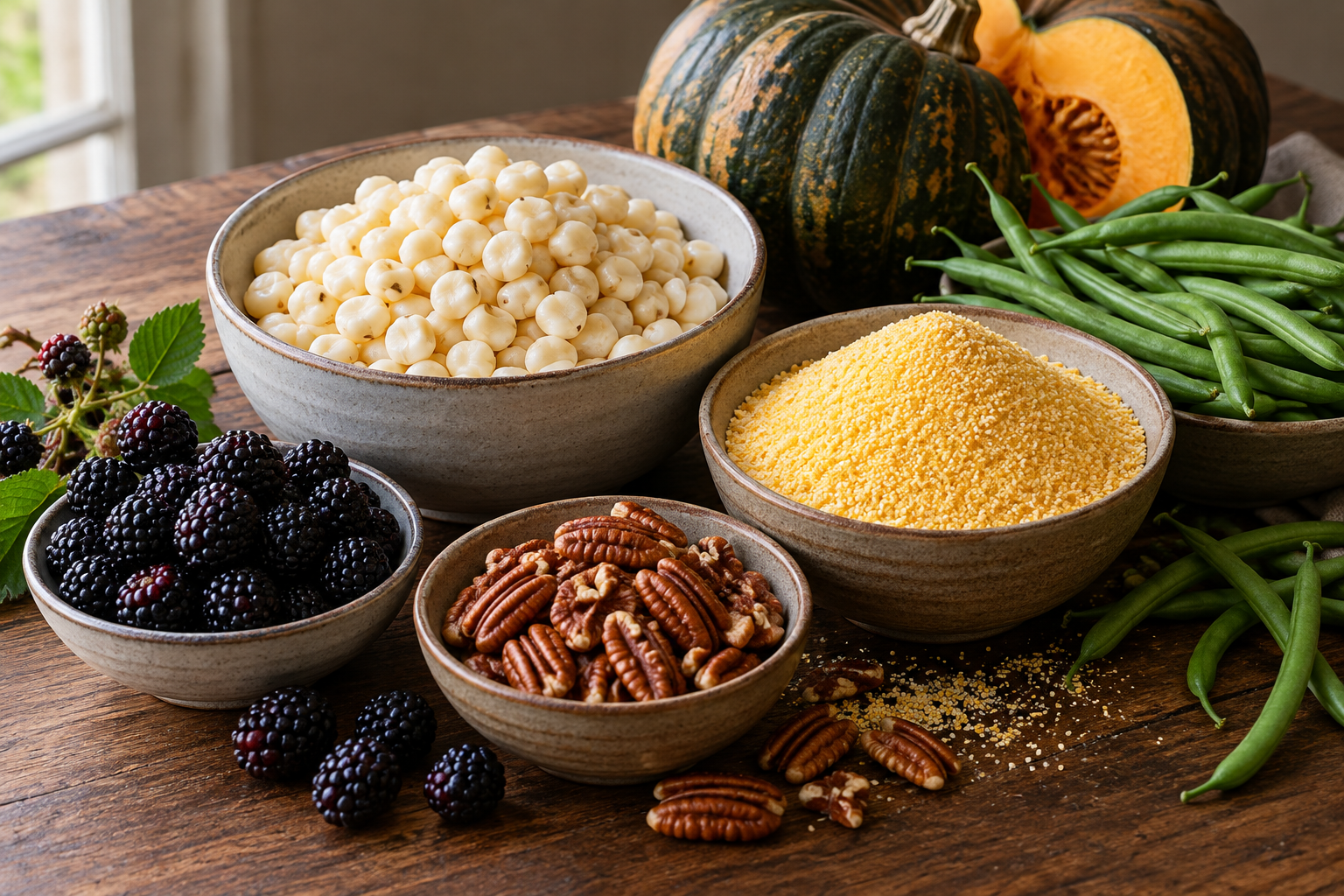
Food history and kitchen connections
A Smithsonian Folklife overview names chestnuts, grapes, and squash in its discussion of Native food foundations in Appalachia. That regional overview does not identify a historical recipe matching this tray of vegetables and fruit. It offers a food-landscape connection, while the oven method and combination remain the work of this collection.
The chestnuts in a supermarket pouch are usually not American chestnuts, and that difference belongs in the recipe rather than being hidden. Their soft starchiness supplies a contrast to browned squash and juicy grapes. Add the already-cooked nuts partway through roasting so they warm without drying into hard pieces. The grapes enter late for the same practical reason. This staged approach lets each ingredient keep its character, making a simple side dish from components that would otherwise cook at different speeds.
Modern adaptation: Original modern roast using butternut squash, commercially cooked chestnuts, seedless grapes, and olive oil. Imported or cultivated chestnuts are an explicit grocery substitute, not evidence of ancestral cultivar continuity.
Cook it today
Yield: 4 side portions · Prep 15 min · Cook 35 min (approximate)
Ingredients
- 1 1/2 pounds peeled butternut squash, cut into 3/4-inch cubes
- 1 cup commercially cooked peeled chestnuts, halved
- 1 cup seedless red grapes
- 1 1/2 tablespoons olive or sunflower oil
- 1/2 teaspoon fine salt
- 1/4 teaspoon black pepper
- 1 tablespoon cider vinegar
- 2 tablespoons chopped parsley, optional
Method
- Heat the oven to 425°F. Put squash on a rimmed baking sheet and toss with oil, salt, and pepper. Spread it in a single layer with space between pieces so it roasts rather than steams.
- Roast for 20 minutes. Turn the squash with a spatula and add chestnuts, distributing them through the tray rather than leaving them on an exposed dry edge.
- Roast 8 minutes more, then add grapes and return the tray to the oven for 5 to 7 minutes. The squash should be tender and browned, the nuts warmed through, and some grape skins just beginning to split.
- Transfer to a serving dish. Drizzle with vinegar while warm and toss once, gently, so the chestnuts do not crumble completely. Add parsley if desired. Taste a piece containing both squash and grape before adjusting salt.
Substitutions
Use commercially cooked frozen chestnuts, thawed, if shelf-stable pouches are unavailable. Cooked white beans make a different nut-free version; pat them dry before adding.
Serving
Serve alongside roast turkey or a bean main course. Any tray juices belong on the plate; they carry the balance of fruit and vinegar.
Storage
Refrigerate within 2 hours for up to 3 days. Reheat covered until hot throughout. Chestnuts are tree nuts; check packaging and disclose them.
Sources and evidence notes
- A Taste of Appalachia: Smithsonian Folklife: Regional historical overview of nuts, fruit, and cultivated foods.
- Early History and Cherokee Removal: National Museum of the American Indian: Supports Cherokee agriculture in the eastern homeland.
These original modern recipes are inspired by documented ingredients and food traditions. They are not recovered ancient recipes or claims of tribal endorsement. Sources support the historical context; quantities, combinations, substitutions and appliance methods are modern.