Southeast · Inspired by southeastern squash cultivation, with a modern cake format
Food history and kitchen connections
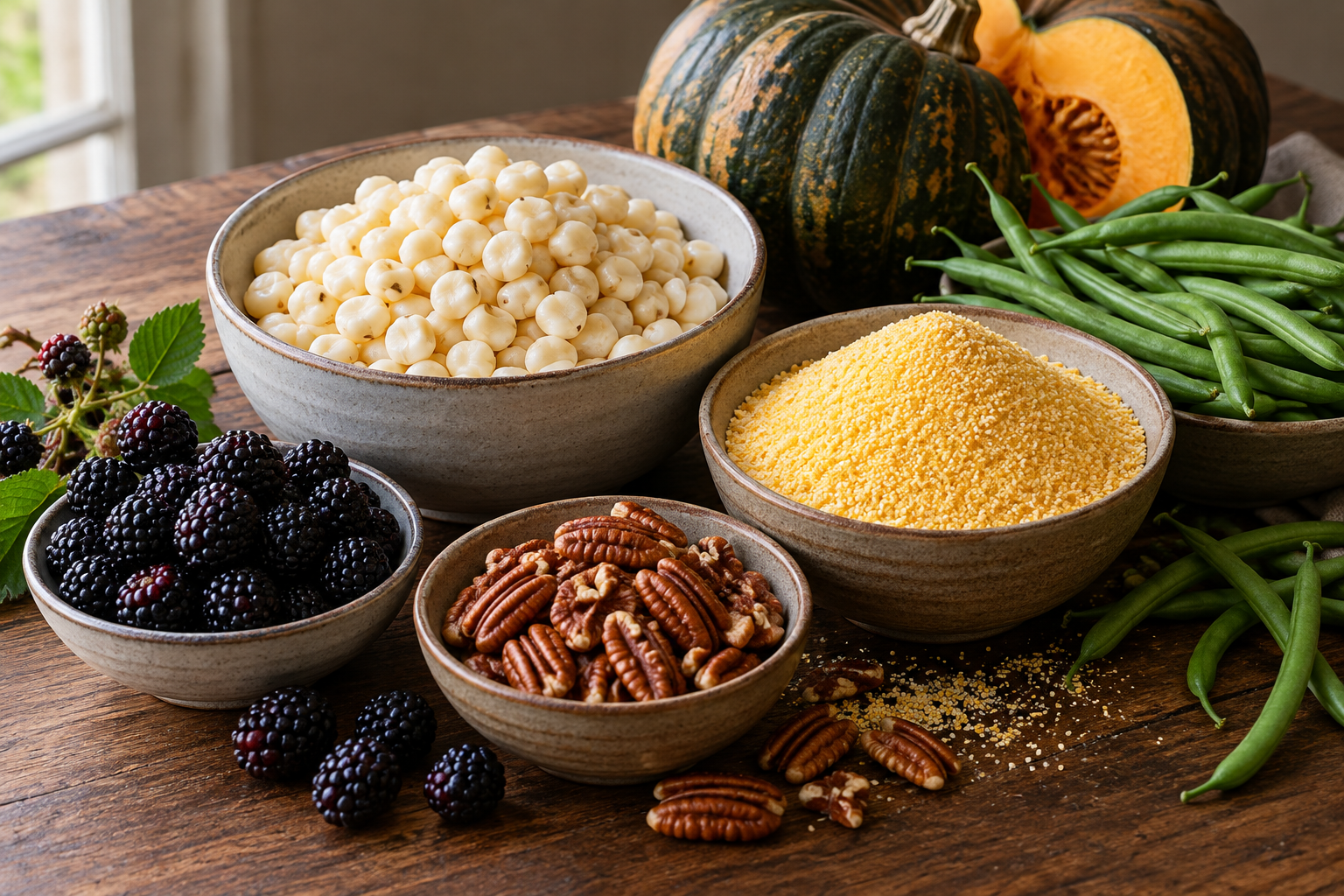
Squash has a deep history in eastern North American agriculture, and Choctaw Nation documents pumpkin growing within its own agricultural history. These are related scales of evidence, not permission to attribute one modern patty to every southeastern nation. The cakes below use the documented crop as a starting point.
Cooked squash contains variable amounts of water. A dry mash from roasted squash will shape readily, while a watery puree may need a little more meal and a longer rest. Baking the cakes on parchment avoids the fragility of turning a soft vegetable mixture in hot oil. Pumpkin seeds add small crisp pieces to an otherwise smooth interior. An egg supplies a dependable modern binder. Together, these choices produce a practical side dish whose format is openly contemporary, even as its central plant has a much longer history.
Modern adaptation: Original modern oven cakes using cooked squash, cornmeal, pumpkin seeds, and an egg. Their binder, shape, and oven method are not claimed as an ancient southeastern preparation.
Cook it today
Yield: 4 servings, two cakes each · Prep 20 min · Cook 25 min (approximate)
Ingredients
- 2 cups plain roasted winter squash, mashed and cooled
- 1 large egg
- 1/2 cup fine yellow cornmeal, plus 2 tablespoons if needed
- 1/3 cup unsalted hulled pumpkin seeds, roughly chopped
- 2 scallions, finely sliced
- 1/2 teaspoon fine salt
- 1/4 teaspoon black pepper
- 1 tablespoon sunflower oil
Method
- Heat the oven to 400°F. Line a baking sheet with parchment and brush it with half the oil. If the squash mash looks watery, drain it in a fine sieve for 10 minutes before measuring.
- Beat the egg in a bowl. Add squash, 1/2 cup cornmeal, seeds, scallions, salt, and pepper. Stir well and rest 10 minutes. The mixture should hold a soft mound; add extra cornmeal only if it spreads immediately.
- Divide into eight portions on the sheet. Flatten gently into cakes about 1/2 inch thick. Brush tops with remaining oil, using a light hand so the shapes remain intact.
- Bake for 20 to 25 minutes, until the edges begin to brown and the centers are set. Check that the egg-containing mixture reaches 160°F. Rest 5 minutes before lifting with a thin spatula.
Substitutions
Use plain canned pumpkin if it is thick, draining if necessary. Unsalted sunflower kernels replace pumpkin seeds; chopped pecans are another option but introduce tree nuts.
Serving
Add a spoonful of bean puree or yogurt on the side. Two cakes with a crisp salad can be a light lunch rather than only a garnish.
Storage
Refrigerate within 2 hours for up to 3 days. Reheat on a baking sheet until hot throughout. Freeze with parchment between cakes for up to 2 months.
Sources and evidence notes
- Where Did Your Favorite Thanksgiving Day Food Originate? Smithsonian: Gives archaeological context for the domestication and movement of squash and maize.
- Agriculture: Choctaw Nation: Supports discussion of Choctaw crops and changing agriculture.
These original modern recipes are inspired by documented ingredients and food traditions. They are not recovered ancient recipes or claims of tribal endorsement. Sources support the historical context; quantities, combinations, substitutions and appliance methods are modern.