Great Lakes · Menominee squash and maple context; original modern adaptation
Food history and kitchen connections
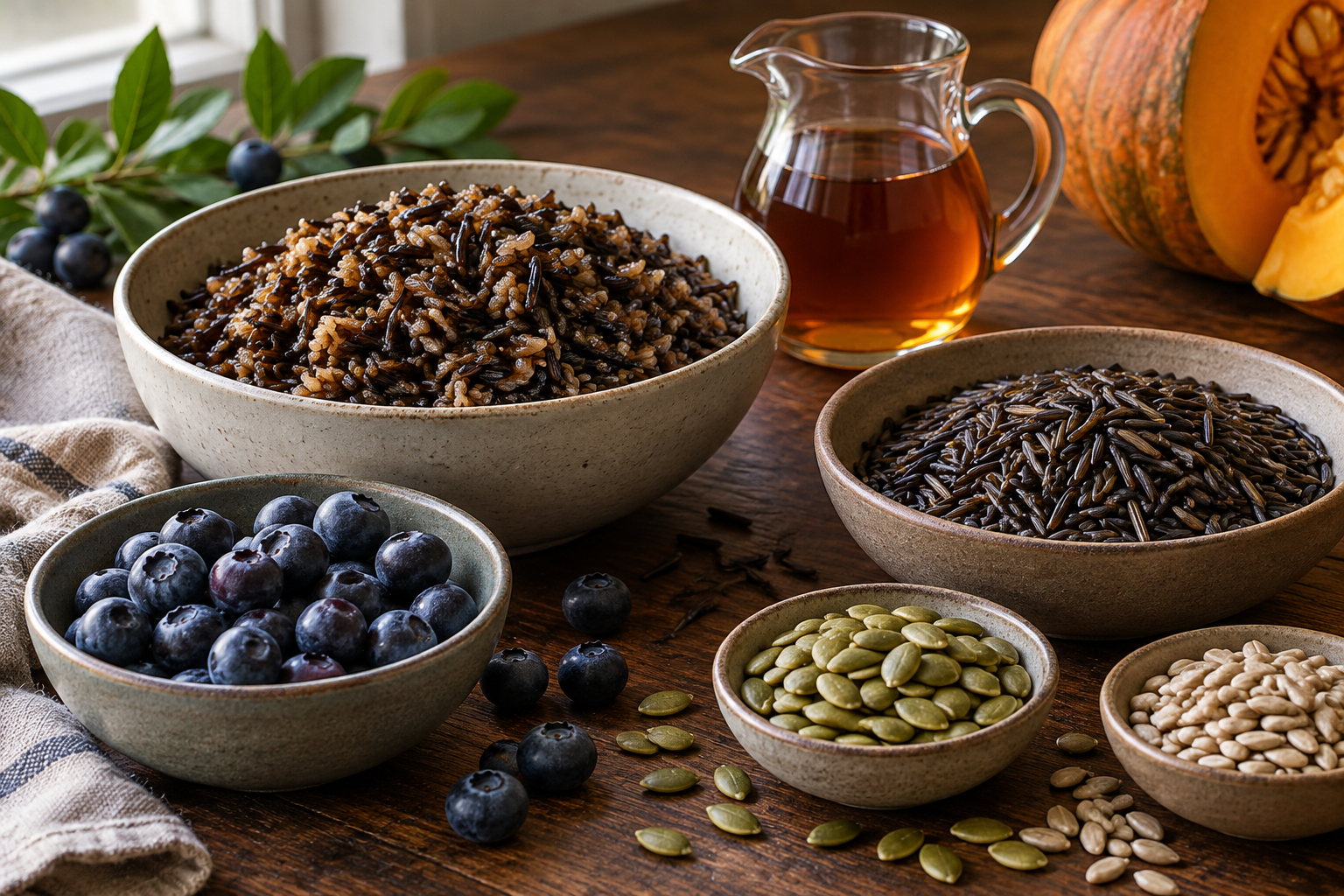
The Menominee Tribe’s public subsistence account names squash grown in small gardens and maple products used for flavoring. Milwaukee Public Museum describes maple sugar used beyond sweets. Those references support an ingredient discussion while leaving this blended soup a modern culinary interpretation.
The small quantity of maple syrup here is a seasoning. Adding too much would obscure the squash and turn the bowl toward dessert. Blending cooked sunflower kernels into the vegetables adds richness without cream, though a household blender may leave a slightly textured result. A final spoonful of toasted seeds makes that texture feel deliberate. The soup uses peeled supermarket squash and packaged broth, so it asks for no wild plant gathering. It can be prepared as a contemporary starter or light meal while recognizing that the source’s account of garden crops is part of a much larger Menominee food system and living culture.
Modern adaptation: This is an original modern blended soup made with market squash, bottled oil, stock, and purchased maple syrup. The blender and proportions are present-day choices. It is not represented as an ancient Menominee soup, a medicinal preparation, or a recipe endorsed by the tribe.
Cook it today
Yield: 4 main-course or 6 starter servings · Prep 20 min · Cook 35 min (approximate)
Ingredients
- 2 tablespoons sunflower oil, divided
- 1 medium onion, diced
- 5 cups peeled butternut squash in 1-inch cubes
- 1/2 cup unsalted sunflower kernels, divided
- 4 cups low-sodium vegetable stock
- 1 cup water, plus more as needed
- 1 tablespoon pure maple syrup
- 1/2 teaspoon fine salt
- 1 tablespoon lemon juice
Method
- Warm 1 tablespoon oil in a soup pot. Cook onion over medium heat for 6 minutes until translucent, stirring so it does not burn.
- Add squash, 1/3 cup sunflower kernels, stock, water, and salt. Bring to a boil, reduce to a simmer, and cook partly covered for 25 minutes, until squash is very tender.
- While the soup cooks, toast remaining kernels in remaining oil over medium-low heat for 2 to 3 minutes, stirring. Transfer to a plate as soon as fragrant.
- Remove the pot from heat. Purée with an immersion blender. If using a countertop blender, cool first and follow its hot-liquid instructions; never seal steaming liquid in a closed blender.
- Stir in maple syrup and lemon juice. Add water to reach a pourable consistency, warm gently, and taste. Ladle into bowls and garnish with toasted kernels.
Substitutions
Pumpkin or kabocha squash can replace butternut; peel before cooking and add water as needed. Pumpkin kernels may replace sunflower kernels. Use plain water instead of stock and adjust salt after blending.
Serving
Serve with a spoonful of cooked beans or plain wild rice for a more substantial meal. The soup should pour smoothly rather than stand like a mash.
Storage
Refrigerate within 2 hours in shallow containers for up to 3 days at 40°F or below. Reheat to 165°F, stirring. Freeze without garnish up to 2 months.
Sources and evidence notes
- Menominee Indian Tribe of Wisconsin: Facts and Figures, Subsistence: Tribal publication identifies wild rice, small gardens, boiling, roasting, and maple sweetening; supports history, not recipe proportions.
- Milwaukee Public Museum: Maple Sugar: Documents Great Lakes maple processing and culinary uses. This book uses purchased maple products and does not reproduce ceremonial knowledge.
These original modern recipes are inspired by documented ingredients and food traditions. They are not recovered ancient recipes or claims of tribal endorsement. Sources support the historical context; quantities, combinations, substitutions and appliance methods are modern.