Great Lakes · Ojibwe rice context; original modern adaptation
Food history and kitchen connections
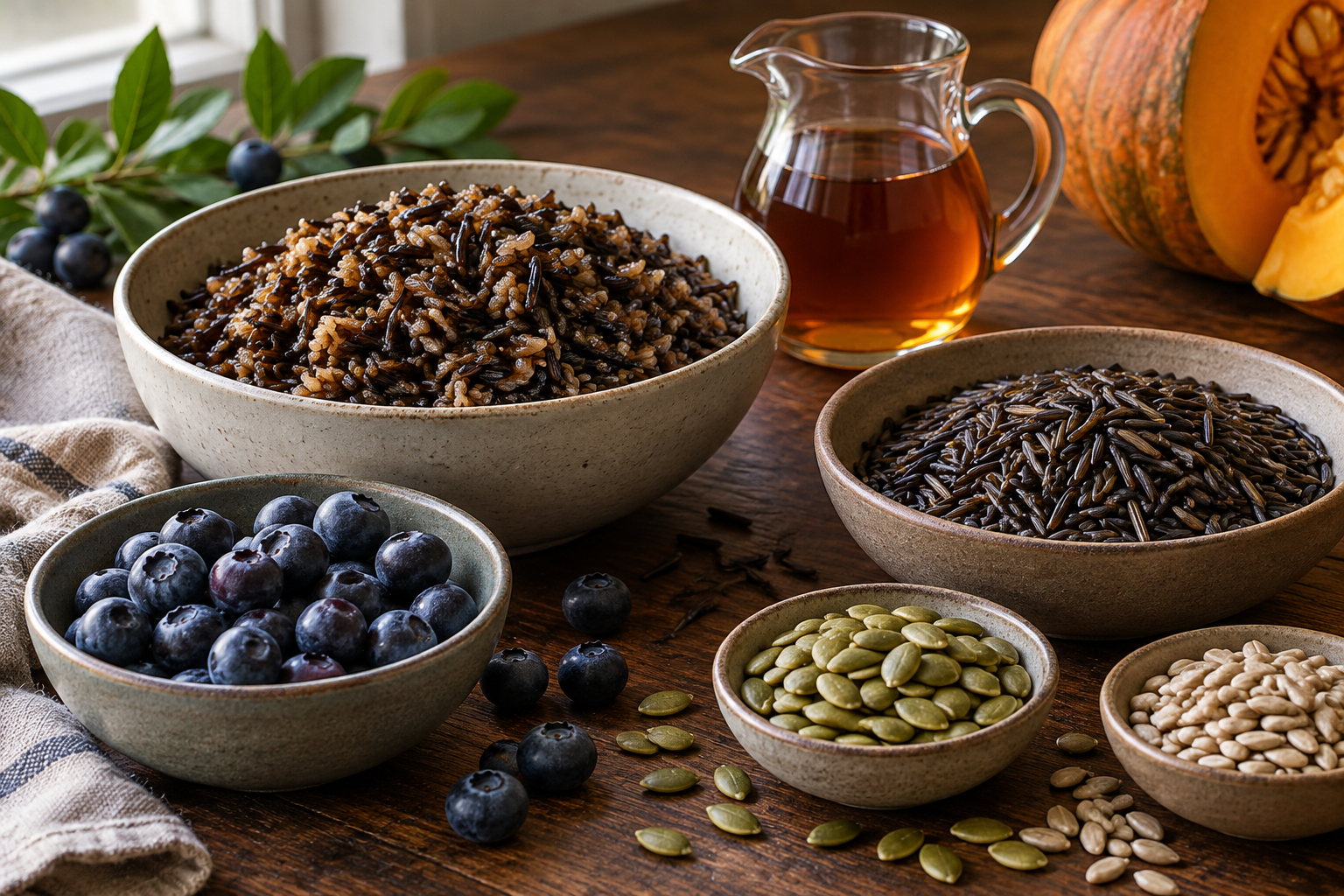
Wild rice is central to the Great Lakes food history described by GLIFWC and Milwaukee Public Museum. Both resources also show its use extending into many present-day dishes. This recipe treats a stuffed supermarket pepper as a modern serving form, not as a recovered Ojibwe preparation.
The peppers are softened before they are filled, which keeps the turkey from becoming dry while waiting for a raw vegetable shell to cook. The rice is also cooked separately and drained. Once those two components are ready, the filling needs only a short final bake. Ground farmed turkey, bell peppers, canned tomatoes, and onion create a practical contemporary supper. Their inclusion should not be used to imply that every ingredient had the same place in an earlier Great Lakes kitchen. The historical connection is deliberately narrow: the importance of the grain. The recipe is a new arrangement meant to give that grain a substantial role on the plate.
Modern adaptation: These are original modern stuffed peppers with farmed turkey and canned tomatoes. Purchased hand-harvested manoomin and cultivated paddy rice differ; follow the package timing. Bell-pepper boats and the tomato filling are the author’s choices, not evidence of an ancient Native American dish.
Cook it today
Yield: 4 main-course servings · Prep 20 min · Cook 65 min (approximate)
Ingredients
- 3/4 cup uncooked finished wild rice, rinsed
- 4 cups water for rice
- 4 large bell peppers, halved lengthwise and seeded
- 1 tablespoon sunflower oil
- 1 small onion, diced
- 1 pound ground turkey
- 1 can (14.5 ounces) diced tomatoes, drained, reserving 1/2 cup juice
- 1/2 teaspoon fine salt
- 1/4 cup unsalted sunflower kernels
Method
- Cook wild rice in water according to its package until tender, then drain. Heat oven to 400°F and arrange pepper halves cut-side up in a 9-by-13-inch baking dish.
- Add reserved tomato juice to the dish around the peppers. Cover with foil and bake for 15 minutes to begin softening them.
- Meanwhile, warm oil in a skillet. Cook onion for 5 minutes. Add ground turkey and break it into small pieces; cook until every part reaches 165°F.
- Fold drained tomatoes, cooked rice, and salt into turkey. Spoon loosely into pepper halves. Cover again and bake for 15 minutes, until peppers are tender and filling is steaming.
- Uncover, scatter sunflower kernels over each pepper, and bake for 5 minutes more. If using refrigerated cooked rice, verify the filling reaches 165°F before serving.
Substitutions
Ground chicken works if cooked to 165°F. For a meatless filling, use 2 cans drained cooked white beans and vegetable stock in place of tomato juice if needed. Do not add dry rice to the filling.
Serving
Allow two pepper halves per person. A spoonful of the juices from the baking dish keeps the filling moist without requiring a separate sauce.
Storage
Refrigerate within 2 hours in shallow containers at 40°F or below for up to 3 days. Reheat covered to 165°F. Freeze individual pepper halves up to 1 month.
Sources and evidence notes
- Milwaukee Public Museum: Wild Rice: Describes wild rice as an Ojibwe and Menominee staple and several historical food pairings; supports ingredient history only.
- GLIFWC: Wild Rice, Manoomin (2019): Intertribal commission explains manoomin and distinguishes wild-grown, hand-harvested grain from cultivated paddy rice; supports sourcing context only.
These original modern recipes are inspired by documented ingredients and food traditions. They are not recovered ancient recipes or claims of tribal endorsement. Sources support the historical context; quantities, combinations, substitutions and appliance methods are modern.