Great Lakes · Ojibwe and Menominee wild rice context; original modern adaptation
Food history and kitchen connections
Milwaukee Public Museum identifies wild rice as an important Ojibwe and Menominee staple. GLIFWC distinguishes wild-grown hand-harvested manoomin from cultivated paddy wild rice. Those are meaningful differences in sourcing, finishing, and cooking behavior; a supermarket label should be read carefully.
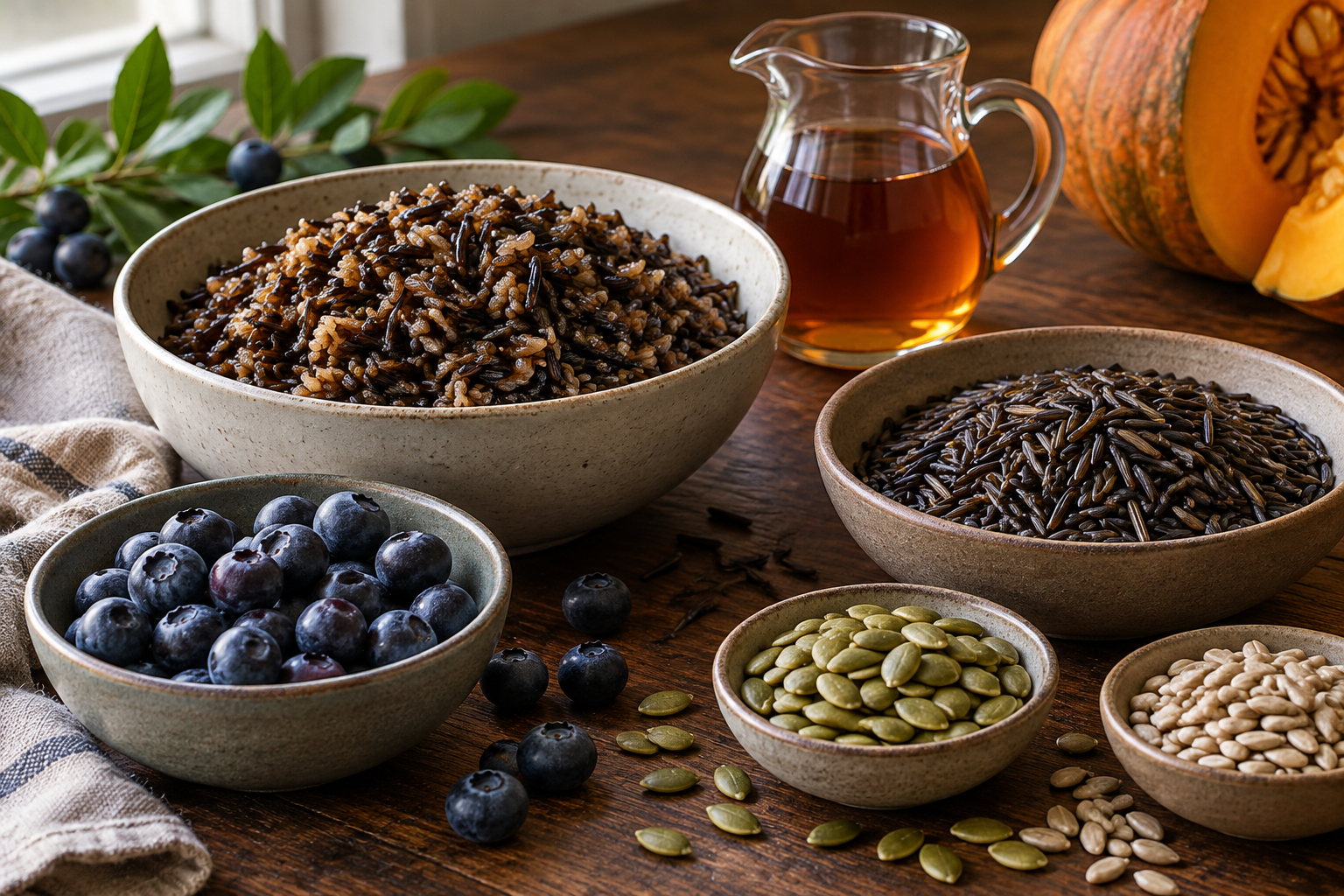
This pilaf makes the grain the largest component of the dish rather than a decorative addition to ordinary rice. Cranberries supply tartness and hazelnuts a firm contrast. Neither the combination nor its dressing is presented as an ancient formula. Cooking the grain separately lets the cook judge tenderness without softening all the other ingredients for the same length of time. A wide serving bowl then allows steam to escape, keeping the grains distinct. The result is useful warm or chilled, but refrigeration remains essential once a cooked grain has left the stove.
Modern adaptation: This is an original modern pilaf with commercial cranberries, hazelnuts, lemon, and bottled oil. Buy finished food-grade wild rice; purchased hand-harvested grain and cultivated paddy rice differ, so follow the package timing. Do not substitute a seasoned rice blend and expect the same proportions.
Cook it today
Yield: 4 side-dish servings · Prep 15 min · Cook 50 min (approximate)
Ingredients
- 1 cup uncooked finished wild rice, rinsed
- 4 cups water, plus more if needed
- 1/2 teaspoon fine salt, divided
- 1/3 cup dried cranberries
- 1/3 cup chopped unsalted hazelnuts
- 1 tablespoon sunflower oil
- 1 tablespoon lemon juice
- 2 tablespoons chopped parsley
Method
- Read the wild-rice package first, noting its timing and whether it describes hand-parched or cultivated grain. Bring the measured water and 1/4 teaspoon salt to a boil in a saucepan. Add rinsed wild rice, reduce to a gentle simmer, and partially cover.
- Begin tasting near the earliest time printed on the package; hand-parched rice can be ready sooner than the original 25-minute first check. Other products may need 45 to 60 minutes or longer. A few grains may split and open as they cook. Taste several cooled grains: stop when they are tender with a little chew and no hard center. Add hot water if the pan approaches dryness.
- Drain in a fine-mesh strainer, shake gently, and spread the rice in a broad bowl for about 5 minutes so excess steam escapes. Do not rinse it after cooking. If making a cold pilaf, transfer promptly to a shallow container and refrigerate rather than waiting for a whole bowl to reach room temperature.
- Toast hazelnuts in a dry skillet over medium-low heat for 3 to 4 minutes, stirring. Tip onto a plate immediately when fragrant; let them cool while finishing the dressing.
- Whisk oil, lemon juice, and remaining salt in the serving bowl. Fold in the warm drained rice, cranberries, and parsley. Taste a spoonful containing both rice and cranberry before adding seasoning. Add hazelnuts just before serving. For a chilled version, keep the nuts separate until the pilaf comes out of the refrigerator.
Substitutions
Use chopped walnuts or sunflower kernels instead of hazelnuts, toasting gently and keeping them separate until service. Unsweetened dried cranberries make a tarter pilaf. If using already cooked refrigerated wild rice, start with 3 cups and reheat to 165°F before mixing for warm service. A seasoned rice blend needs its own package water ratio and will give a different dish.
Serving
Serve as a grain-centered side with cooked fish, beans, or roasted vegetables. Avoid packing it into the cavity of a bird for this preparation.
Storage
Refrigerate within 2 hours in a shallow container, up to 3 days at 40°F or below. Reheat to 165°F for hot service or eat cold while properly chilled.
Kitchen cues and troubleshooting
Do not force every grain to burst wide open: use the tenderness of several sampled grains as the final cue. Drain well before dressing; pooled cooking water dilutes the lemon and oil. Adding nuts at the table makes this an easy make-ahead side while keeping their texture.
Sources and evidence notes
- Milwaukee Public Museum: Wild Rice: Describes wild rice as an Ojibwe and Menominee staple and several historical food pairings; supports ingredient history only.
- GLIFWC: Wild Rice, Manoomin (2019): Intertribal commission explains manoomin and distinguishes wild-grown, hand-harvested grain from cultivated paddy rice; supports sourcing context only.
- University of Minnesota Extension: Wild or brown rice: Current cooking guidance notes opened kernels and faster cooking for hand-parched wild rice; cultural and sourcing context remains with the museum and intertribal sources above.
These original modern recipes are inspired by documented ingredients and food traditions. They are not recovered ancient recipes or claims of tribal endorsement. Sources support the historical context; quantities, combinations, substitutions and appliance methods are modern.