Northeast · Wampanoag squash and nut context; original modern adaptation
Food history and kitchen connections
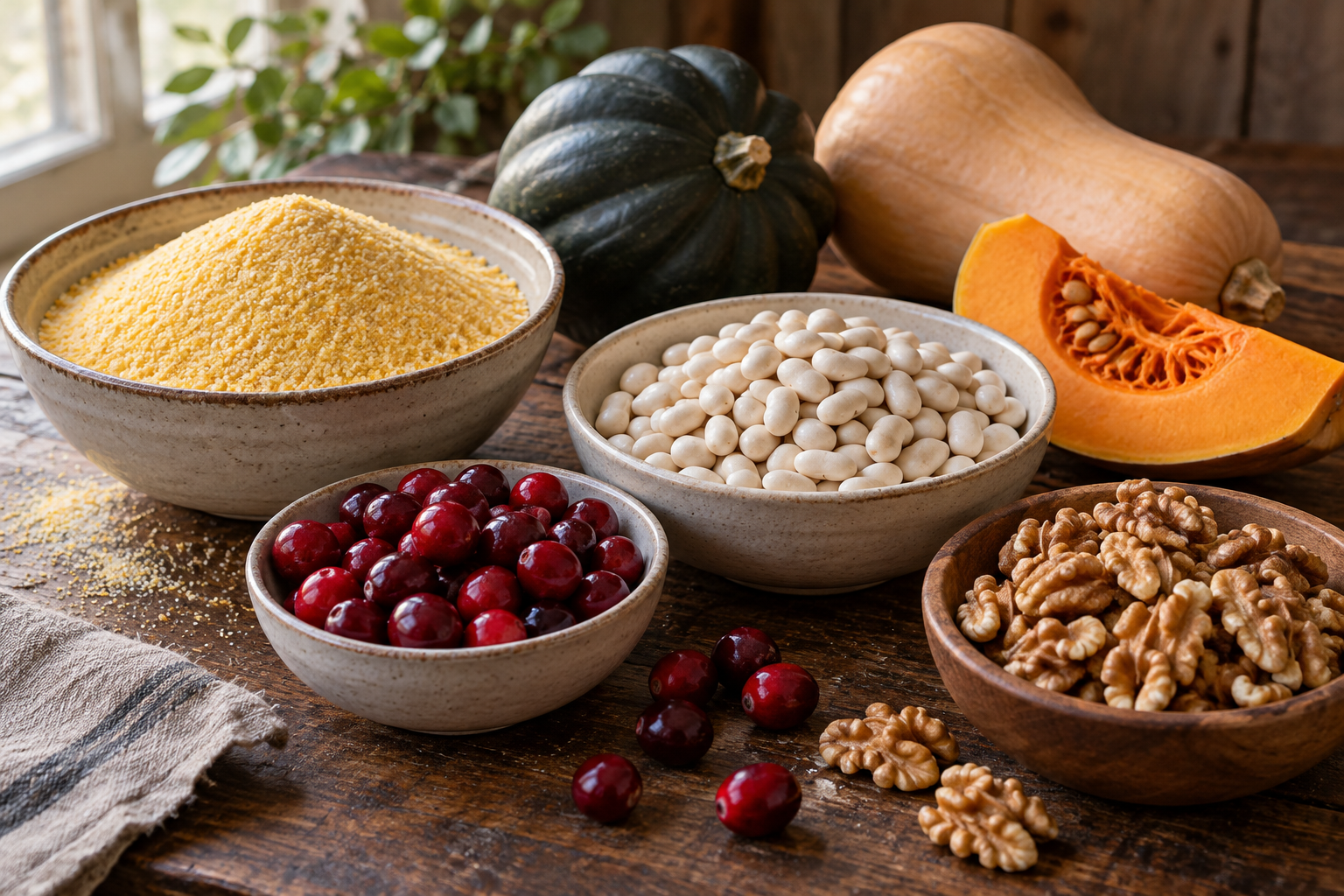
Plimoth Patuxet Museums describes squash and pumpkin cultivation in Wampanoag gardens and nuts added to a range of foods. These broad categories support an ingredient-led discussion. The sources do not identify the packaged chestnuts, pumpkin variety, or mash below as a specific ancient dish.
Chestnuts are selected here for their soft, starchy texture. Commercially cooked and peeled edible chestnuts are easy to chop and fold into pumpkin without requiring a reader to identify or process nuts collected outdoors. They are a modern ingredient choice, not a substitute to be hidden. Roasting the pumpkin before mashing removes some moisture and concentrates its flavor, while toasted sunflower kernels add a crisp finishing contrast. The dish remains coarse enough for the chestnut pieces to be noticed. Keeping it unsweetened makes it useful alongside beans or poultry; maple syrup can be offered separately if a household prefers a sweeter side.
Modern adaptation: This is an original modern side dish inspired by regional squash and nut food categories. Use a sealed food product labeled cooked edible chestnuts; never use horse chestnuts or unidentified gathered nuts. The oven, commercially peeled chestnuts, bottled oil, and measured salt are current conveniences.
Cook it today
Yield: 6 side-dish servings · Prep 20 min · Cook 40 min (approximate)
Ingredients
- 2 pounds peeled pumpkin or butternut squash, cut into 1-inch cubes
- 2 tablespoons sunflower oil, divided
- 1/2 teaspoon fine salt
- 1 package (about 6 ounces) fully cooked peeled edible chestnuts, roughly chopped
- 1/3 cup water or low-sodium vegetable stock
- 1/3 cup unsalted sunflower kernels
- 1 tablespoon pure maple syrup, optional
Method
- Heat oven to 400°F. Toss pumpkin with 1 tablespoon oil and salt on a lined rimmed tray. Spread in one layer so the pieces roast rather than steam.
- Roast for 30 to 35 minutes, turning once, until very tender and lightly browned. Smaller cubes may finish earlier; remove any that begin to scorch.
- Meanwhile, warm remaining oil in a small skillet. Add sunflower kernels and stir over medium-low heat for 2 to 3 minutes until fragrant. Tip onto a plate.
- Transfer hot pumpkin to a saucepan with chestnuts and water or stock. Mash coarsely with a potato masher, leaving pieces of chestnut visible.
- Warm over low heat for 3 to 5 minutes, stirring, until steaming. Add a spoonful more water if needed. Taste before adding optional syrup and finish with toasted kernels.
Substitutions
Use another commercially cooked edible chestnut product if its label has no added sugar. For a nut-free version, leave chestnuts out and add cooked white beans, lightly mashed. Pumpkin kernels replace sunflower kernels.
Serving
Scoop into a warm serving bowl and add the toasted seeds at the table. The mash should be moist enough to hold on a spoon.
Storage
Refrigerate within 2 hours at 40°F or below for up to 3 days. Reheat to 165°F with a little water. Freeze without the seed topping up to 1 month.
Sources and evidence notes
- Plimoth Patuxet Museums: Growing Food: Documents Wampanoag corn, beans, squash, food storage, and gathered or aquatic foods; supports history only.
- Plimoth Patuxet Museums: What’s For Dinner?: Documents Wampanoag fish, shellfish, nuts, berries, and corn foods; does not authenticate the modern combination.
These original modern recipes are inspired by documented ingredients and food traditions. They are not recovered ancient recipes or claims of tribal endorsement. Sources support the historical context; quantities, combinations, substitutions and appliance methods are modern.