Northeast · Regional squash and maple ingredients; original modern adaptation
Food history and kitchen connections
Onondaga Nation lists squash among foundational crops. Milwaukee Public Museum’s Great Lakes maple account describes maple sugar used with vegetables and cereals. The two public accounts provide ingredient context from different places; they do not document this pumpkin bake as one nation’s historical dish.
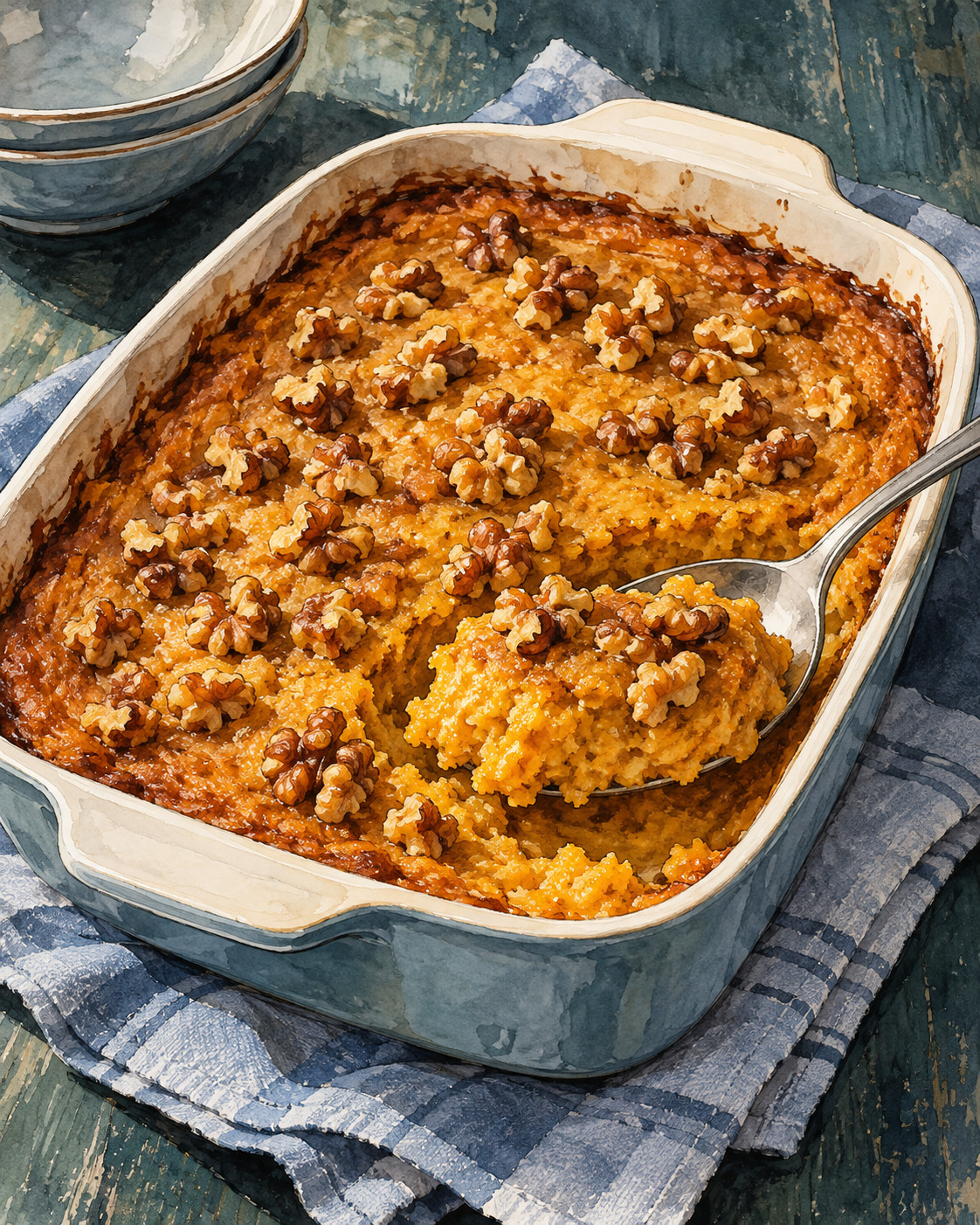
This should be scooped rather than sliced. Cornmeal absorbs moisture from the pumpkin, while eggs set a soft center beneath the walnut topping. The ten-minute batter rest and ten-minute pause after baking do different jobs: first hydrating the grain, then letting the finished mixture settle. Do not keep baking merely to make a bread-like loaf.
Modern adaptation: This is an original modern oven dish. Canned pumpkin, farmed eggs, commercial cornmeal, plant beverage, bottled oil, and purchased maple syrup are conveniences rather than evidence for an ancient pudding. It combines regional ingredient histories without assigning the finished bake to a specific Native nation.
Cook it today
Yield: 6 side-dish servings · Prep 15 min · Cook 40 min (approximate)
Ingredients
- 1 tablespoon sunflower oil, plus 1 teaspoon for the dish
- 1 can (15 ounces) plain pumpkin purée
- 2 large eggs
- 1 cup unsweetened oat beverage
- 1/2 cup medium cornmeal
- 3 tablespoons pure maple syrup
- 1/2 teaspoon fine salt
- 1/2 cup chopped unsalted walnuts
Method
- Heat oven to 375°F. Grease a 2-quart baking dish with 1 teaspoon oil. Check that the pumpkin label says plain purée, not sweetened pie filling.
- Whisk pumpkin, eggs, oat beverage, remaining oil, maple syrup, and salt until evenly combined. Sprinkle cornmeal over the mixture and whisk again.
- Let stand for 10 minutes so the cornmeal starts absorbing moisture. Stir once more, scraping the bottom, then pour into the prepared dish.
- Scatter walnuts over the top. Bake for 35 to 40 minutes, until the edges are set and the center reaches 160°F on an instant-read thermometer.
- Rest for 10 minutes before serving. The center should remain softly spoonable; do not keep baking merely to produce a firm bread-like texture.
Substitutions
Unsweetened soy beverage or dairy milk can replace oat beverage; these are also modern choices. Replace walnuts with unsalted sunflower kernels. Cooked mashed butternut squash works if it is thick and well drained.
Serving
Serve warm alongside beans, roasted vegetables, or cooked poultry. Small spoonfuls work well because the pumpkin and walnuts make a rich side dish.
Storage
Refrigerate within 2 hours, covered, for up to 3 days at 40°F or below. Reheat portions to 165°F. Freeze portions up to 1 month; texture may soften.
Sources and evidence notes
- Onondaga Nation: Food: Public tribal account of corn, beans, squash, fishing, game, spring plants, strawberries, and responsible harvesting; supports ingredient context, not this recipe.
- Milwaukee Public Museum: Maple Sugar: Documents Great Lakes maple processing and culinary uses. This book uses purchased maple products and does not reproduce ceremonial knowledge.
These original modern recipes are inspired by documented ingredients and food traditions. They are not recovered ancient recipes or claims of tribal endorsement. Sources support the historical context; quantities, combinations, substitutions and appliance methods are modern.