Northeast · Onondaga corn and spring-plant context; original modern adaptation
Food history and kitchen connections
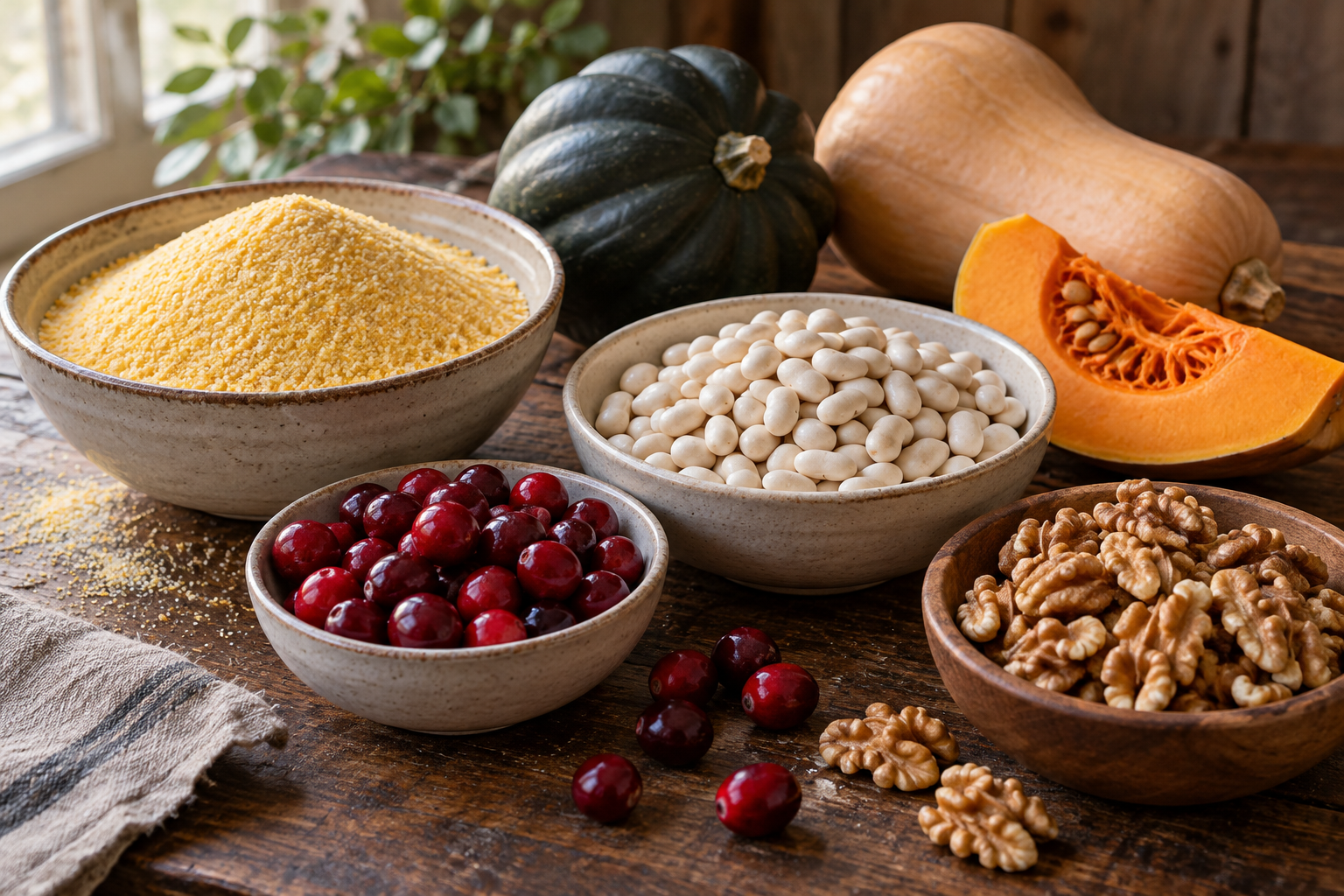
Onondaga Nation’s public food account includes cornmeal mush and spring plants, including leeks. Its community account “A Certain Way” describes maintaining white corn varieties and storing braided ears for later preparation. Together these sources make it clear that corn was both a field crop and a food prepared in several textures.
A bowl of soft cornmeal allows the texture of a ground grain to remain central. The topping here uses supermarket leeks and cultivated mushrooms, so the recipe requires neither a wild-plant identification guide nor access to a harvest site. It is useful to distinguish a familiar leek purchased with its roots trimmed from the wild plants discussed in a cultural source. They can fill a similar culinary role without being the same food. Browning mushrooms in a separate pan keeps their flavor concentrated; folding them directly into the porridge would give a different, softer result. Both the topping and these cooking decisions belong to the present adaptation.
Modern adaptation: This is an original modern cornmeal bowl, not a reconstructed Onondaga recipe. Commercial yellow cornmeal stands in for a specific community-grown white corn; cultivated mushrooms, vegetable stock, retail leeks, and bottled oil provide an accessible topping. Avoid gathering wild mushrooms or leeks for this recipe.
Cook it today
Yield: 4 servings · Prep 15 min · Cook 30 min (approximate)
Ingredients
- 1 cup medium-ground cornmeal
- 4 cups water, plus more as needed
- 3/4 teaspoon fine salt, divided
- 2 tablespoons sunflower oil
- 2 medium cultivated leeks, white and pale green parts sliced
- 12 ounces cultivated cremini mushrooms, sliced
- 1/2 cup low-sodium vegetable stock
- 1 tablespoon chopped fresh chives
- 1 teaspoon lemon juice
Method
- Swish sliced leeks in a bowl of cold water, separating the rings to release grit. Lift them out with your hands or a slotted spoon; pouring the whole bowl through a strainer can put the grit back on the leeks. Drain well. Slice mushrooms to a similar thickness.
- Bring 4 cups water and 1/2 teaspoon salt to a simmer in a heavy saucepan. Whisk in cornmeal gradually. Reduce heat until the surface bubbles gently, then cook for 25 to 30 minutes, stirring and scraping the base frequently. Use the package timing if it calls for longer cooking. Add hot water, 1/4 cup at a time, whenever the mixture becomes too stiff to stir before the grains are tender.
- While the cornmeal cooks, warm oil in a wide skillet over medium-high heat. Add mushrooms in a loose layer. If they will not fit without piling up, cook in two batches using part of the measured oil for each. Leave undisturbed for the first few minutes, then turn and cook until released liquid has mostly evaporated and some edges are browned.
- Return all mushrooms to the skillet if working in batches. Lower heat to medium, add drained leeks and the remaining salt, and cook for 6 minutes, stirring. Add stock and simmer for 5 minutes, until the leeks are tender and only a little liquid remains around the vegetables. Take off the heat and stir in chives and lemon juice.
- Cool a small spoonful of cornmeal and taste it. The grains should feel tender rather than hard or chalky, and the porridge should spread gently on the plate. Continue cooking with extra hot water if needed. Spoon into warm bowls and add the topping just before serving.
Substitutions
Use certified gluten-free cornmeal if needed, and check the stock label too. Onion can replace cultivated leek; cook until fully softened before adding stock. Another labeled edible cultivated mushroom variety is suitable. Instant polenta needs its own package timing and water ratio, so do not cook it for the full time given for medium-ground cornmeal.
Serving
Serve immediately, when the cornmeal is soft enough to spread under the topping. A few reserved chives add freshness without hiding the corn.
Storage
Refrigerate within 2 hours, up to 3 days at 40°F or below. Cornmeal firms when cold; reheat to 165°F with extra water, stirring until smooth.
Kitchen cues and troubleshooting
The clock is a guide because cornmeal grind varies. Keep a kettle of hot water nearby so you can loosen the porridge without cooling the pan. If the topping finishes first, set it aside briefly and warm it gently while you loosen the cornmeal; do not try to keep the cornmeal thick and dry while waiting.
Sources and evidence notes
- Onondaga Nation: Food: Public tribal account of corn, beans, squash, fishing, game, spring plants, strawberries, and responsible harvesting; supports ingredient context, not this recipe.
- Onondaga Nation: A Certain Way: Community account of white corn cultivation and braiding for storage; does not document this modern preparation.
- Bob’s Red Mill: Corn grits preparation instructions: Manufacturer directions illustrate how corn products and intended textures use different cooking times; follow the package for the cornmeal actually purchased.
These original modern recipes are inspired by documented ingredients and food traditions. They are not recovered ancient recipes or claims of tribal endorsement. Sources support the historical context; quantities, combinations, substitutions and appliance methods are modern.