Northeast · Eastern Woodlands crops; original modern adaptation
Food history and kitchen connections
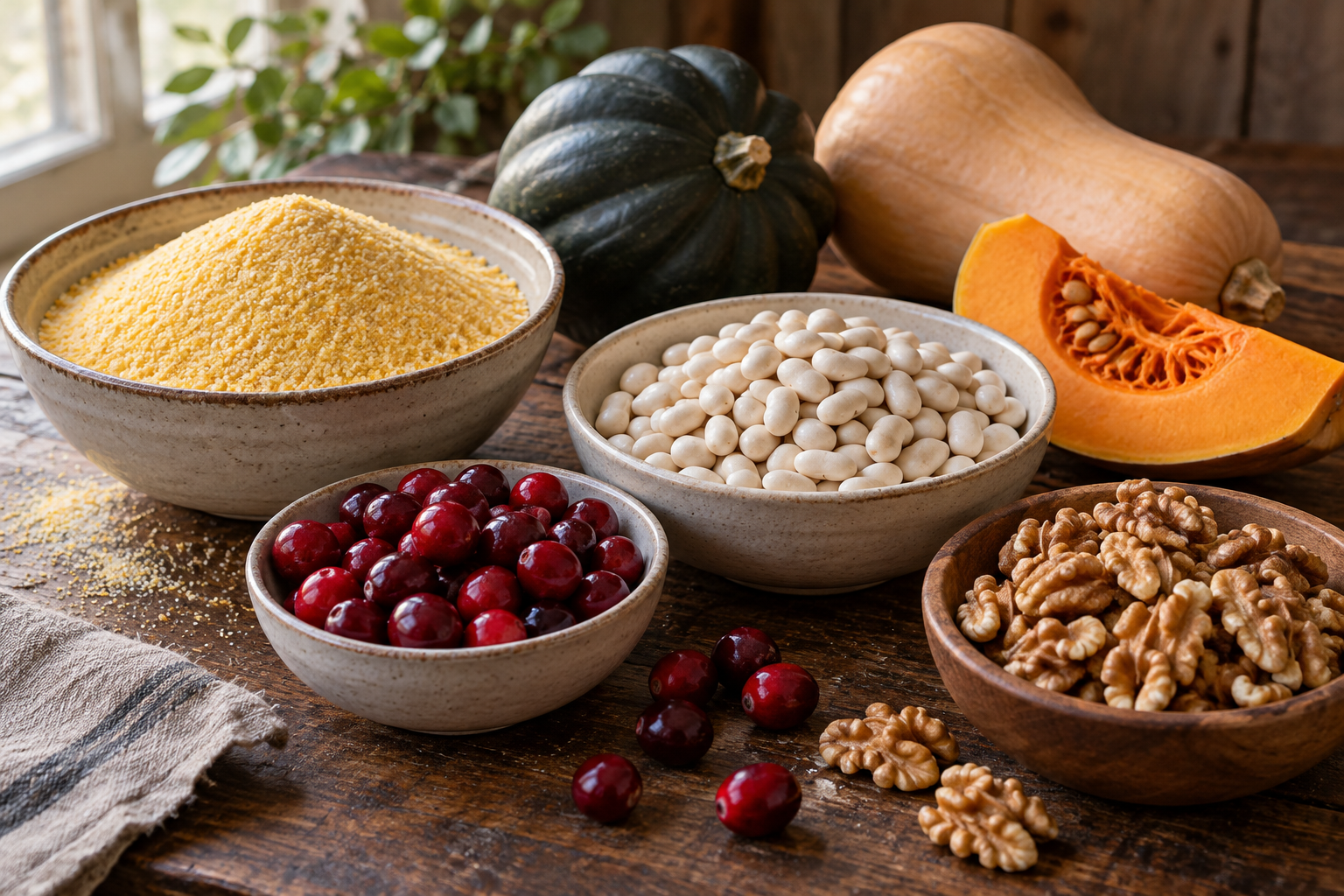
Corn, beans, and squash have specific cultural significance in Haudenosaunee foodways, described publicly by Onondaga Nation. Farther east, Plimoth Patuxet Museums documents Wampanoag cultivation of several squashes and pumpkins. These are distinct communities and food traditions; the shared crop does not make their cuisines interchangeable.
An acorn squash half is a convenient modern serving vessel. Its bowl-shaped cavity holds a loose filling, and baking lets the edges soften without stirring the squash into a soup. For this recipe, corn supplies chew while cranberries provide a bright, tart accent and walnuts contribute richness. That particular composition is the author’s, not evidence of a shared historical dish. The squash variety at a supermarket is also the product of continued plant breeding and distribution. Keeping that distinction visible makes the recipe useful without asking a modern tray of ingredients to stand in for centuries of farming, seed selection, land stewardship, and everyday cooking knowledge.
Modern adaptation: This oven-baked dish is an original adaptation using documented regional crops and other modern pantry ingredients. Sweetened dried cranberries, canned corn, lemon juice, bottled oil, and an electric oven are current choices. It is not presented as a historical Wampanoag or Haudenosaunee stuffed-squash recipe.
Cook it today
Yield: 4 light main-course servings · Prep 20 min · Cook 50 min (approximate)
Ingredients
- 2 medium acorn squash, about 1 1/4 pounds each
- 2 tablespoons sunflower oil, divided
- 1/2 teaspoon fine salt, divided
- 1 can (15 ounces) corn kernels, drained
- 1 can (15 ounces) cooked white beans, drained and rinsed
- 1/3 cup chopped unsalted walnuts
- 1/3 cup dried cranberries
- 2 tablespoons water
- 1 tablespoon lemon juice
Method
- Heat the oven to 400°F. Halve the squash from stem to base and scoop out seeds. Trim a very thin slice from each underside only if needed for stability.
- Rub cut sides with 1 tablespoon oil and 1/4 teaspoon salt. Put cut-side down on a lined rimmed tray. Bake for 30 to 35 minutes, until almost tender.
- Mix corn, beans, walnuts, cranberries, remaining oil and salt, water, and lemon juice. Use a fork to lightly crush a few beans so the filling holds together.
- Turn squash halves cut-side up carefully. Divide filling among the cavities, mounding it loosely. Cover the tray loosely with foil.
- Bake for another 15 minutes, until the squash is fully tender and the filling is steaming. Rest for 5 minutes before serving with a spoon for the flesh.
Substitutions
Use delicata squash halves and shorten the first bake as needed. Sunflower kernels replace walnuts. Unsweetened cranberries work if you prefer a distinctly tart filling; add no extra sweetener before tasting.
Serving
Offer one filled half per person, with any filling that spills onto the tray spooned alongside. A leafy salad makes a useful contrast.
Storage
Refrigerate within 2 hours in shallow containers, up to 3 days at 40°F or below. Reheat covered to 165°F. The cooked squash becomes softer after freezing.
Sources and evidence notes
- Onondaga Nation: Food: Public tribal account of corn, beans, squash, fishing, game, spring plants, strawberries, and responsible harvesting; supports ingredient context, not this recipe.
- Plimoth Patuxet Museums: Growing Food: Documents Wampanoag corn, beans, squash, food storage, and gathered or aquatic foods; supports history only.
These original modern recipes are inspired by documented ingredients and food traditions. They are not recovered ancient recipes or claims of tribal endorsement. Sources support the historical context; quantities, combinations, substitutions and appliance methods are modern.