Famous Last Meals / Modern companion recipe
Spoon-Tender Beef with Carrot and Bread
Brown a small batch of beef, then give it a long covered simmer with onion and carrot. The sauce stays spoonable rather than turning into a flour-heavy gravy. Carrot, thyme, measured seasoning and this entire method are modern choices; this is not a recipe from the Temple.
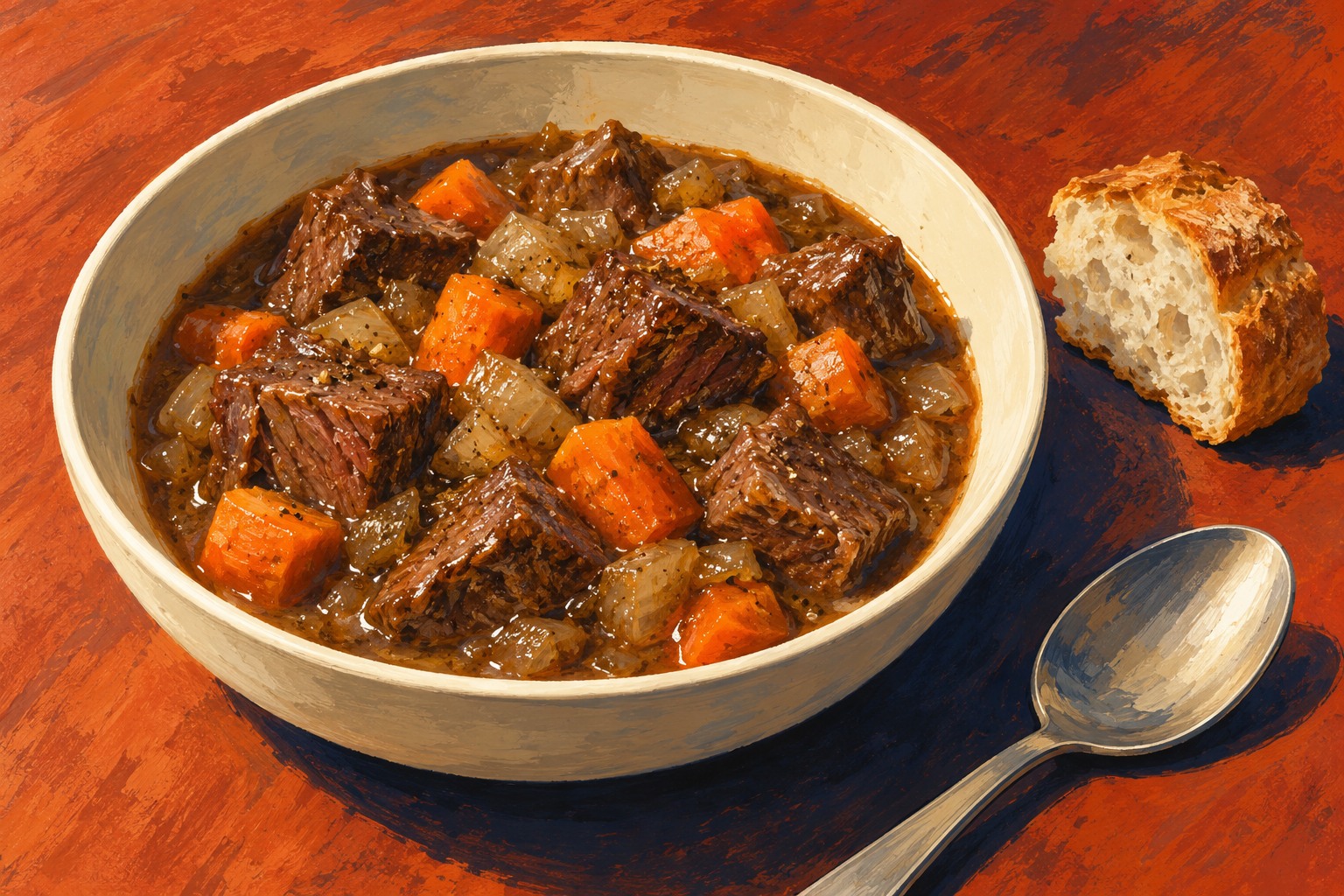
Use a cut that benefits from waiting
Chuck contains connective tissue that a quick sear does not soften. Cut reasonably even cubes, then use the fork test at the end of the covered simmer. A browned outside and a safe temperature alone do not mean this cut will be pleasant to eat. If the fork still meets resistance, add a spoonful of water, cover again and let time do the work.
A little flour, added before the water
Ten grams of flour lightly binds the liquid released by the meat and vegetables. Stir it into the softened onion and carrot before gradually adding water. That gives a smooth sauce without a separate slurry. The lid should fit well enough to keep a small stew from drying during its long simmer; check the base instead of assuming the original water will last in every pot.
Count the bread as part of supper
Divide the loaf portion before sitting down so the listed yield includes what each person receives. Tear pieces into the edge of the bowl to catch sauce, or serve beside it. The bread is a modern measured accompaniment to a dish associated with an earlier named prison dinner. There is no claim that the finished bowl reproduces the king’s food.
Ingredients
- 14 oz boneless beef chuck, trimmed of hard gristle and cut into 1 in/2.5 cm cubes (400 g prepared raw meat)
- 1 small onion, finely diced (100 g)
- 1 large carrot, scrubbed or peeled and cut into ½ in/1 cm pieces (150 g prepared)
- 1 garlic clove, finely chopped (3 g)
- 2 teaspoons olive oil (10 ml), divided into two 1-teaspoon/5 ml portions
- 1 level tablespoon plus 1 teaspoon all-purpose/plain flour (10 g; weight controls)
- 2 cups plus 1 tablespoon plus 1 teaspoon drinking water (500 ml), plus small measured splashes only if needed during the long simmer
- 1 small dried bay leaf
- ½ teaspoon dried thyme leaves (about 0.5 g)
- ¼ teaspoon fine salt (1.5 g)
- ¼ teaspoon black pepper (about 0.5 g)
- 3½ oz plain crusty bread (100 g), divided into two 1¾ oz/50 g portions
Set out
Stovetop, Heavy 2-liter/about 2-quart saucepan or small Dutch oven with a close-fitting lid and a usable base about 8 in/20 cm wide, Knife and separate boards for produce and raw beef, Kitchen scale, measuring jug and spoons, Tongs, wooden spoon and fork, Food thermometer, A separate holding plate for partly cooked beef between browning batches, Two deep plates or bowls, Shallow storage containers and refrigerator
Allergens
Wheat/gluten. Base flour and bread contain wheat/gluten. Bread can also contain milk, egg, soy or sesame depending on its recipe; check its label, all seasonings and shared-equipment warnings. The starch variation changes the flour only and does not make ordinary bread suitable for avoiding wheat.
Make it
- Prepare and weigh the onion, carrot and garlic first. Cut the raw beef on a separate board, pat dry with disposable paper and wash hands and raw-meat utensils. Keep the bread and its board away from raw juices. Divide the meat into two 200 g batches.
- Heat the first 5 ml oil over medium-high heat in the heavy saucepan. Brown the first batch of beef for about 5 minutes, turning, and lift to a plate reserved for the partly cooked meat. Brown the second batch in the remaining 5 ml oil for another 5 minutes. Do not force all 400 g into a crowded layer.
- Lower to medium. Add onion and carrot to the same pot and cook 6–7 minutes, scraping and stirring. If the base threatens to burn, loosen it with 1 tablespoon from the measured water rather than extra oil. Add garlic and thyme, stir 30 seconds, then stir in the flour for 1 minute.
- Return all meat and collected juices. Gradually add the rest of the measured 500 ml water, scraping the base, then add bay, salt and pepper. Bring to a simmer, taking about 5 minutes. The liquid should come around the meat without filling this 2-liter pot beyond about two-thirds. Cover, lower the heat and keep at a very gentle simmer for about 2 hours 20 minutes to 2 hours 30 minutes. Stir along the bottom every 30 minutes and add 1–2 tablespoons/15–30 ml water only if the pot is drying.
- Check several pieces with a fork: the connective tissue should be soft enough for the cubes to part under light pressure. The meat must also be hot throughout at least 165°F/74°C. Tough chuck needs further gentle simmering, not harder boiling; extend the time if required. Remove the bay leaf. If the sauce is watery, simmer uncovered about 5 minutes, watching closely. Divide all stew equally between two bowls and serve each with its measured 50 g bread.
A useful detail
The 3-hour-25-minute total allows 25 minutes for preparation and approximately 3 hours for two browning batches, vegetables, heating, the long covered simmer and a short uncovered finish. Chuck varies; allow longer if it has not become fork-tender. The starting food and liquid occupy comfortably less than a 2-liter pot, with room to stir. No potato, wine, broth cube or garnish is required.
Keep it well
Refrigerate planned leftovers in shallow containers at 40°F/4°C or below within 2 hours, or 1 hour above 90°F/32°C. Keep bread separately. Use stew within 3 days, or freeze promptly chilled portions at 0°F/−18°C for up to 2 months for quality. Thaw in the refrigerator. Reheat only the required stew portion to 165°F/74°C throughout, stirring and adding a spoonful of water if needed.
How this recipe relates to the story
Beef and bread connect to Cléry’s named afternoon dinner on 20 January. The cut, vegetables, seasoning, bread portions and whole cooking method are original modern choices, not a historical reconstruction or claim about the later supper.
Another way
- Replace the carrot with the same prepared weight of turnip cut into ½ in/1 cm pieces. Keep the beef, water and long tenderizing stage unchanged; the finished stew will taste sharper.
- For a version without wheat flour, use 8 g cornstarch/cornflour instead. Omit flour from step 3. Near the end, mix the starch with 1 tablespoon/15 ml cold water, stir into the simmering stew and cook at least 2 minutes until thickened. Choose bread appropriate to the intended diet and check every label; this is not an allergen-free guarantee.