Famous Last Meals / Modern companion recipe
Skillet Okra with a Cornmeal Crust
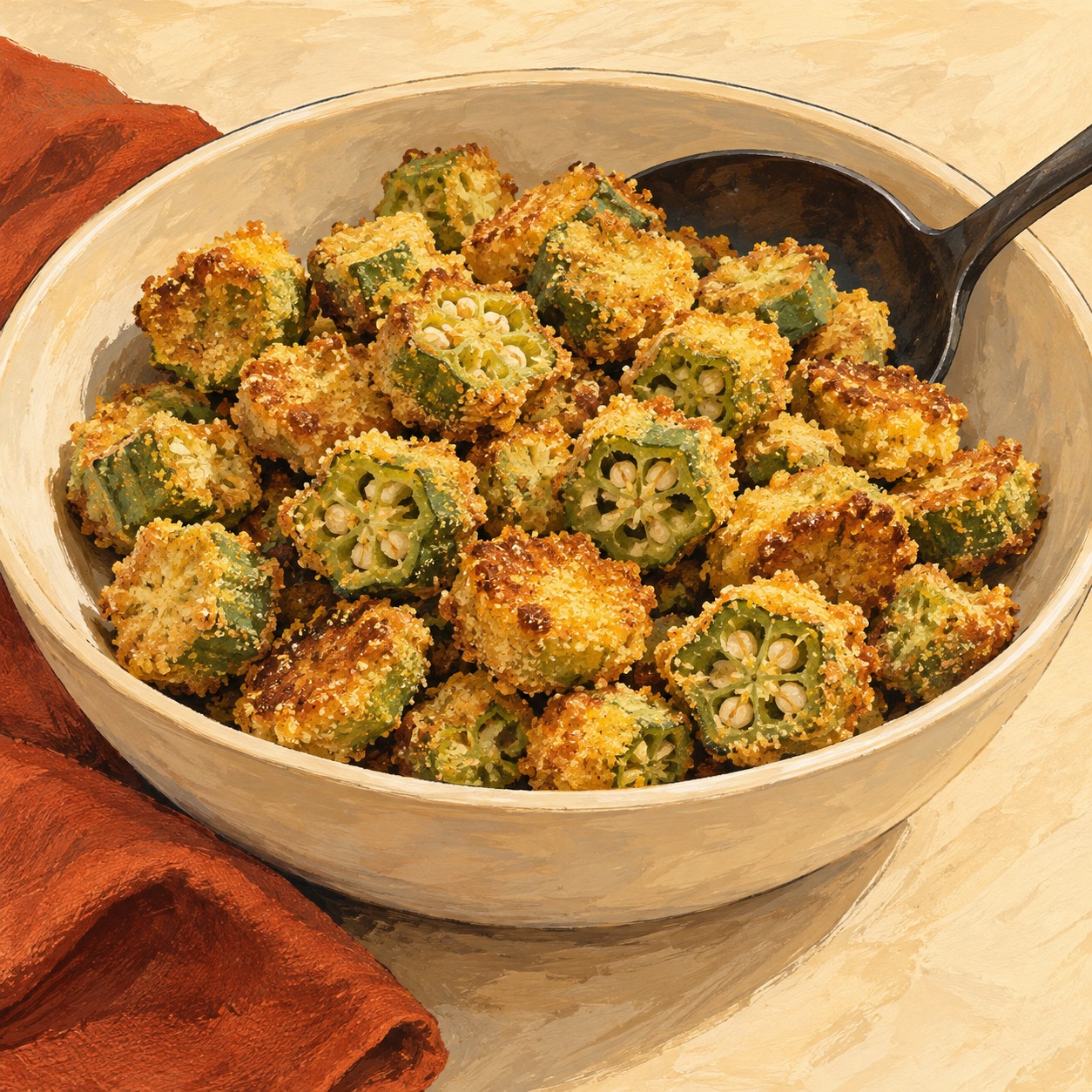
Thinly sliced okra needs room against the hot pan. A fine cornmeal-and-flour coating becomes a light crust in two batches, while the centers cook until tender. This is an original home side dish inspired by one named item in the request, not a Texas prison recipe.
A coating, not a thick batter
The milk only moistens the cut okra enough for a thin dusting of cornmeal and flour. Let excess drip away before coating, and leave wet leftovers behind. Fine cornmeal is specified so that a short skillet cook can soften it while forming a crust. A heavy blanket of dry coating turns the dish gritty and produces extra loose crumbs in the oil.
The second batch deserves a clean surface
Small crumbs can burn before the next okra rounds are tender. Pause with the skillet off the heat, remove dark crumbs carefully with a dry heatproof utensil, and then replenish the measured oil. A wide cooking base gives the rounds contact with the pan; cooking all the okra at once would crowd them and trap steam. Keep water away from the hot oil and use the utensil rather than fingers to turn pieces.
Ingredients
- 14 oz fresh young okra pods, washed and dried very thoroughly (400 g before trimming; about 360–380 g after removing firm stem tips)
- ¼ cup pasteurized milk (60 ml)
- 2.1 oz fine cornmeal (60 g; about ⅓–½ cup depending on grind, so weight controls)
- ¼ cup all-purpose/plain flour (30 g)
- ½ teaspoon fine salt (3 g)
- ¼ teaspoon black pepper (about 0.5 g)
- 6 tablespoons neutral cooking oil suitable for frying (90 ml total), divided into two 3-tablespoon/45-ml batches
Set out
Stovetop, 12-in/30-cm heavy skillet with about 10-in/25-cm flat usable cooking base, Knife and board, Colander and clean towels, 2 mixing bowls and kitchen scale, Measuring jug and spoons, Wide slotted spatula, Heatproof draining rack over a tray or clean absorbent paper on a heatproof plate, Splatter screen if available; lid nearby for emergency covering, not for cooking, Refrigerator and shallow covered container for leftovers
Allergens
Milk; Wheat. Check the cornmeal and oil labels for additional allergens and shared-equipment warnings. Cornmeal does not make the whole dish free of wheat; the coating deliberately includes flour.
Make it
- Wash the okra under running water, then dry very thoroughly before trimming. Remove only the tough stem tips and cut the pods into ⅜-in/1-cm rounds. Spread them briefly on a clean towel so no surface wash water remains. Measure the milk in one bowl and mix cornmeal, flour, salt and pepper in the other.
- Divide the cut okra into 2 equal batches. Toss the first batch in half the milk (2 tablespoons/30 ml). Lift it out, allowing excess to drip back, then toss with half the dry mixture until thinly coated. Prepare only the batch about to cook; a long wet wait makes the coating pasty.
- Add 3 tablespoons/45 ml oil to the heavy skillet and heat over medium heat until shimmering, not smoking. This is a thin shallow film, roughly 1 mm across the stated pan base, not a deep-frying bath. Place the first batch carefully in a single uncrowded layer. Lower the heat if the coating darkens too quickly. Never pour water into the hot oil.
- Cook about 8–11 minutes, turning the rounds several times with the spatula, until the coating is golden and dry, the centers are tender when pierced, and no wet floury patches remain. Do not taste partly cooked coating to check it. If the pan needs longer for tender centers, lower the heat and continue turning rather than scorching the outside.
- Lift the cooked okra onto the draining rack. Take the pan off the heat and let any loose crumbs stop sizzling. Remove dark crumbs carefully with a dry heatproof slotted utensil; do not handle or pour hot oil. Add the remaining 3 tablespoons/45 ml oil, return to medium heat, and coat the second batch with the remaining milk and dry mixture just before cooking it the same way. Discard all leftover wet coating and milk.
- Divide the entire cooked batch into 4 small side portions and serve promptly. There is no extra dipping sauce or garnish in this recipe. Let the pan and oil cool completely before handling the remaining oil for disposal according to local guidance; never pour it down the sink.
A useful detail
The 45-minute total includes thorough drying, trimming, coating and two separate skillet batches. Young pods cook more tenderly than large woody ones. The oil is a measured cooking allowance; some remains in the pan and coating bowls. This recipe does not assert that all flour, milk or oil is eaten, and it makes no nutrition or calorie claim.
Keep it well
This side is best eaten promptly for texture. Refrigerate leftovers in a shallow covered container within 2 hours, or 1 hour above 90°F/32°C, at 40°F/4°C or below; use within 2 days. Reheat only the portion needed to 165°F/74°C throughout in an oven or skillet, accepting that the crust may soften. Do not keep cooked okra at room temperature to preserve crispness.
How this recipe relates to the story
Fried okra is one component named in Brewer’s requested menu. The quantity, fine cornmeal/flour coating, milk, measured oil and four-side yield are original modern choices, not an identified prison formula or a claim that this particular preparation was delivered or eaten.
Another way
- Use the same weight of thawed plain frozen sliced okra only if it can be drained and dried thoroughly. Follow any longer cooking instruction on its package and expect a softer result; never place icy or dripping pieces in hot oil.
- For a milder seasoning, omit the black pepper while keeping the same fine cornmeal/flour coating and batch size. No chili is included in the base recipe.